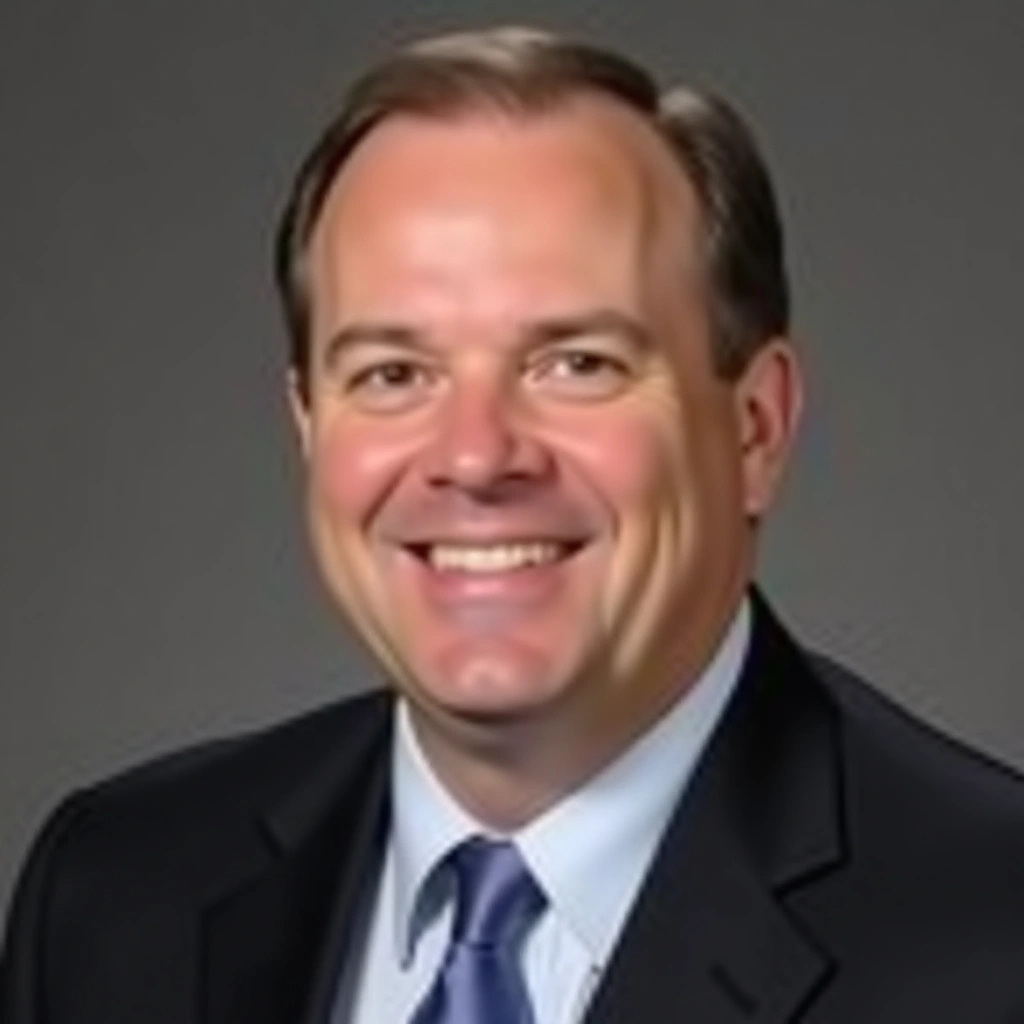
Nov 15 (Reuters) – The US Federal Reserve has the tools and responsibility to deal with price pressures that are "running too hot," and the central bank "has some work to do on inflation," Kansas City Federal Reserve President Jeff Schmid said on …
There’s a particular kind of honesty that only comes out at conferences in Hawaii. Maybe it’s the ocean air. Maybe it’s the knowledge that your audience is too relaxed to throw anything. Either way, Kansas City Federal Reserve President Jeff Schmid used a credit union conference in Hawaii on Sunday to say something central bankers don’t always say plainly: the Fed “has some work to do on inflation.”
That’s central-banker speak for “we are not where we want to be, and pretending otherwise isn’t helping.”
The Short Version
Schmid said the Federal Reserve has both the tools and the responsibility to deal with price pressures that are “running too hot.” He described inflation as “uncomfortably above the 2% price stability target, and moving in the wrong direction.”
That last part matters. Inflation being above target is one thing. Inflation being above target and heading further away from it is the economic version of your GPS saying “recalculating” while you drive confidently toward a lake.
To be clear, Schmid did not specifically call for more rate hikes. He was careful about that, as Fed officials tend to be, since a single sentence from them can move markets faster than a celebrity tweet. But the overall tone left little doubt about which way he leans.
Where Rates Stand Right Now
Some context. According to the report, the Fed raised rates by a quarter percentage point in September, bringing the target range to 3.75%-4.00%. Then, at last month’s meeting, it chose not to raise them again.
Since then, inflation readings have come in hotter than expected, and other Fed officials, including influential Governor Christopher Waller, have made comments that markets took seriously. As a result, interest rate futures are now fully pricing in a quarter-point increase at the December meeting, with a small probability of a half-point hike.
In other words, markets have already decided what they think is coming. Schmid’s remarks didn’t exactly talk them out of it.
One small detail worth noting: Schmid is not a voting member of the Federal Open Market Committee this year. So he doesn’t get a vote in December. But Fed presidents still take part in the discussions, and their public comments are closely watched as signals of where internal thinking is heading. Not having a vote doesn’t mean not having a voice.
Narrative Number One: “It’s All Supply Shocks”
The most interesting part of Schmid’s speech wasn’t the headline. It was his pushback against what he called common narratives that have recently built up around inflation and the Fed’s ability to control it. He took aim at two of them.
The first is the idea that high inflation simply reflects repeated supply shocks. You’ve probably heard versions of this: something breaks in the supply chain, prices jump, and there’s not much a central bank can do because it can’t manufacture products or unclog shipping routes with interest rates.
Schmid’s response, roughly: nice try.
“Inflation is always the result of an imbalance between supply and demand,” he said. “It is in the context of strong demand that a disruption to supply drives up prices. Demand always plays a role in inflation, and the Fed, through its influence on demand, always has the tools and responsibility to address inflation.”
This is a pretty sharp point. A supply disruption hurts prices most when people are still eager to buy. If demand were soft, a shortage wouldn’t push prices up as much because fewer buyers would be competing for limited goods. So even when the trigger looks like supply, demand is part of the story. And demand is exactly what the Fed’s tools are built to influence.
Think of it this way: if there’s only one slice of pizza left at the party, the price of that slice depends a lot on how many hungry people are standing around it. The Fed can’t bake more pizza, but it can, metaphorically speaking, make a few people less hungry. That’s not a fun job, but it’s the job.
Narrative Number Two: “This Demand Can’t Be Stopped”
The second narrative Schmid rejected is the idea that today’s sources of demand-driven inflation are somehow immune to Fed policy. He specifically mentioned the artificial intelligence buildout as an example of the kind of demand people sometimes describe this way.
The logic of that narrative goes something like this: there’s so much investment pouring into AI, and the enthusiasm is so intense, that a few percentage points on interest rates won’t slow anyone down. Who cares about borrowing costs when you’re racing to build the future?
Schmid isn’t buying it. He disagrees with the idea that this kind of demand is resistant to monetary policy.
He also made a related point that’s easy to miss: “I would also push back on the idea that meeting our inflation objective requires a reaction from any particular set of prices, for example prices for AI-related technology goods.”
Translation: the Fed doesn’t need one specific corner of the economy to cool off in order to bring overall inflation down. Its target is broad price stability, not a crusade against the price of any single category of goods. So arguing that AI-related prices won’t respond to rates doesn’t mean inflation as a whole is out of reach.
The Common Thread
Here’s where Schmid tied it all together, and it’s probably the most quotable part of the speech:
“Both narratives – that inflation is being driven by either supply shocks or by demand that is impervious to higher interest rates – have a common core,” he said. “Mainly, that inflation is somehow beyond the Fed’s power to control. I don’t believe this to be true.”
This is the heart of his argument. Both stories, whether intentionally or not, end up in the same place: the Fed can’t really do anything, so maybe it shouldn’t try too hard. Schmid is essentially saying that’s a comfortable excuse, and he isn’t interested in it.
He continued: “The Fed does have the tools to address inflation and has the responsibility to achieve price stability. As Chairman (Kevin) Warsh said, we have work to do.”
So there you have it. Not exactly a mic drop, but by Federal Reserve standards, it’s fairly close. Central bankers usually prefer phrases like “we remain attentive to incoming data,” which is the verbal equivalent of beige paint.
Why This Matters for Regular People
It’s easy to tune out Fed speeches. They’re full of jargon, they rarely contain jokes, and they never come with snacks. But what Schmid is talking about affects pretty much everyone.
If inflation stays high and keeps moving the wrong way, everyday costs keep climbing. If the Fed responds with higher rates, borrowing gets more expensive, which touches mortgages, car loans, credit cards, and business investment. Neither option is particularly cheerful. The Fed’s job is to pick the less painful path over time, and Schmid is arguing that tolerating persistent inflation isn’t it.
It’s also notable that he made these remarks to a credit union audience. Credit unions deal directly with people borrowing and saving money, so they feel the effects of both inflation and rate changes up close. It’s a fitting crowd for a message about the Fed taking responsibility.
What to Watch Next
The big event on the calendar is December’s Fed meeting. Markets are fully priced for a quarter-point hike, with a small chance of something larger. Schmid didn’t explicitly endorse a move, but his speech fits neatly with the more hawkish tone that’s been coming from several Fed officials lately, Waller included.
If the Fed does raise rates in December, speeches like this one will look like the groundwork. If it doesn’t, expect a lot of people to ask why officials spent weeks saying there was work to do.
The Bottom Line
Jeff Schmid’s message boils down to a simple idea: inflation is the Fed’s problem to solve, and blaming supply shocks or unstoppable AI spending doesn’t change that. Demand always plays a role, the Fed always has tools to influence it, and price stability is its responsibility, whether the job is convenient or not.
It’s not the most exciting thing anyone has ever said in Hawaii. But in a world where it’s tempting to explain away every stubborn number, there’s something refreshing about a central banker essentially saying, “No, this one’s on us.”
Inspired by: “Fed ‘has some work to do on inflation,’ KC Fed chief says” (r/Business)