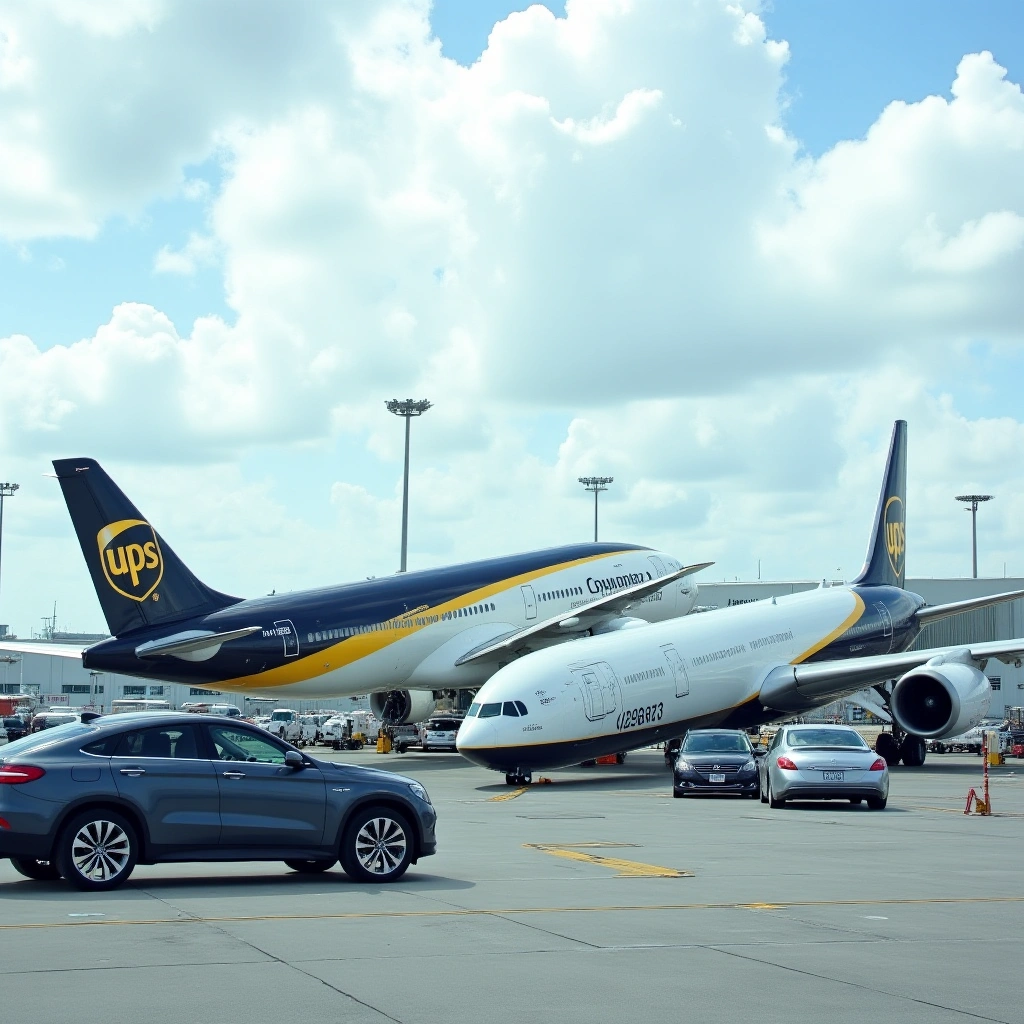
Two planes collided Saturday night … cancellations and travel chaos. “ The wingtip of a Copa Airlines Boeing 737 struck the nose of a UPS Boeing 767 while the airplanes were taxiing ,” the Federal Aviation Administration …
We’ve all been there. You’re inching through a crowded parking lot, someone else is inching the other way, and suddenly there’s that horrible crunch that ruins everyone’s evening. Now imagine that, except both vehicles are commercial jets and the parking lot is one of the busiest airports in the United States.
That’s roughly what happened at Miami International Airport on Saturday night, when a Copa Airlines passenger plane and a UPS cargo aircraft managed to bump into each other while taxiing on the tarmac. Two people were injured, according to media reports.
What Actually Happened
According to a CNN report citing the Federal Aviation Administration (FAA), the incident occurred around 9:15 pm on Saturday. The wingtip of a Copa Airlines Boeing 737 struck the nose of a UPS Boeing 767.
If you’re picturing two planes dramatically colliding in midair, you can relax. This was a ground incident. Both aircraft were taxiing, which is the slow, careful-in-theory process of moving between the runway and the gate. Think of it as the airport equivalent of rolling through a parking garage, just with much bigger vehicles and much more expensive paint jobs.
Two people were reported injured. The available reports don’t go into detail about who they were or how serious their injuries were, so we won’t pretend to know more than we do. Hopefully both recover quickly.
The Part Where Somebody Was Supposed to Yield
Here’s the detail that stands out. The FAA said air traffic controllers had instructed the UPS crew to give way to the Copa aircraft.
In other words, there was a plan. The plan was clear. The plan involved one plane waiting for the other one to pass. And yet, somehow, a wingtip and a nose ended up occupying the same space at the same time, which physics generally frowns upon.
Now, before anyone grabs a pitchfork, it’s worth pointing out that the FAA says it is investigating the collision. An instruction to give way doesn’t automatically tell us exactly what went wrong. Ground movements at a big airport involve a lot of moving parts: controller instructions, pilot positioning, aircraft dimensions, lighting, taxiway layout, and the simple fact that judging the end of a wing from a cockpit is not exactly like checking your side mirror. That’s precisely why investigations exist, and it’s fair to let this one play out before declaring a villain.
Why Wingtips Are the Usual Suspects
If you’ve ever wondered why wingtips seem to get involved in so many of these ground mishaps, it comes down to geometry. A Boeing 737 has a fairly wide wingspan, and pilots sitting up front can’t easily see where the very end of each wing is. When two aircraft are maneuvering near each other, a few feet of misjudgment can be the difference between a routine night and a call to the FAA.
And the nose of a Boeing 767 isn’t small either. It’s a big, wide-body aircraft, often used for cargo, which is exactly the job UPS uses it for. So in this case you had a narrow-body passenger jet’s wingtip meeting a wide-body freighter’s nose. Neither of them was built for that kind of introduction.
Not a Crash, But Still Not Great
It’s important to keep perspective. This was not a takeoff or landing accident, and the speeds involved during taxiing are low. That’s a big part of why ground collisions, while alarming, tend to be far less catastrophic than incidents in the air.
That said, two people were hurt, and two large aircraft presumably now need some attention from maintenance crews. A wingtip strike can mean damage that has to be inspected carefully before a plane goes anywhere, and the nose of an aircraft houses important equipment. Even a slow-speed bump can take airplanes out of service and leave passengers and packages waiting.
So if your shipment was a little late or your flight got shuffled around, now you have a possible explanation that’s more interesting than “operational reasons.”
The Broader Takeaway
Airports are incredibly busy places, and Miami International handles a lot of both passenger and cargo traffic. Coordinating all those movements on the ground depends on controllers giving clear instructions and crews following them precisely. Most of the time, it works so smoothly that nobody even thinks about it. Incidents like this one are a reminder of just how much careful choreography goes on behind the scenes every single night.
The FAA’s investigation should eventually shed light on why an instruction to give way ended with a wingtip in a nose. Until then, the best we can do is wish the two injured people a speedy recovery and silently thank every ground crew member, controller, and pilot who keeps the other thousands of daily taxi movements boring.
Because when it comes to airplanes on the ground, boring is exactly what we want.
Inspired by: “2 injured as passenger, cargo planes collide at Miami international airport” (r/World)