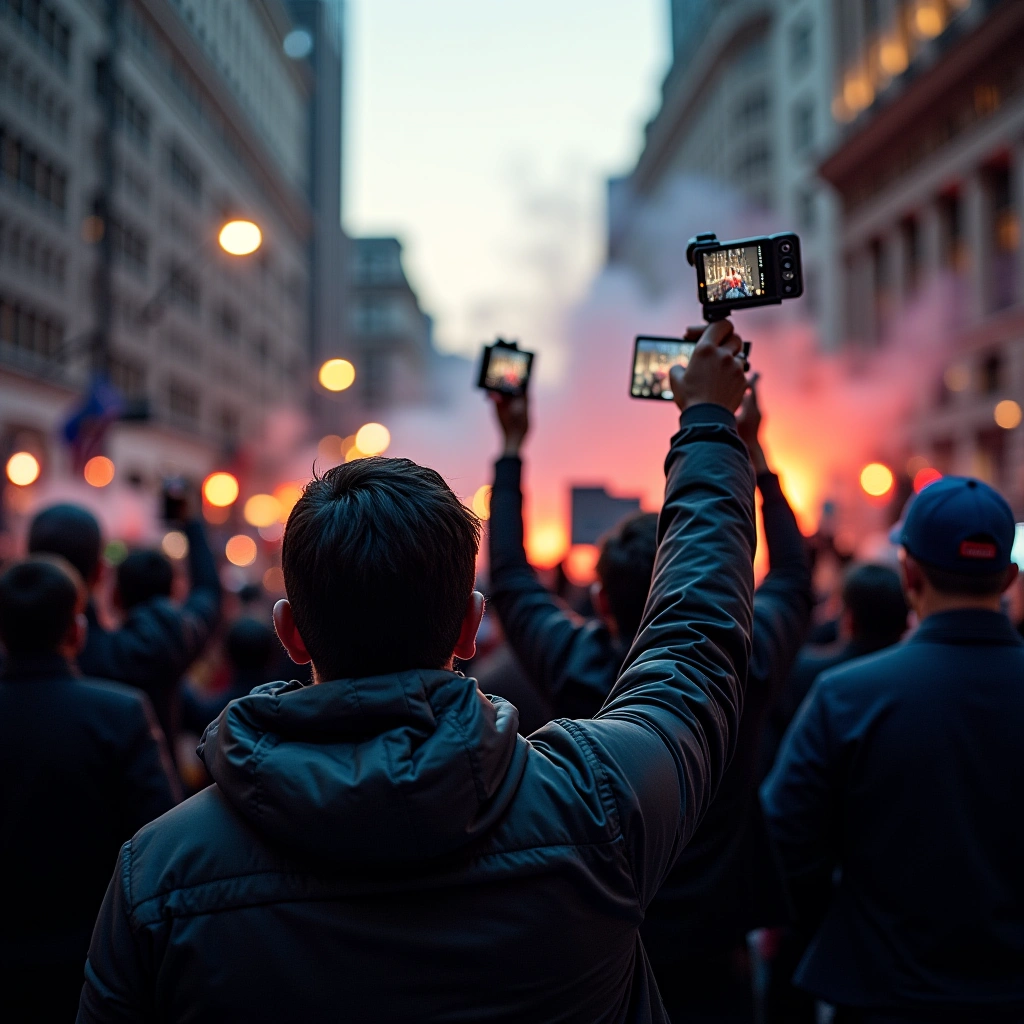
Skip to Content How Protest Has Changed in the Digital Age The digital age has changed the ways in which protest works. How have people adapted, and where are we heading? Hugo Lefer , Staff Reporter • January 25, 2026 Shannon Stapleton Demonstrators attend a pro-Palestinian protest on the day of the two-year anniversary of the attack on Israel by Hamas, in New York City, U.S., October 7th, 2025.
In a move that’s sure to make social media managers everywhere break into a cold sweat, the Indian government has recently advised social media platforms to act swiftly on any unlawful posts related to ongoing protests. Yes, you heard that right—if you thought your average Tuesday was chaotic, just wait until you see how quickly posts can disappear from your feed!
So, what exactly does this mean for the average user? Well, if you’ve ever posted something that you thought was just a little too spicy for the algorithm, you might want to reconsider. The government is prioritizing actions based on official complaints, which means if someone flags your post, it could be gone faster than your last slice of pizza at a party.
The main goal here is to prevent disruptions to public order and incitement of violence. And let’s be honest, with all the chaos happening around the world, no one wants to be the person who accidentally sparked a digital riot over a meme or a poorly worded tweet.
Now, don’t get me wrong, the intention behind this advisory is to maintain peace and order, which is commendable. But it does raise a few eyebrows. What exactly qualifies as ‘unlawful content’? Is it just anything the government doesn’t like, or is there a specific list? Are we talking about the classic ‘your opinion is not valid’ kind of unlawful?
Social media platforms, already struggling to manage the fine line between free speech and hate speech, are now facing even more pressure. It’s like asking a tightrope walker to balance on a wire made of spaghetti while juggling flaming torches. Good luck with that!
And let’s not forget the issue of accountability. If a post gets taken down, who’s responsible? The person who complained? The social media platform? The government? Or is it just a collective shrug and a ‘better luck next time’ situation?
This advisory is a reminder that while social media can be a powerful tool for expression, it also comes with its own set of challenges. As users, we’re often left navigating a minefield of rules, regulations, and the occasional rogue algorithm that seems to have a personal vendetta against us.
So, as we continue to scroll through our feeds, let’s keep one thing in mind: the next time you hit ‘post,’ you might want to think twice. Because in this new era of social media oversight, you never know when your witty commentary could land you in hot water—or worse, a digital black hole.
In conclusion, while the Indian government’s efforts to keep social media platforms in check might seem like a necessary evil, it also opens up a whole new can of worms. The balance between free speech and public safety is delicate, and as we’ve seen time and time again, it’s not always easy to get it right. But hey, at least we’ll have plenty of material for our next round of social media memes, right?
Inspired by: “Govt advises social media firms to swiftly act on protests related unlawful posts” (r/News)