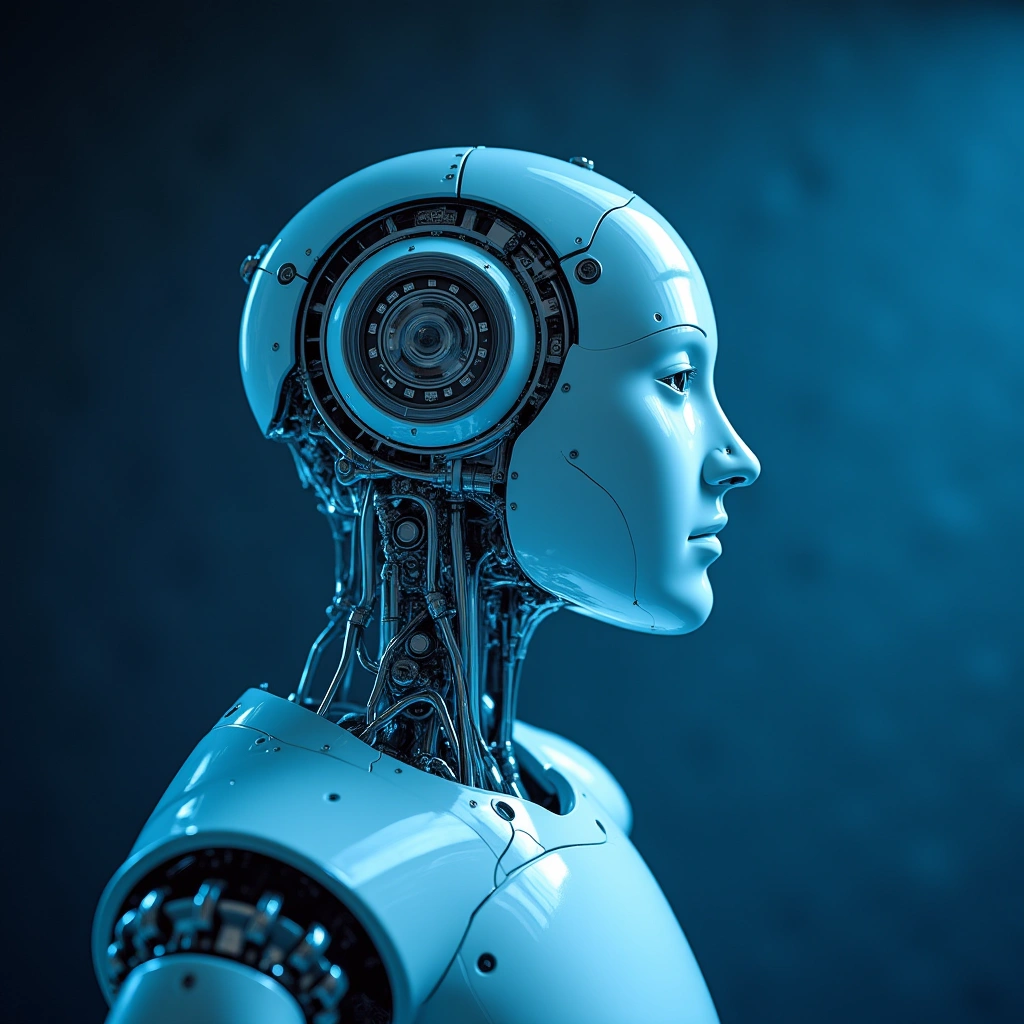
Let’s face it: when it comes to the intersection of economics and artificial intelligence, there’s a lot of head-scratching going on. Economists are known for their ability to analyze trends, predict market movements, and create models that would make even the most complex Rubik’s cube look like child’s play. But, as we dive into the world of AI, it seems some of them might be missing a few key points. So, grab your favorite beverage and let’s unpack what’s going on.
The first is that estimates for growth, jobs, and prices are each built in isolation, with no single framework to reconcile them. The second is that models fixate on AI’s current capabilities, rather than on how fast it spreads and how much …
First off, let’s talk about the elephant in the room: the rapid pace of AI development. While economists are busy crunching numbers from the last decade, AI is out there evolving faster than a toddler on a sugar high. The traditional economic models often rely on historical data to predict future trends, but AI is like that friend who always arrives late to the party—by the time they show up, the mood has already changed. It’s a classic case of trying to fit a square peg into a round hole.
Now, don’t get me wrong; economists are incredibly smart people. However, their models often assume a stable environment where variables change predictably. Enter AI, which is anything but predictable. With its ability to learn and adapt, AI can disrupt entire industries overnight. Think of it as a teenager with a new driver’s license: one minute they’re cruising smoothly, and the next minute they’ve crashed into the neighbor’s mailbox.
Another thing that economists might be overlooking is the impact of AI on labor markets. Sure, we’ve all heard the doom and gloom predictions of robots taking over our jobs, but the conversation often stops there. Economists need to consider how AI is not just replacing jobs, but also creating new ones—jobs that didn’t even exist five years ago. It’s like the old saying goes: when one door closes, another one opens, but in this case, that door might lead to a room filled with data scientists and AI ethicists.
And let’s not forget about the role of human creativity in the age of AI. While AI can analyze data and optimize processes, it’s not exactly known for its ability to come up with the next big idea. Economists might underestimate the value of human intuition and creativity in a world increasingly dominated by algorithms. After all, who wants to live in a world where all the art is created by a machine? I mean, have you seen how AI draws a cat? It looks like a five-year-old’s finger painting.
Moreover, the ethical implications of AI are something that economists might not be fully accounting for. As AI systems become more prevalent, questions about bias, privacy, and accountability are popping up like weeds in a garden. Economists need to factor in these social costs when analyzing the economic impact of AI. Ignoring the ethical side of things is like baking a cake without flour—sure, it might look good on the outside, but it’s going to fall flat.
Lastly, let’s talk about the economic models themselves. Many of them are based on assumptions that no longer hold true in the age of AI. For instance, the assumption that markets are efficient is being challenged as AI introduces new variables that can skew results. Economists need to be willing to adapt their models to incorporate the nuances of AI—because if they don’t, they might find themselves in a world where their predictions are about as useful as a chocolate teapot.
In conclusion, while economists have a lot of valuable insights to offer, they need to take a closer look at the implications of AI. It’s not just about the numbers; it’s about the human experience, the ethical considerations, and the unpredictable nature of this rapidly evolving technology. So, let’s raise a glass to the economists who are ready to embrace the challenge and adapt to the new realities brought on by AI. After all, the future may be bright, but only if we’re willing to keep our eyes wide open and our models flexible. Cheers!
Inspired by: “What Economists Are Missing About AI” (r/technology)