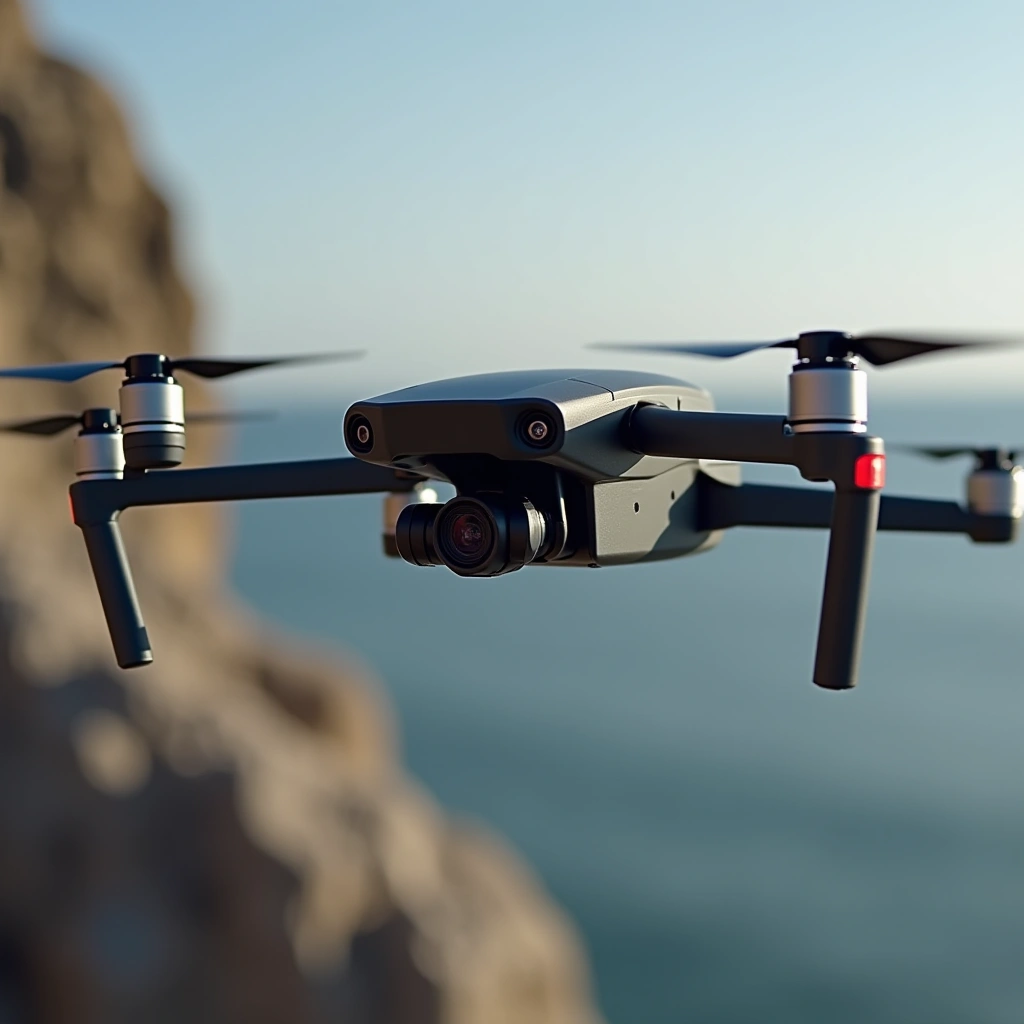
In the world of technology, where every day seems to bring us closer to the type of gadgets we once only saw in spy movies, the latest innovation—a drone designed to achieve near-invisibility—has just landed on our radar. Dubbed the ‘Phantom Twist,’ this little marvel is the brainchild of a US team that clearly took inspiration from both high-tech espionage and perhaps a bit of magic.
Called the “Phantom Twist,” the drone spins up to 25 times per second, which is too fast for the human eye to see clearly. While it isn’t completely invisible, it morphs into a ghostly smudge that seamlessly blends into the background.
Now, let’s get one thing straight: when we say ‘near-invisibility,’ we’re not talking about Harry Potter-level cloaking spells. This drone doesn’t vanish into thin air like it’s been binge-watching ‘The Invisible Man’—it spins. Yes, you heard that right. In a twist (pun totally intended) that would make a ballerina proud, this drone uses a unique spinning mechanism to create an optical illusion that makes it incredibly difficult to spot.
So, how does it work? The science behind this spinning marvel is all about manipulating light. When the drone spins rapidly, it confuses the human eye and makes it blend into the background. In essence, it’s like that one friend who insists on wearing camouflage at a party—good luck trying to find them in a crowd. This could potentially revolutionize surveillance, military operations, and even wildlife photography (because who doesn’t want to get up close and personal with a bear without it noticing?).
Of course, the Phantom Twist has its critics. Some might argue that spinning around in the air doesn’t exactly scream stealth mode. I mean, can you imagine trying to sneak up on a target while doing what looks like a drone version of the cha-cha? But hey, if it works, it works! Plus, it’s a lot more entertaining to watch than your average drone just hovering around like it’s lost.
The implications of this technology are vast. Imagine a drone that can survey an area without being detected, helping in search and rescue missions or providing intelligence without the risk of being shot down. Of course, there’s also the chance that it could be used for less-than-savory purposes, like spying on your neighbor’s barbecue (who knew Frank was secretly the grill master?). But that’s a conversation for another day.
As with all technology, there are questions about regulation and ethics. Just because we can make a drone that’s hard to see doesn’t mean we should let it loose without any guidelines. We wouldn’t want a bunch of rogue drones spinning around like they own the place, creating chaos and confusion. I can already see the headlines: ‘Local Drone Spotted in Neighborhood, Residents Confused as to Why It Looks Like a Flying Frisbee.’
In conclusion, the Phantom Twist represents a fascinating leap forward in drone technology. While it may not be the perfect solution for every situation, it certainly adds a new dimension to the art of aerial stealth. So, keep your eyes peeled—though you might just miss it if you’re not careful! Who knows? Someday, we might all be begging our drones to stop spinning long enough for us to actually see them. Until then, let’s just hope they don’t decide to take up dance lessons.
Inspired by: “‘Phantom Twist’: US team designs drone that spins to achieve near-invisibility” (r/technology)