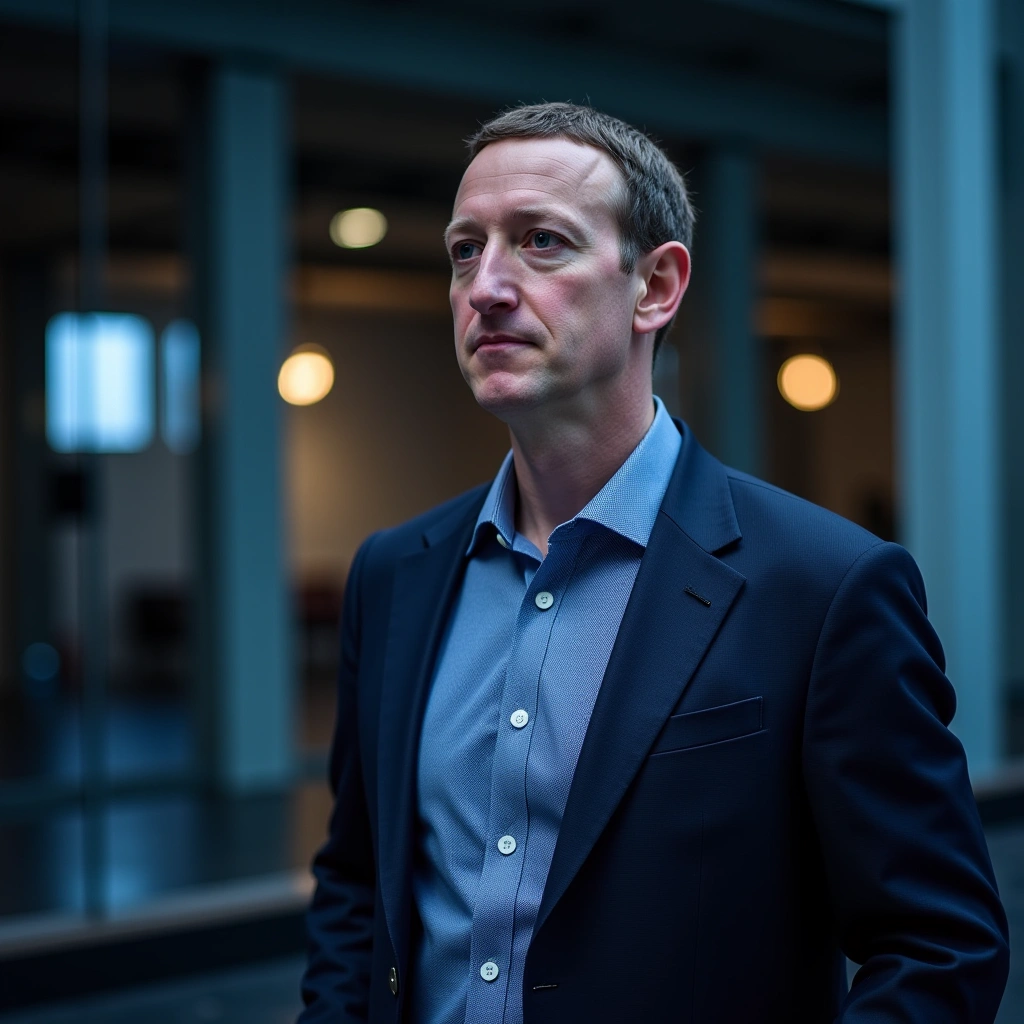
In a recent statement that sent ripples through the tech world, Meta CEO Mark Zuckerberg cautioned against the potential ban on Chinese AI models by the U.S. government. Now, before you roll your eyes and dismiss this as just another tech CEO trying to save his own skin, let’s dive a bit deeper into why this warning might actually hold some water.
Meta CEO Mark Zuckerberg says the U.S. should compete with China, not ban Chinese AI models, warning against harmful regulations.
First off, let’s acknowledge that the relationship between the U.S. and China has been, shall we say, a bit rocky? It’s like a soap opera that just keeps dragging on, with new plot twists every week. And in this case, the drama is centered around artificial intelligence – a field that is rapidly evolving and has the potential to change the world as we know it. So, why is Zuckerberg waving his arms and shouting, “Hold on a second!”?
For starters, banning Chinese AI models could set a dangerous precedent. It’s not just about one country’s technology; it’s about the global marketplace of ideas and innovation. If the U.S. starts banning AI models from China, what’s to stop other countries from doing the same? It could lead to a fragmented tech landscape where collaboration takes a backseat, and we end up in a tech Cold War. And honestly, who needs that kind of stress?
Zuckerberg also pointed out that AI is a field where collaboration across borders can lead to groundbreaking advancements. Think about it: some of the most significant technological breakthroughs come from diverse teams working together. If the U.S. decides to shut out Chinese AI models, it could hinder the potential for progress that could benefit everyone. After all, wouldn’t you want the best innovations, even if they come from a place that has a few different ideas about governance than we do?
Now, it’s easy to dismiss Zuckerberg’s warnings as self-serving. After all, Meta has its own interests in the AI space. But let’s not forget that he isn’t the only voice in the room. Experts across the tech industry are echoing similar sentiments, emphasizing the need for open dialogue and cooperation rather than isolation.
And let’s address the elephant in the room: security concerns. Many argue that Chinese technology could pose risks, and they’re not wrong. But banning it outright might not be the solution. Instead, the focus should shift towards establishing robust regulations that ensure safety while still allowing for the flow of ideas and technology. It’s a balancing act – like trying to walk a tightrope while juggling flaming torches. Easy, right?
In conclusion, while it’s tempting to react to geopolitical tensions by slamming the door on foreign technology, Zuckerberg’s warning serves as a reminder that innovation thrives on collaboration. So, before we start drawing lines in the sand, let’s consider the bigger picture: a world where ideas flow freely, and we all benefit from the advancements made in AI, no matter where they come from. And who knows? Maybe one day, we’ll all be thanking our friendly neighborhood AI – even if it has a funny accent.
So, let’s keep the conversation going and think twice before we hit the panic button on Chinese AI models. After all, in the world of technology, sometimes the best ideas come from the most unexpected places.
Inspired by: “Meta CEO Zuckerberg warns US shouldn’t ban Chinese AI models” (r/technology)