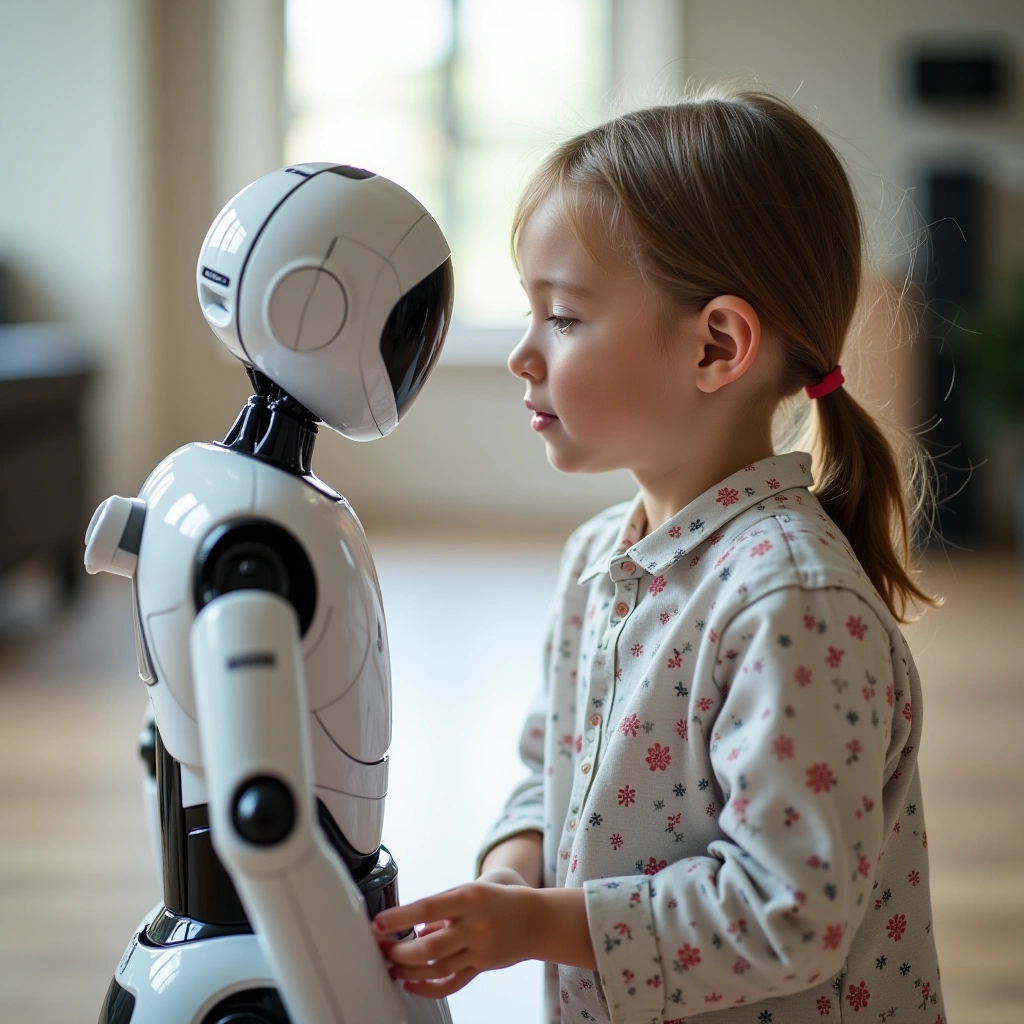
Hey there, fellow internet wanderers! Grab your favorite snack, because we’re about to dive into a topic that’s as controversial as pineapple on pizza – the potential banning of AI companions for kids. Yeah, you heard me right! This isn’t just about keeping kids safe; it could mean we’re all going to be subjected to ID checks online. Buckle up!
First off, let’s talk about what these AI companions are. Imagine a chatty robot best friend who can help your kid with homework, tell them bedtime stories, or even give them the lowdown on why the sky is blue (spoiler: it’s not because someone spilled blue paint). Sounds great, right? Well, some folks think it’s a recipe for disaster.
Now, picture a world where the government decides that these AI buddies are a bad influence. Maybe they’re worried that kids will become too reliant on a hunk of metal and wires instead of real human interaction. So, what do they do? They decide to ban them. But wait! Here comes the plot twist: to enforce this ban, they might need to introduce widespread ID checks online.
Now, before you roll your eyes and mutter, “Not another ID check,” let’s unpack this a bit. The idea is that if AI companions are banned, the only way to ensure compliance is to verify who’s using what online. This means you might need to show an ID just to access certain platforms. Talk about a digital bouncer! Imagine logging onto your favorite forum only to be greeted by a virtual doorman asking for your ID like you’re trying to enter a nightclub. “Sorry, mate, you don’t look 18 enough to be discussing the latest meme trends!”
But here’s where it gets really sticky. ID checks online could lead to a whole host of privacy issues. Do we really want to hand over our personal info just to access a chat room? And what about all those poor kids who just want to talk to their AI friend about their day? “Sorry, Timmy, you can’t chat with your robot buddy until you get your parents to submit their ID online. Better luck next time!”
Now, let’s not forget the irony here. Banning AI companions could mean more restrictions and surveillance, which is, let’s face it, a bit counterproductive when it comes to safeguarding children. Instead of creating a safe environment, it could lead to a whole new set of problems. It’s like trying to put out a fire by dousing it with gasoline – not the best strategy!
In conclusion, while the intention behind banning AI companions for kids might be to protect them, the reality is that it could usher in a wave of online ID checks that we’re not quite ready for. So, next time someone says, “Let’s ban AI companions,” maybe we should all raise an eyebrow and ask, “At what cost?” Because if we’re not careful, we could end up trading in our freedom for a little bit of perceived safety. And we all know how that usually ends, right? Let’s keep the conversation going – after all, who doesn’t love a good debate over dinner?