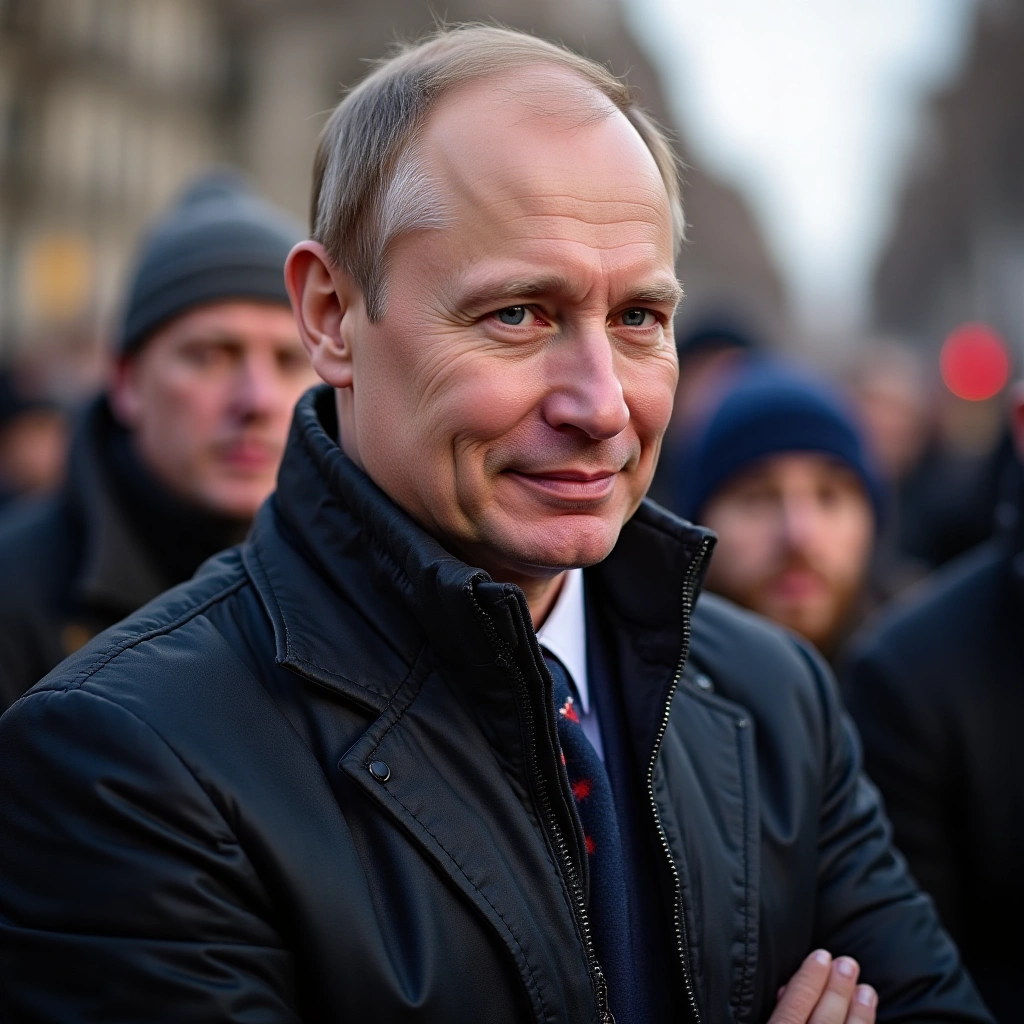
The report reveals how Russian-linked networks, Iranian government officials and far-right social media influencers have used the unrest to spread false information to millions of people across Europe and beyond .
Ah, social media. The glorious platform where everyone has an opinion, cat videos reign supreme, and misinformation spreads faster than a rumor in a high school cafeteria. Recently, it seems that social media has become a playground for covert operations, with a new report revealing that a Russian network exploited the recent riots in France to push some rather dubious narratives. Buckle up, folks—we’re diving into the wild world of online influence, political maneuvering, and the not-so-great art of social media manipulation.
According to internal assessments from the EU and the French foreign ministry, a covert Russian network allegedly took to social media during the unrest in France, promoting narratives that conveniently placed the blame on immigration and painted the French government as a bunch of ineffective nincompoops. I mean, who doesn’t love a good scapegoat, right? It’s all fun and games until someone blames the immigrants.
But wait, there’s more! The report also found that social media accounts linked to the good ol’ US MAGA movement and even some Israeli accounts jumped on the bandwagon, amplifying these so-called “hostile narratives” that connected the riots to radical Islamism and migration. Because nothing says “let’s help” like a good old-fashioned online dogpile. It’s like a digital version of the game where everyone throws their opinions into a ring and sees which one can knock the others out.
So, what’s the takeaway here? Well, it appears that some external actors are quite keen on using France’s domestic turmoil as a political chess piece. It’s almost as if they’re saying, “Why not stoke the flames of discord while we’re at it?” I mean, who needs a stable society when you can have chaos and confusion, right?
This isn’t just a French problem, either. It’s a reminder that social media can be a double-edged sword. On one side, you have the potential for genuine connection and dialogue. On the other, you have a breeding ground for misinformation, fear-mongering, and a whole lot of drama that would make any reality TV show jealous.
As we continue to navigate the murky waters of social media, it’s crucial to remember that not everything you read online is true. Shocking, I know! The next time you see a post blaming a societal issue on a single group, take a moment to pause, reflect, and maybe even do a little digging. After all, wouldn’t it be a shame to fall for the oldest trick in the book?
In conclusion, the world of online influence is as chaotic as a cat trying to navigate a room full of laser pointers. While we can’t control what narratives are being pushed by foreign actors, we can control how we respond to them. So, let’s try to be a little more discerning, shall we? And maybe, just maybe, we can use our social media powers for good instead of letting it turn into a political circus. Now, if only I could find a cat video to cheer me up after all this serious talk!
Inspired by: “Covert Russian network exploited French riots on social media, EU report says” (r/News)