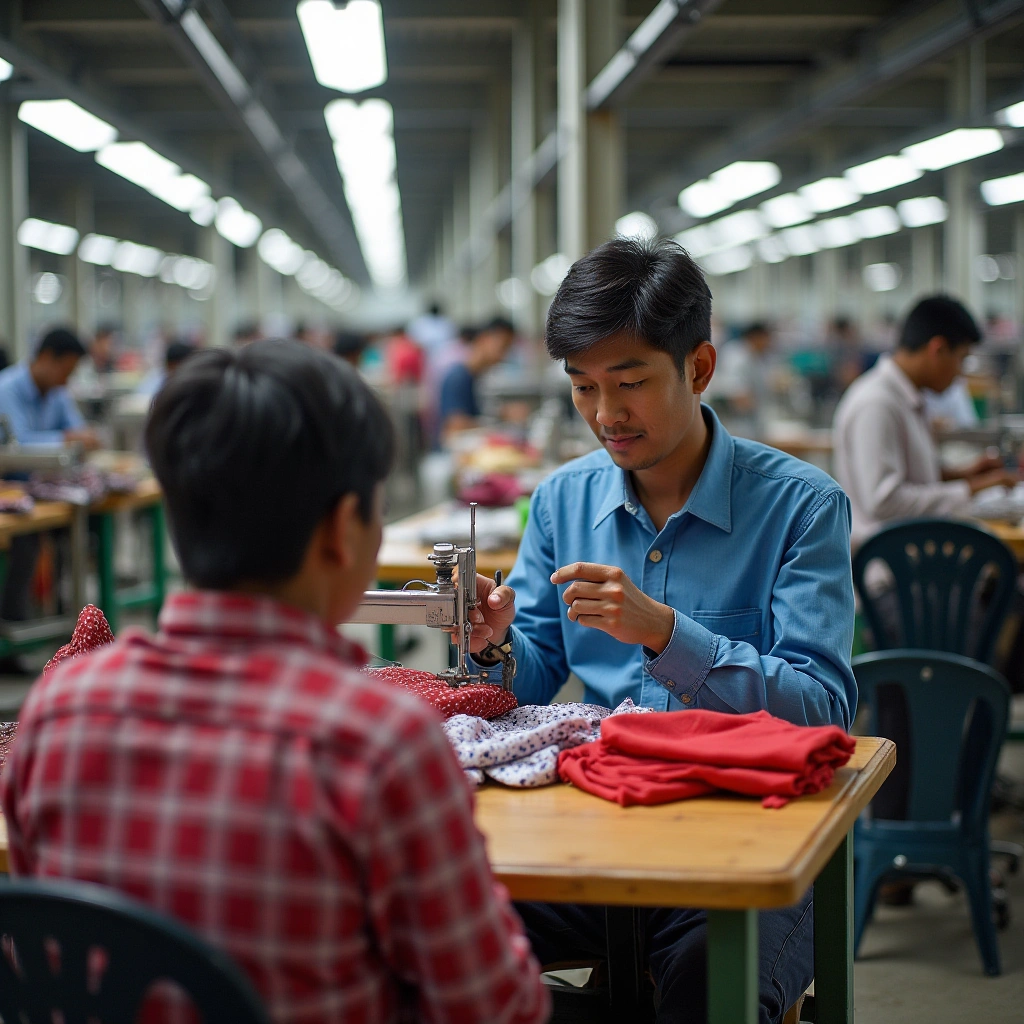
As workers demand a Tk30,000 minimum wage and factory owners warn of mounting financial pressure, the dispute exposes a structural weakness in Bangladesh's apparel industry , where international brands retain pricing power while manufacturers …
So, let’s talk about the elephant in the room—or, in this case, the elephant in the garment factory. The Bangladesh garment industry, which is the second largest in the world (right after China, of course, because when it comes to manufacturing, China likes to flex its muscles), is facing a bit of a crisis. And by ‘bit of a crisis,’ I mean garment manufacturers are threatening to pull out of wage negotiations and possibly shut down factories altogether. Yikes!
The ongoing protests for higher wages have turned into a bit of a circus, and not the fun kind with clowns and acrobats. We’re talking about protests that have occasionally led to clashes and some unfortunate property damage. Talk about a fashion statement gone wrong—who knew a demand for better pay could lead to vandalism? But hey, who doesn’t love a good protest, right? It’s like a flash mob, only with more yelling and fewer dance routines.
The Bangladesh Garment Manufacturers and Exporters Association (BGMEA) and the Bangladesh Knitwear Manufacturers and Exporters Association (BKMEA) are feeling the heat. They’ve cited security concerns due to the demonstrations as a reason to reconsider their participation in wage talks. Because nothing says ‘let’s negotiate’ quite like the threat of a factory shutdown. It’s like saying, “If you don’t give me what I want, I’m taking my ball and going home.”
Workers have been protesting since October, demanding higher wages to keep up with the rising cost of living. And let’s be honest—who doesn’t want to be able to afford a decent cup of coffee without having to sell a kidney? But the manufacturers are worried about the safety of their operations during these protests. I mean, can you blame them? When you have workers throwing things around, it’s hard to focus on negotiating wages. One minute you’re discussing pay raises, and the next, you’re dodging a flying shoe.
It’s a classic case of ‘we want to pay you more, but we also don’t want our factories to become the next battleground.’ The irony is palpable. The garment industry is a critical pillar of Bangladesh’s economy, accounting for a whopping 80% of its exports. So, when manufacturers threaten to shut down, it’s not just a few workers that get affected—it’s the whole economy. Talk about a domino effect!
Now, before we get too deep in the weeds, let’s remember that the garment workers are not just asking for a few extra bucks for their trouble. They’re advocating for fair wages in an industry that has been notorious for its poor working conditions. It’s a bit like asking a genie for three wishes, only to find out that the genie is a bit of a jerk and only grants you one wish, but with a catch.
In a world where the cost of living is rising faster than you can say ‘minimum wage,’ it’s no wonder these workers are demanding change. However, the manufacturers are in a tough spot too. They have to balance the books, keep their factories running, and maintain a semblance of order amidst the chaos. So, what’s the solution?
Perhaps a round-table discussion with snacks? Or maybe a negotiation strategy that doesn’t involve threats and potential factory closures? Who knows! But one thing is for sure: the stakes are high, and the future of Bangladesh’s garment industry hangs in the balance.
As we watch this situation unfold, let’s hope both sides can come to a reasonable agreement before the only thing left standing are empty factories and a lot of frustrated workers. Because at the end of the day, everyone deserves to earn a living wage without having to dodge projectiles while at work. Here’s to hoping for a resolution—and maybe a little less drama in the process!
Inspired by: “Bangladesh garment-makers threaten to quit wage talks” (r/News)