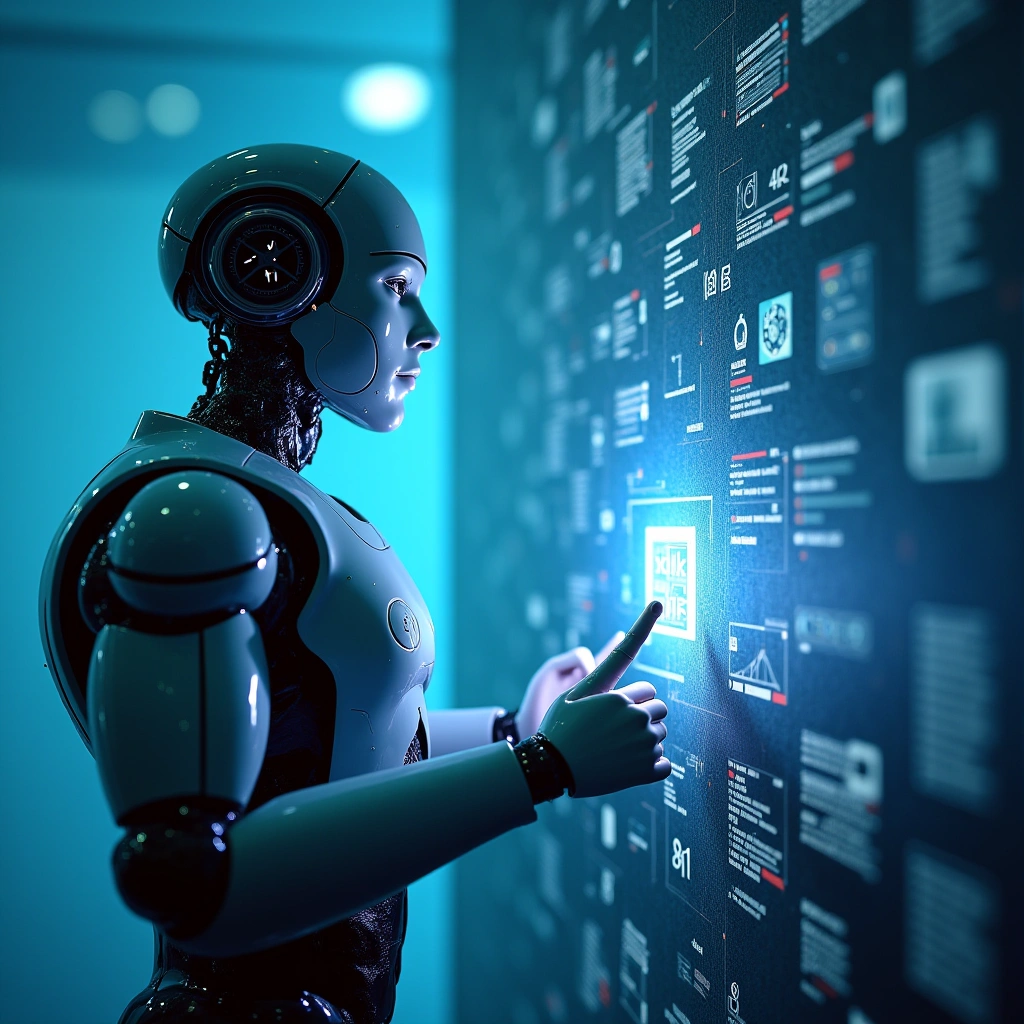
Ah, election season. A time when we’re all reminded how little we know about politics and how much we’d rather scroll through cat memes than read up on candidates. But fear not, dear voters! Thanks to the wonders of technology, we now have A.I. to help us figure out who to vote for. Yes, you heard that right. People are turning to artificial intelligence to make one of the most important decisions of their lives. Because why not let a glorified calculator decide who should lead the country?
2024 will be the first election year to feature the widespread influence of AI before, during and after voters cast their ballots, including in the making and distribution of public messages about candidates as well as electoral processes.
Let’s unpack this, shall we? The Reddit post titled ‘Who Should I Vote for?’ perfectly encapsulates the modern dilemma: with so much information out there, how can we possibly make an informed decision? And let’s be honest, most of us would rather binge-watch a new series than dive into political platforms. Enter A.I., our new best friend—or at least a slightly more reliable friend than that one guy from college who thinks he knows everything about everything.
But how does this A.I. voting assistant work? Well, it’s pretty simple. You feed it some information about your values, beliefs, and maybe a few of your favorite pizza toppings (just kidding about that last one, or am I?). The A.I. then analyzes candidates’ positions and spits out a recommendation. Voila! You now have a candidate to vote for, all while you continue to avoid actual research.
Now, before you get too cozy with the idea of letting a machine decide your democratic fate, let’s take a moment to reflect on the implications. First off, there’s the whole issue of bias. A.I. systems are only as good as the data they’re trained on, and if that data is skewed, well, congratulations! You just voted for the candidate with the most favorable algorithm. It’s like ordering a pizza and ending up with pineapple on it—unexpected and probably not what you wanted.
Then there’s the concern about losing the human element in voting. Politics is messy, emotional, and, let’s face it, sometimes downright absurd. Can an algorithm truly understand the nuances of human experience? I mean, it can’t even figure out how to accurately predict the weather half the time! But here we are, handing over our decision-making to something that can’t even comprehend why we cry during rom-coms.
Of course, there are some who argue that A.I. can help us cut through the noise. In a world where misinformation spreads faster than you can say “fake news,” having a tool that sifts through the nonsense could be a game-changer. It’s like having a friend who does all the research for you, but instead of a friend, it’s a machine that doesn’t even know what a friend is. How comforting!
So, what’s the takeaway here? While using A.I. to guide your voting decisions might seem like a futuristic solution to a complicated problem, it’s essential to remember that no algorithm can replace personal judgment and critical thinking. Sure, it’s tempting to let a program do the heavy lifting, but at the end of the day, your vote is yours alone.
In conclusion, if you find yourself asking, ‘Who should I vote for?’ consider using A.I. as a starting point, but don’t forget to put in the legwork yourself. After all, you wouldn’t let a robot decide what to have for dinner, would you? (Unless you’re really indecisive, in which case, maybe you should.) So, get out there, do some research, and remember: voting is a privilege, not just another task on your to-do list. And who knows? You might even enjoy it—if you can tear yourself away from the cat memes, that is.
Inspired by: “‘Who Should I Vote for?’ Voters Turn to A.I. Before Casting Their Ballots” (r/technology)