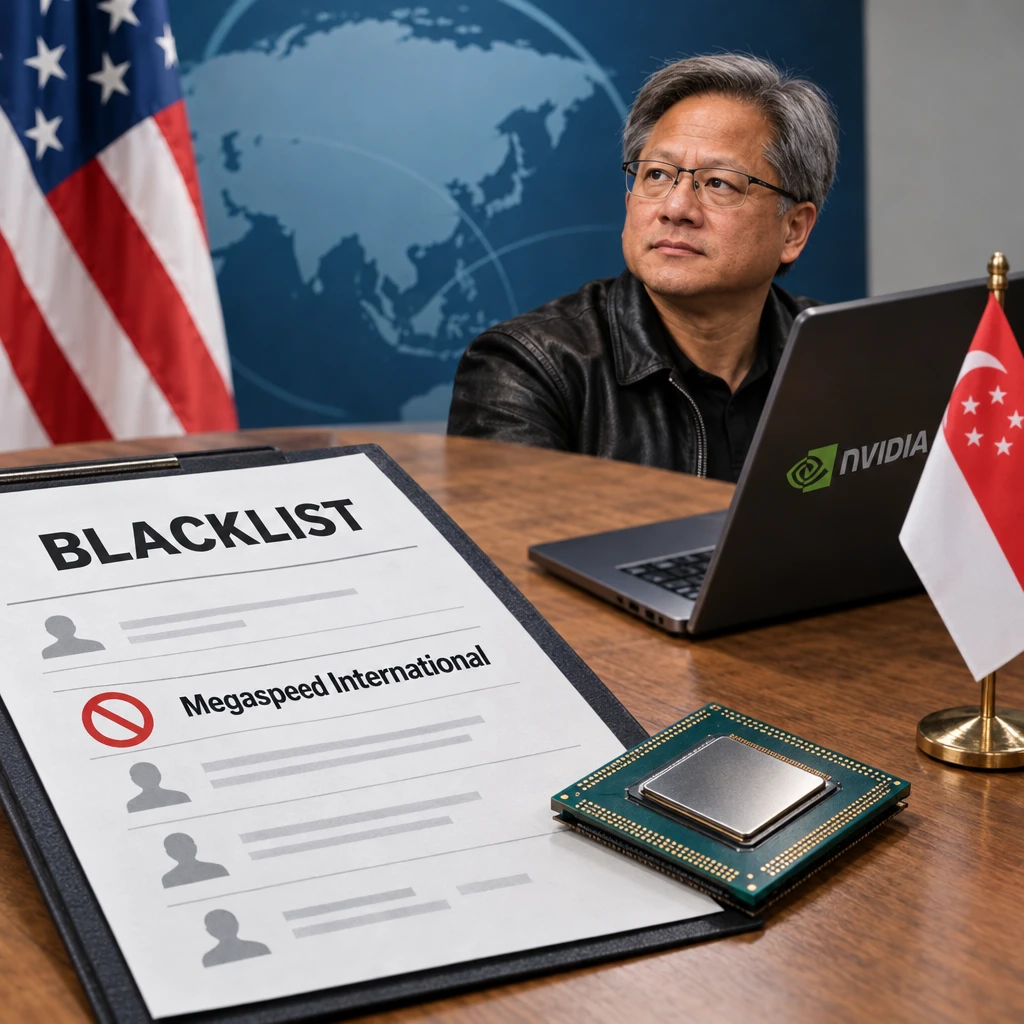
The Trump administration plans to add Singapore-based Megaspeed to the Commerce Department’s entity list Monday, people familiar with the matter said, cutting off its access to U.S.-made semiconductors as scrutiny of Nvidia’s China sales intensifies.
If you’ve been following the chip world lately, you know the rules of the game: the best AI processors are valuable, scarce, and wildly controversial. So when news broke that the US plans to add Megaspeed International to a blacklist that would bar it from buying artificial intelligence chips, it landed with a particular kind of thud.
According to people familiar with the matter, the Singapore-based firm sits at the center of a scandal that once rattled Nvidia Corp. so badly that Jensen Huang briefly lost his job as chief executive. That’s a sentence you don’t read every day, and it explains why the story spread so quickly across business and tech outlets.
The report came from Bloomberg and was quickly picked up by several other outlets, including Salem Radio Network News, TechCrunch, NDTV, and the Jerusalem Post. Each one framed the story a little differently. Some focused on the trade blacklist itself, while others put more weight on the espionage investigation that reportedly connects Megaspeed to the Nvidia matter. The consistent thread was that the company appears headed for restrictions on buying advanced AI chips.
So what is a blacklist, anyway?
In trade policy, a blacklist (often called an entity list in US practice) is a way for the government to restrict companies it considers a national security concern. Being on the list generally means that American companies need special approval before supplying certain products to the listed firm. For a business that depends on high-end chips, that can be a serious problem. You can’t build AI infrastructure with good intentions and a spreadsheet alone.
It’s worth noting what the reports actually say. The plan is described as something the US is planning, and the sources were people familiar with the matter rather than official public documents. That means details could shift as the process moves forward, and anyone quoting specifics should keep one eyebrow raised until formal action is announced.
Why this story has so much attention
Part of the reason this one is getting so much coverage is the name attached to it. Nvidia is the company that has become synonymous with the AI boom, and Huang is one of the most recognizable executives in tech. Any story that connects his company to espionage concerns and a dramatic leadership wobble is going to get clicks, and maybe a few raised eyebrows from people who thought chip stories were already dramatic enough.
The bigger issue is the broader geopolitical tug-of-war over advanced semiconductors. Governments increasingly treat cutting-edge chips as strategic assets, much like energy or defense technology. Companies caught in the middle often find themselves navigating rules that change faster than their supply chains can adapt. A firm like Megaspeed, operating in a region that sits between many of these interests, ends up as a case study in how quickly the ground can shift.
What to watch next
If you’re waiting for the final word, the most useful signals will be official announcements and any formal filings that confirm the listing. Until then, it’s a story built on reporting from people with knowledge of the discussions, which is common in this kind of coverage but still means caution is warranted.
For now, the takeaway is simple. The US appears ready to tighten the rules around who can buy the most sought-after AI chips, and a company tied to a very public scandal is in the crosshairs. In an industry that already moves at breakneck speed, that’s a reminder that in the chip business, even the shopping list can become a political document.
Inspired by: “US to Blacklist Megaspeed, the Firm at Center of Nvidia Scandal” (r/News)