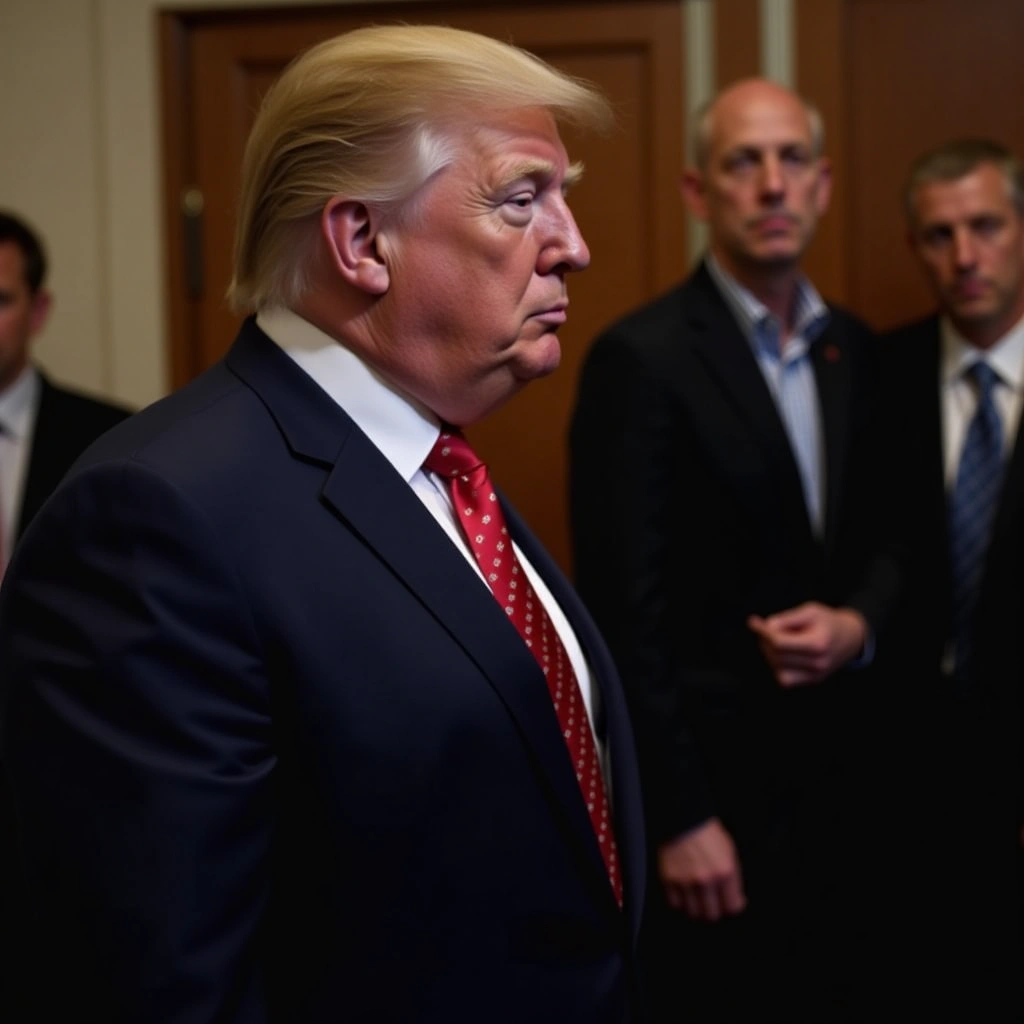
A three-judge panel of the 2nd U.S. Circuit Court of Appeals on Monday spent more than an hour questioning Trump's lawyer and a state prosecutor about the president's latest bid to shift the case from state court to federal court, where he could seek to have it dismissed on immunity grounds. There was no immediate decision. The sides were in court for the second time in 11 days as Trump pursues a two-pronged legal strategy in an attempt to erase his May 2024 conviction on 34 felony counts of falsifying business records to obscure a $130,000 payment to adult film performer Stormy Daniels.
Most people who get convicted of something and want it undone pick one appeal and hope for the best. Donald Trump has never been accused of doing things the way most people do them. He is challenging his New York hush money conviction in both state and federal court at the same time. It’s less a legal strategy than a buffet, and he’s filling two plates.
Here is what’s happening, why it matters, and why you’ll probably keep hearing about this for a while.
Quick Refresher: What Was He Convicted Of?
In case the last few years of news have blurred together, which would be understandable, here’s the short version. In 2024 a Manhattan jury found Trump guilty of 34 felony counts of falsifying business records. The case centered on how his company recorded reimbursements to his former lawyer, Michael Cohen. Cohen had paid adult film actress Stormy Daniels to stay quiet before the 2016 election about a sexual encounter she says she had with Trump. Trump has denied the encounter and has denied any wrongdoing throughout.
The case was brought by the Manhattan District Attorney’s office under Alvin Bragg. At sentencing, Trump received what’s called an unconditional discharge. That means no jail, no fine, and no probation. It does, however, leave the conviction on his record, and that’s apparently the part he finds most irritating.
So the stakes here aren’t about avoiding a prison cell. They’re about whether he stays a convicted felon. For someone who cares about his record, both the legal one and the win-loss one, that’s a big deal.
Front Number One: The Federal Court
The first battle is federal. Trump’s lawyers have been trying to move the case out of New York state court and into federal court. A three-judge panel of the 2nd U.S. Circuit Court of Appeals recently heard arguments and questioned lawyers on both sides about that attempt.
The argument rests on immunity. In 2024 the U.S. Supreme Court ruled that presidents have broad immunity from criminal prosecution for official acts. Trump’s team argues that some of the evidence used at trial involved conduct from his time in office. In their view, that makes this a matter for federal court. Moving it there, they hope, would give him a better path to having the conviction thrown out.
You can see why a defense team would try this. When the Supreme Court gives you a new legal tool, you use it on everything nearby. The catch is timing. The conduct at the heart of the case, the hush money payment, happened before he became president. Prosecutors have argued that this was a case about personal business records, not presidential duties. Putting “official acts” and “hush money reimbursements” in the same sentence takes some effort.
Still, appeals courts don’t hold arguments just for fun. The judges’ questions suggest they’re taking the issue seriously, even if nobody can say yet which way they’ll lean.
Front Number Two: The State Court
At the same time, Trump is pursuing a more traditional appeal in New York’s Appellate Division, the state’s intermediate appeals court. Arguments have been heard there too, and the court hasn’t ruled yet.
This is the standard route for anyone convicted in New York state court who believes the trial went wrong. Defense lawyers typically argue that the judge made legal errors, that certain evidence shouldn’t have been allowed, or that the prosecution’s theory didn’t hold up. You can expect the immunity question to appear here as well, since it’s the gift that keeps on giving for Trump’s legal team.
There’s also the matter of the case’s legal structure. Falsifying business records is normally a misdemeanor in New York. It becomes a felony when it’s done to commit or conceal another crime, and that two-step setup drew a lot of commentary during the trial. It’s the sort of thing appeals lawyers like to pick apart.
Why Fight on Two Fronts?
If this seems like a lot of legal activity over a sentence that included no actual punishment, you’re not wrong. But a two-track approach has a certain logic.
First, it doubles the chances. If either court gives Trump what he wants, he gets closer to erasing the conviction. Lawyers usually prefer more lottery tickets to fewer, especially when the client is famously unenthusiastic about losing.
Second, the conviction matters symbolically. It’s a historic first, and not one anyone puts on a commemorative plate. Getting rid of it would let Trump argue that the whole case was illegitimate from the start, which is roughly what he has said all along.
Third, these cases tend to shape future law. How courts handle presidential immunity in a state criminal case could matter long after this particular dispute is resolved. Whatever happens, legal scholars will be writing about it for years. Law students, start your highlighters.
What Happens Next?
The honest answer is that we wait. Neither the 2nd Circuit panel nor the New York Appellate Division has issued a final word on these challenges. Courts are not known for speed, and appeals courts in particular move at a pace somewhere between “deliberate” and “is anyone still in the building?”
When the rulings arrive, whoever loses is likely to appeal again. In the state system that could mean New York’s highest court, the Court of Appeals, which is a confusing name for the top court in a state but here we are. On the federal side, the road could eventually lead back to the U.S. Supreme Court. Given how central its immunity ruling is to the argument, that wouldn’t be shocking.
The Bottom Line
Trump was convicted, sentenced to essentially nothing, and is now spending a great deal of legal effort making sure even the “essentially” goes away. He’s pursuing that in two court systems at once, with the federal side built on the Supreme Court’s immunity decision and the state side running a more conventional challenge to how the trial was handled.
Whether you see this as a legitimate fight against an unfair prosecution or an elaborate effort to scrub an inconvenient record probably depends on how you felt about the case to begin with. Either way, the hush money saga isn’t over. It has just moved to a different courtroom. Actually, two of them.
Inspired by: “Trump appeals to state and federal courts to erase hush money criminal conviction” (r/News)