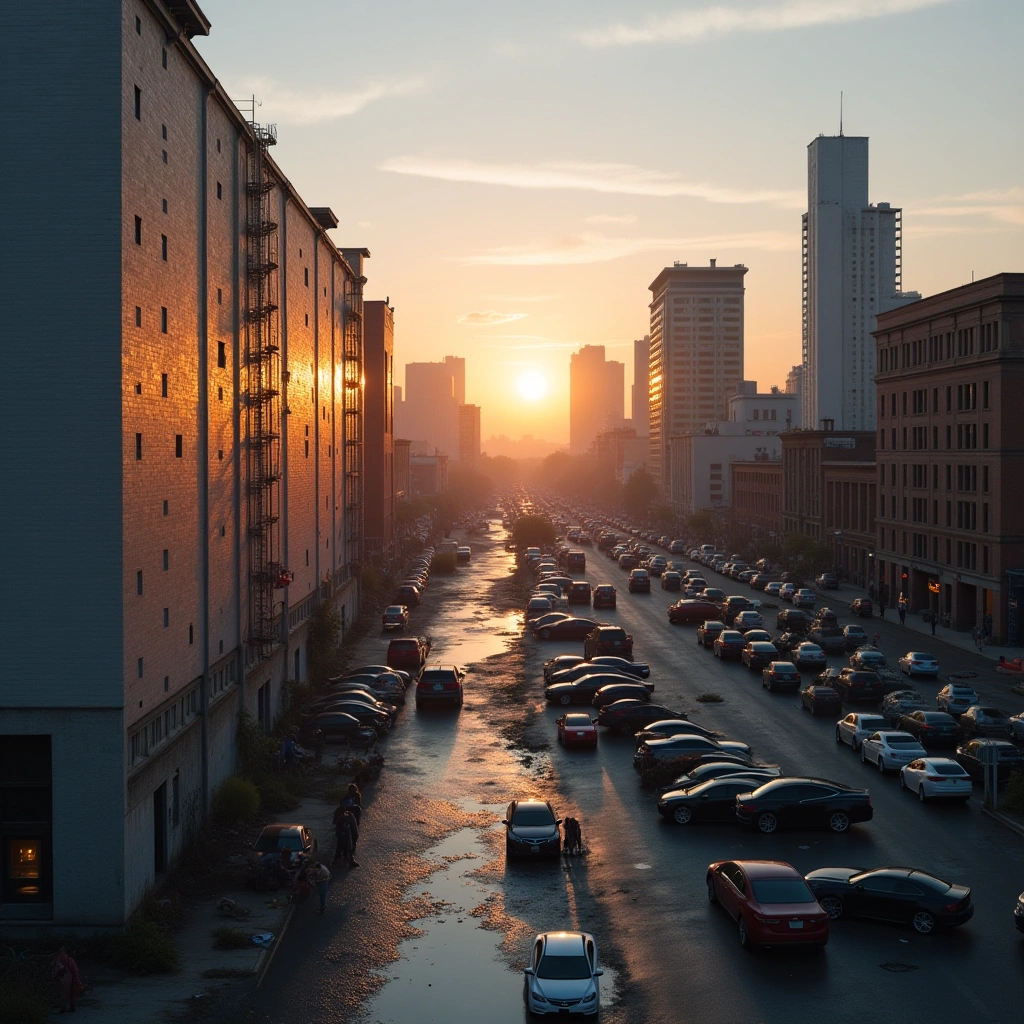
Nipsco said on Sunday that it was restoring power to everyone as soon as possible and estimated Gary would have its electricity restored by Wednesday. "We recognise how frustrating and difficult it is to be without power for an extended period," the company said in a statement. Indiana's Governor Mike Braun said on Sunday that there was "no excuse for these delays". He has requested a quicker major disaster declaration from the Federal Emergency Management Agency (Fema), which would unlock further help. With climate change making extreme weather more severe and frequent, such power outages are likely to become a more common problem.
Ah, Gary, Indiana. The town that once boasted a booming steel industry and a young Michael Jackson, but now feels more like a cautionary tale than a thriving community. In recent years, Gary has become a poster child for the adverse effects of climate change, particularly on those who are already down on their luck. It’s almost like being stuck in a bad sequel of a movie that nobody wanted to see in the first place.
So, what’s the deal? Climate change is not just a distant threat lurking in the shadows; it’s a heavy rain cloud hanging over cities like Gary, where the most vulnerable populations are often the hardest hit. You see, when disaster strikes—think floods, heatwaves, or even just a particularly moody weather pattern—it’s usually the people with the least resources who feel the brunt of it. And let’s be honest, the folks in Gary are not exactly rolling in dough.
The reality is that those who live in economically disadvantaged areas often lack the means to prepare for or recover from climate-related disasters. Imagine trying to evacuate your home when you barely have enough money for gas, let alone a hotel room or a plane ticket to somewhere sunny (and preferably disaster-free). It’s not like you can just swipe right on Airbnb and find yourself a cozy spot in the mountains.
In Gary, the consequences of climate change are compounded by years of economic decline, leaving many residents without the financial safety net that could help them weather the storm—literally. When severe weather events occur, these communities often face the double whammy: not only do they deal with the immediate impacts, but they also struggle with long-term recovery. It’s like being stuck in a game of Monopoly where you never pass Go and always end up in jail.
Let’s not forget that climate change doesn’t discriminate; it affects everyone. However, it does have a knack for targeting the most vulnerable among us. The wealthy can afford to build fancy flood barriers or relocate to high ground—wherever that might be in their gated communities—while the less fortunate are left to fend for themselves. It’s almost like Mother Nature has a twisted sense of humor, picking favorites based on bank accounts.
So, what can be done? For starters, we need to raise awareness about these issues and advocate for policies that help vulnerable communities like Gary. Investing in infrastructure that protects against climate change can make a world of difference. Think stormwater management systems, affordable housing in safer areas, and community resources to help residents prepare for disasters. It’s time to make sure that everyone has a fighting chance against the whims of climate change.
In conclusion, Gary, Indiana is a stark reminder that climate change is not just an environmental issue; it’s a social justice issue. It’s a wake-up call for all of us to pay attention to the struggles of those who are often overlooked. If we want to build a more resilient future, we need to ensure that no one is left behind—especially not the folks in Gary who are just trying to navigate life while dodging the next climate disaster. Let’s roll up our sleeves and do better, shall we?
Inspired by: “Gary, Indiana’s suffering is a reminder that the people most vulnerable to a climate-fueled disaste…” (r/climatechange)