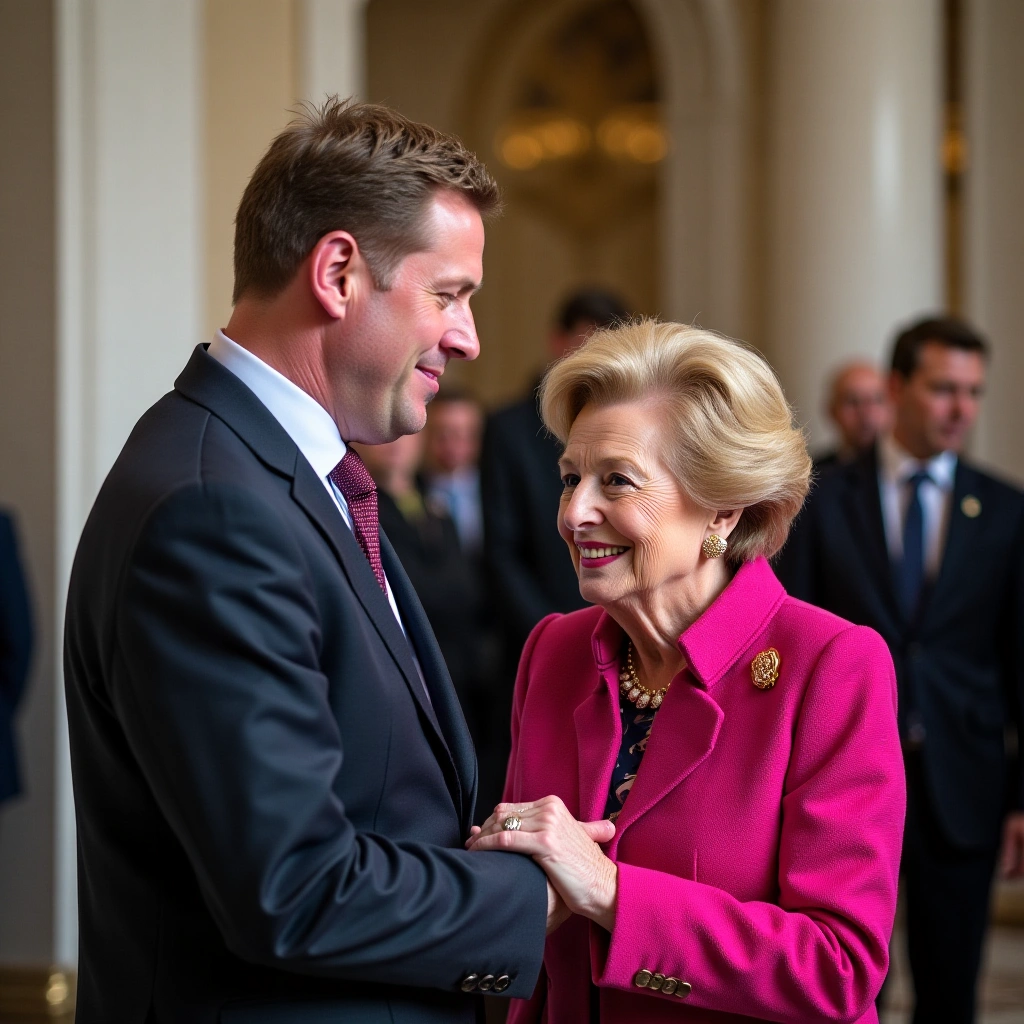
Audiences at Conservative party conferences are not easily surprised, but Robert Jenrick’s revelation drew audible gasps: yes, he said, his daughter’s middle name was really Thatcher.
Politics has a way of producing moments that are almost too neat to be real, and this one is a good example. Robert Jenrick, who sat on the Conservative benches for years and is now with Reform UK, stood up to criticise Margaret Thatcher. According to reports, he said her government left a “deep scar” on industrial areas and described her as a “dated” reference. Then came the detail that got everyone talking: Jenrick gave one of his daughters the middle name Thatcher, which he has previously described as a way of honouring her.
So, to put it plainly, he named a child after her and then said she damaged the places she was supposed to be helping. You could be forgiven for reading that twice.
To be fair to Jenrick, it is possible to admire someone and still think they got important things wrong. Plenty of people feel that way about historical figures, and British politics is full of them. Thatcher is one of the most divisive prime ministers the country has had. Supporters point to her economic reforms, her hostility to trade union power and her role in the Cold War, and they see a leader who was willing to make unpopular decisions. Critics point to the deindustrialisation of the 1980s, the closure of large numbers of coal pits, the bitter miners’ strike of 1984 to 1985, and the job losses that hit mining towns, steelworking communities and manufacturing regions very hard. For many people in those places, the debate is not abstract. It is about what happened to their streets, their pubs, their pits and their parents’ jobs.
That is why the phrase “deep scar” landed the way it did. Whatever you think of Thatcher, it is hard to deny that large parts of the industrial North, the Midlands, South Wales and Scotland were transformed in ways that are still felt decades later. Describing that as a scar is not an outrageous claim. What irritated critics was the timing and the personal link. If you believe a politician did lasting harm, then naming a daughter after her does seem to undercut the point, or at least invite questions about what the name is meant to signal.
Other politicians were quick to point out the apparent contradiction, and it is not hard to see why. It is the sort of gap that practically writes its own headline. Critics argued that you cannot really claim to be embarrassed by a legacy while publicly tying your family to it. Supporters might reply that people can hold mixed views about a figure, appreciating some achievements while condemning others. Both points are reasonable, but the second one tends to sound better in a calm seminar than in a fast-moving news cycle.
There is also a broader pattern here that is worth noticing. Political parties change, alliances shift and individual politicians reposition themselves, sometimes quite dramatically. When someone moves from one side to another, they often find that their past statements and personal choices get dragged back into the light. A middle name is a small thing, but it is also a symbol, and symbols are exactly what voters and commentators love to pick over.
It is also worth remembering that the debate about Thatcher has never really gone away. Every few years someone revisits her legacy, whether through a film, a documentary, an anniversary or a speech like this one. That tells you something: the question of what her government meant for Britain is still unresolved in many people’s minds. The honest answer is probably that it depends on where you lived, what work you did and what you expected from government.
So where does that leave Robert Jenrick? Possibly in the awkward position of having to explain a gap between his words and his family choices, which is never a comfortable spot for a politician. Whether that matters to voters is another question entirely. Some will shrug, some will be annoyed and some will simply enjoy the irony. For everyone else, the episode is a reminder that Thatcher is still one of the most powerful names in British politics, and that giving a child her name is apparently still a statement, whether you intend it or not.
Inspired by: “Reform’s Robert Jenrick hits out at Margaret Thatcher for leaving ‘deep scar’ in industrial areas..…” (r/News)