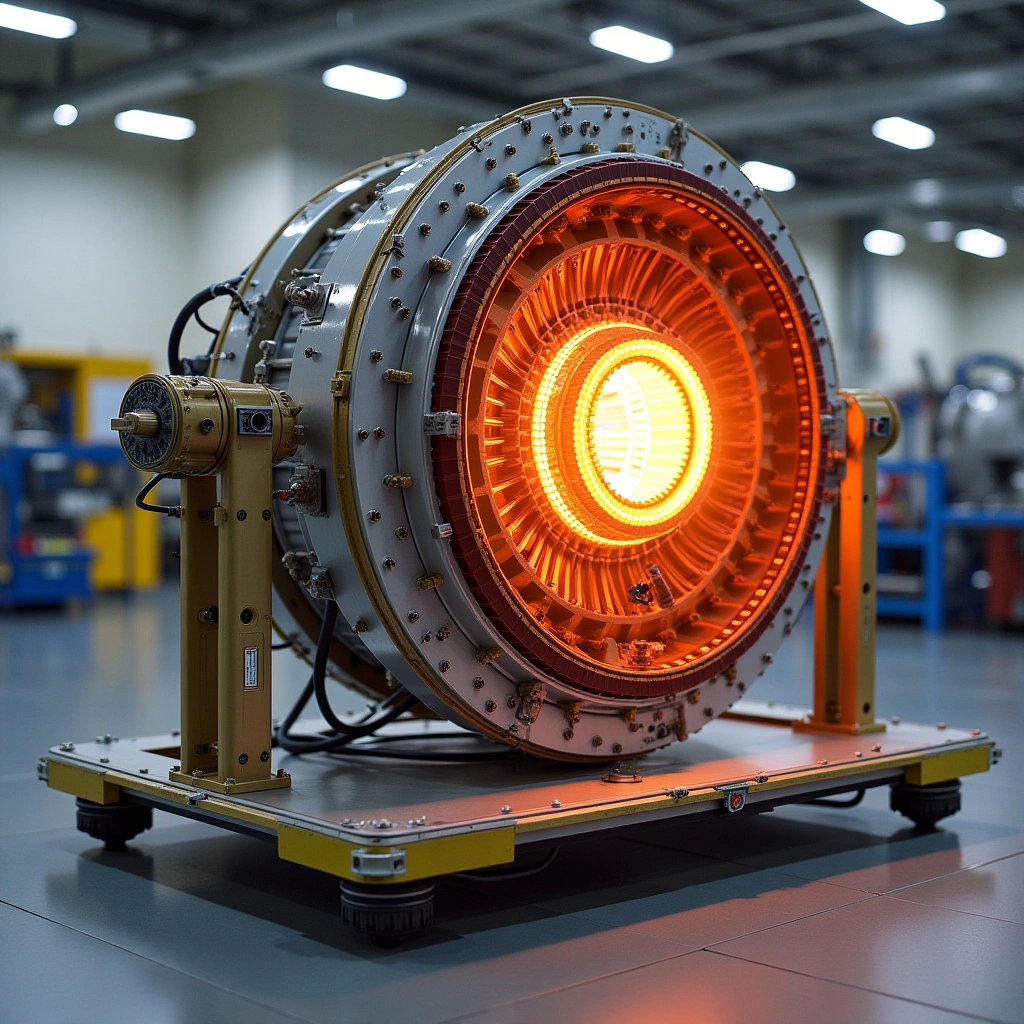
Hey there, space enthusiasts and casual stargazers! Buckle up because NASA just lit a fire under our collective imaginations—or should I say, an electromagnetic thruster? That’s right, folks! In a thrilling display of scientific prowess, NASA has powered up a prototype of its electromagnetic thruster inside a vacuum chamber, reaching an astonishing 120 kilowatts. That’s like running your toaster, microwave, and a small spaceship all at once—if only it could make me breakfast too!
This milestone marks the highest power levels achieved in U.S. tests of an electric propulsion system, and let’s be real, it’s a big deal! If you’re wondering what an electromagnetic thruster even is, fear not! It’s basically a fancy way of saying “let’s use electricity to make things go zoom in space.” These babies work by generating thrust through electromagnetic forces, which is a lot cooler than it sounds—like a sci-fi movie but with fewer aliens (for now).
Now, you might be asking, why do we even need these thrusters? Well, if you’ve ever tried to find a parking spot at the mall during the holiday season, you know that maneuverability is key. The same goes for space travel! Conventional rockets burn fuel like it’s going out of style, which is fine for getting off the ground, but once you’re cruising through the cosmos, we need something more efficient. Enter electric propulsion, which can get us to distant planets or even asteroids faster, cleaner, and with fewer dramatic explosions. (Sorry, Hollywood!)
Not only does this technology promise to reduce fuel costs, but it also opens up the possibility of long-term space missions. Imagine astronauts zipping around in a spacecraft powered by electromagnetic thrusters! It’s like the ultimate road trip but with zero gas stations and a never-ending supply of freeze-dried food. Yum!
However, let’s not get too carried away. While 120 kilowatts is impressive, we’re not exactly ready to pack our bags for Mars just yet. There are still challenges to overcome, such as scaling this technology for real-world applications and ensuring it can withstand the harsh conditions of space travel. But hey, if anyone can figure it out, it’s NASA. They’ve got more brains per square foot than a college library during finals week!
So, what does this mean for the future of space exploration? Buckle in, because it could mean faster trips to the Moon, Mars, and beyond! And who knows? Maybe someday we’ll be using these thrusters to make intergalactic coffee runs. Until then, let’s just sit back, relax, and keep our eyes on the stars. Who’s ready for a cosmic adventure?
In conclusion, NASA’s electromagnetic thruster is not just a cool gadget; it’s a game changer in the world of propulsion technology. So here’s to future space explorers! May your journeys be swift, your snacks plentiful, and your thrusters ever so powerful. Until next time, keep looking up!