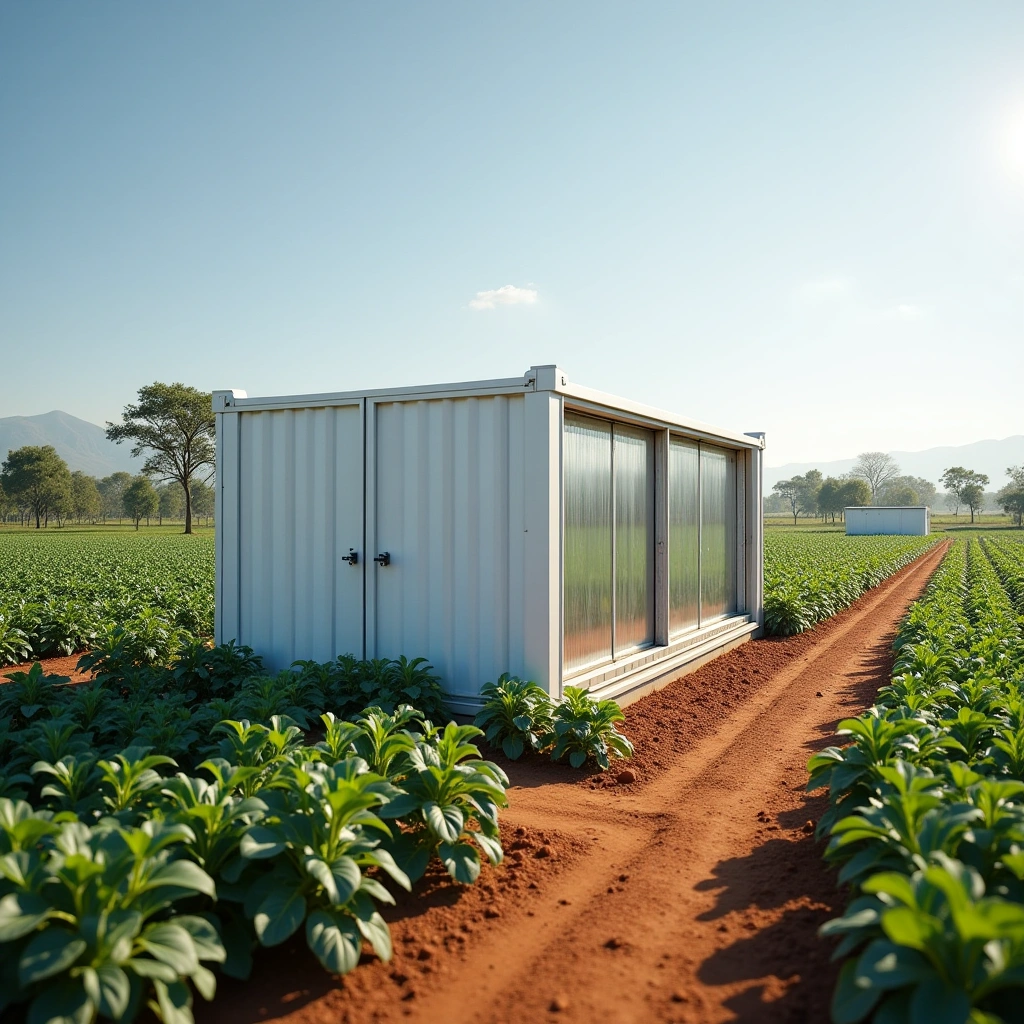
Post-harvest food losses in Africa are estimated at up to 40% due to poor infrastructure, extreme heat, and unreliable electricity grids that make traditional refrigeration expensive or impractical. Solar-powered cold storage addresses this by providing off-grid cooling solutions that allow smallholder farmers to preserve perishable goods without relying on costly diesel generators or unstable power networks. This shift enables farmers to reduce spoilage rates from up to 50% to under 2%, granting them the flexibility to wait for better market prices and access global export markets. Companies like SoKo Fresh in Kenya, ColdHubs in Nigeria, and AkoFresh in Ghana have pioneered pay-per-use models that make these technologies accessible, significantly boosting farmer incomes while cutting greenhouse gas emissions.
Let’s talk about a game changer in the agricultural scene across Africa: solar-powered cold storage. Yes, you heard that right. It’s not just a fancy gadget for hipster farmers; it’s a lifeline for many who are trying to keep their crops fresh and their profits up.
Imagine this: you’re a farmer in a remote village, working hard all season to grow delicious fruits and vegetables. You’ve nurtured your crops like they’re your own children (because, let’s face it, they kind of are). But then comes the dreaded harvest season, and you realize you have no way to keep your produce fresh. With no cold storage, you’re looking at a post-harvest loss of up to 50%. Yep, you read that correctly. Half of your hard work could just go down the drain. Talk about a bad day!
Enter solar-powered cold storage. This innovative technology is like a superhero for farmers, swooping in to save the day. By harnessing the power of the sun, these systems keep crops cool and fresh, reducing post-harvest losses to under 2%. That’s right—2%! Suddenly, your children (ahem, crops) don’t have to perish in the heat. They can be preserved, enjoyed, and sold without the threat of spoilage hanging over their heads.
But wait, there’s more! Not only does this technology help in preserving crops, but it also improves the quality of produce. You see, fresher crops mean better quality, and better quality means happier customers—both local and international. Farmers can now access lucrative international markets that they previously could only dream of. Imagine sending your perfectly preserved mangoes to markets abroad while you sit back and sip on a cool drink, knowing you’ve got a steady income coming in.
And let’s not forget about the elephant in the room: electricity. In many parts of Africa, reliable electricity is about as rare as finding a unicorn. Traditional cold storage relies on a stable power supply, which can be costly and unreliable. But with solar-powered systems, farmers can wave goodbye to those worries. The sun is free, folks! And it shines pretty reliably in most parts of Africa.
So, what does this mean for the future? Well, it’s a bright one—pun intended. Solar-powered cold storage is not just a trend; it’s a sustainable solution that empowers farmers, improves food security, and supports local economies. As more farmers adopt this technology, we could see a significant reduction in food waste and a boost in agricultural productivity. Plus, it’s a win for the environment, as it reduces reliance on fossil fuels and lowers carbon emissions.
In conclusion, solar-powered cold storage is transforming agriculture across Africa in ways that are nothing short of impressive. It’s helping farmers keep their crops fresh, cutting down on waste, improving quality, and tapping into international markets—all while reducing their reliance on expensive electricity. So, next time you bite into a delicious African mango, remember the solar-powered technology that made it possible. It’s not just a fruit; it’s a triumph of innovation and sustainability. Cheers to that!
Inspired by: “Solar-powered cold storage is transforming agriculture across Africa, helping farmers preserve peri…” (r/climatechange)