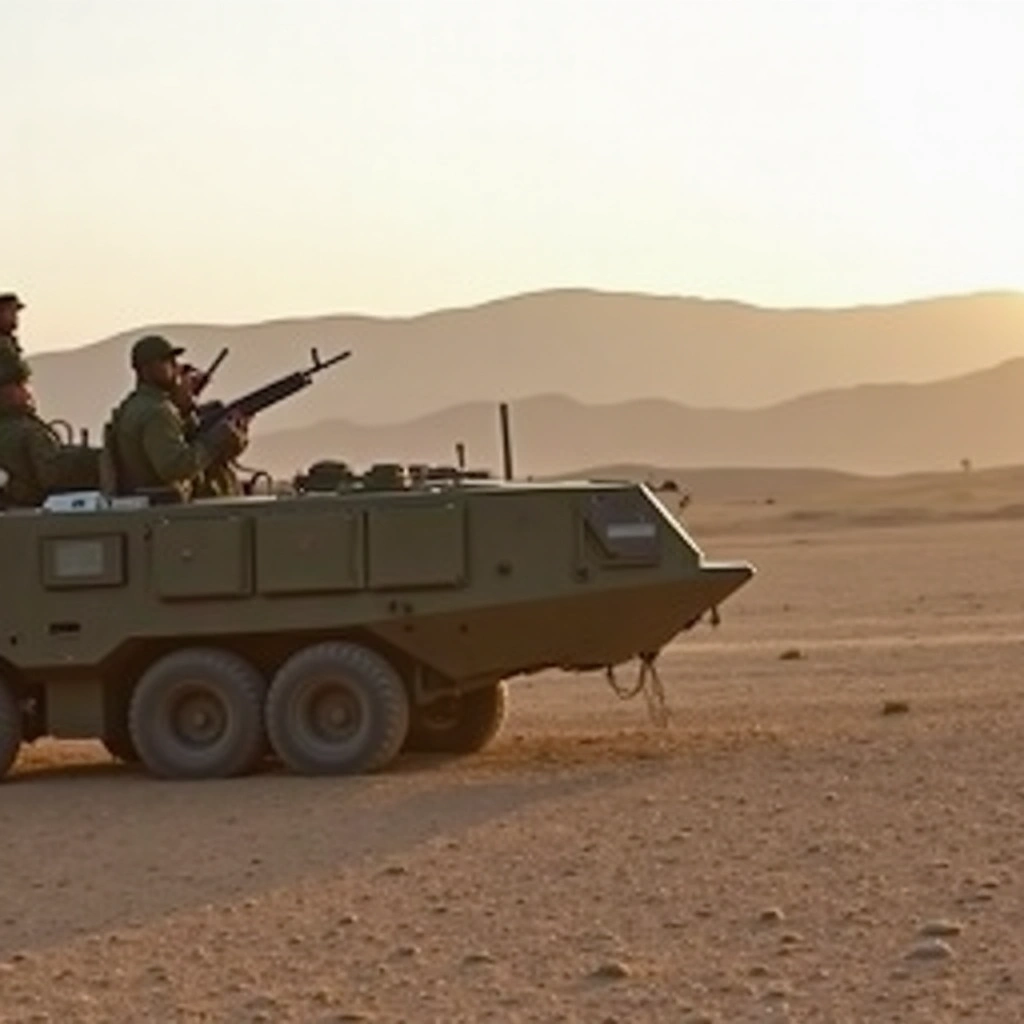
Kata’ib Hezbollah (KH; Arabic: كتائب حزب الله, lit. ‘Battalions of the Party of God’), also known as the Hezbollah Brigades, is an Iraqi Shia paramilitary group under the command of Iran’s Islamic Revolutionary Guard Corps and a nominal component of the Iraqi Popular Mobilization …
If you’ve been following Iraq headlines lately, you may have noticed a name popping up again and again: Kataib Hezbollah. Iraqi Prime Minister Ali al-Zaidi has reportedly ordered security forces to prepare for action against the group, which is one of the most powerful Iran-aligned Shi’ite militias in the country. That is a big deal, and it deserves more than a quick skim. So let’s walk through what the group is, why it matters, and why the current situation is so tangled.
Start with the basics. Kataib Hezbollah is an armed Shi’ite group in Iraq that receives backing from Iran. It is not a small fringe outfit. It has built real military and political influence over the years, and it has been a major player in the wider network of Iran-aligned armed groups across the region. If you ever wondered why Iraq’s politics feel like a crowded room where everyone is holding a weapon, this is part of the reason.
The group’s roots go back to the years after the 2003 US-led invasion, when many armed factions emerged to fight foreign forces and compete for power in a country in chaos. Kataib Hezbollah became known for attacks on US troops and for a hardline stance against American influence in Iraq. The United States later designated it a terrorist organization, a label that still shapes how Washington deals with the group.
Here is where things get complicated, and where the sarcasm starts to write itself. Kataib Hezbollah is part of the Popular Mobilization Forces, a state-linked umbrella of armed groups that was formally integrated into Iraq’s security structures. That gives the militia a semi-official status. In plain terms, it operates in a gray zone where it is not fully an arm of the state, yet it is not purely a private militia either. Critics have pointed out that this arrangement lets the group enjoy the perks of official legitimacy without the accountability that usually comes with it. It is a bit like being invited to the party, handed a seat at the head table, and then insisting you are just a guest who happens to be carrying a rifle.
The current controversy centers on money. Officials accuse Kataib Hezbollah of running a smuggling ring that diverted hundreds of millions of dollars’ worth of state oil. The group denies the allegations. Those kinds of claims are serious, and they go to the heart of the trust problem in Iraq. Oil revenue is the lifeblood of the government, and any suggestion that armed groups are siphoning it off goes straight to the question of who really holds power.
That is also why some headlines have described the group as receiving state salaries. Reports have highlighted that a militia designated as a terrorist organization by some governments is still drawing money connected to the Iraqi state. Whether you see that as a practical compromise or a glaring contradiction probably depends on where you sit politically, but it is hard to ignore the irony.
So what happens next? The prime minister’s order suggests the government is at least considering a harder line. Whether security forces actually move against the group, and how far that goes, remains to be seen. Iraq has a long history of announcements that do not quite match reality, and armed groups with deep roots are not easy to dislodge. Still, the fact that the government is talking about action at all marks a shift worth watching.
The bigger picture is that Kataib Hezbollah sits at the intersection of Iraqi sovereignty, Iranian influence, and American pressure. Every move it makes is read through all three lenses. For readers trying to make sense of the news, the key takeaway is this: this is not just a story about one militia. It is a story about who controls Iraq’s institutions, who benefits from its wealth, and whether the state can enforce its own rules on groups that have grown too comfortable inside it.
Keep an eye on the coming weeks. The details will matter, and so will the claims that get proven or disproven along the way.
Inspired by: “Explainer-What is Iraq’s Kataib Hezbollah militia?” (r/News)