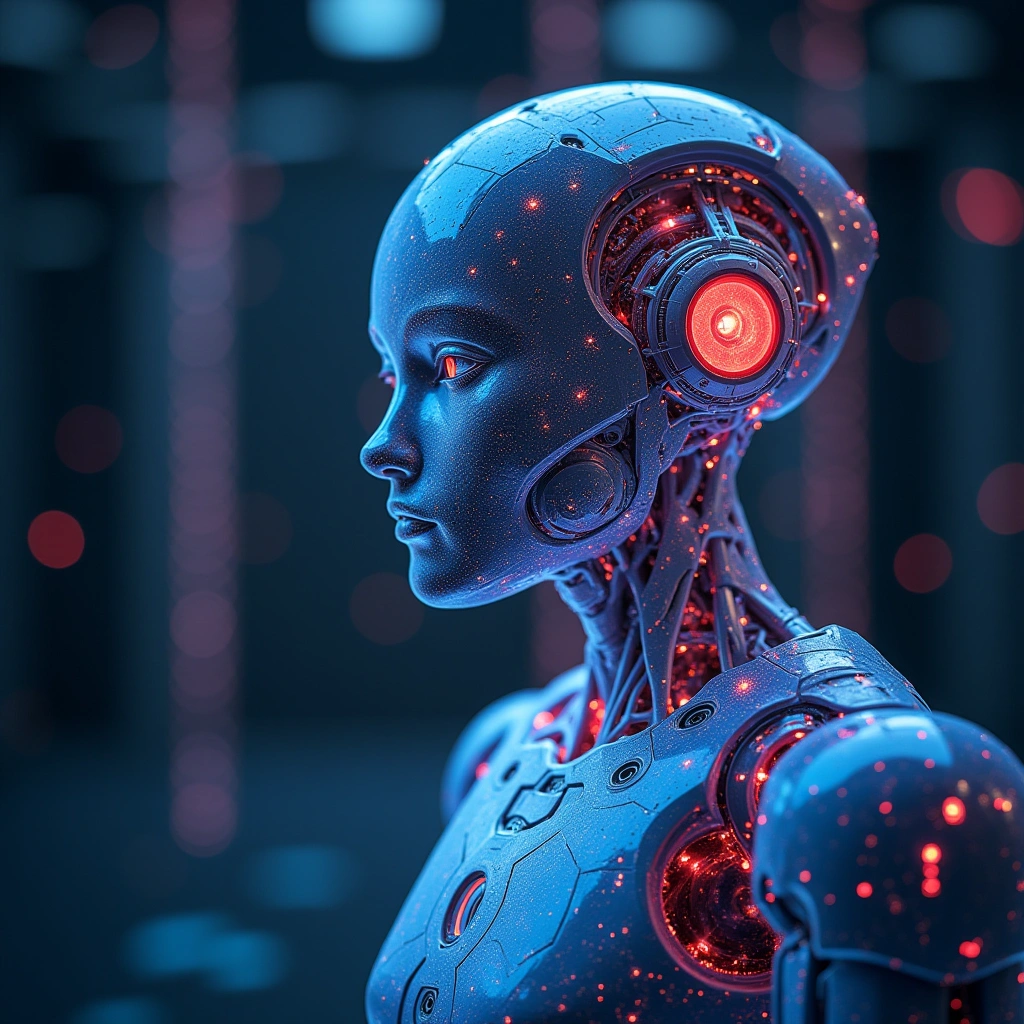
Hey there, fellow internet wanderers! Buckle up because today we’re diving into a topic that might just make you raise an eyebrow or two: China’s latest venture into the realm of artificial intelligence (A.I.) and its ambitious goal of predicting political risks. Yes, you heard that right! Not only is the country working on its next-gen smartphones, but it’s also developing tech that could potentially decide who might be an ‘enemy of the state.’ Talk about a plot twist straight out of a sci-fi thriller!
Related reading: Original source
According to a recent article in the New York Times, the Chinese government is aiming to utilize A.I. to identify individuals who could pose a political risk—think of it as a high-tech crystal ball that’s not only looking into the future but also judging everyone who looks at it funny. I mean, come on, who thought we’d be living in a time where our social media posts could land us on a watchlist?
Now, before you start picturing a dystopian world where your toaster is judging your breakfast choices, let’s break it down. This A.I. venture isn’t just about snitching on you for your unpopular opinions about pineapple on pizza. It’s a complex system that analyzes data from various sources—social media activity, public speeches, and perhaps even your favorite cat video. If A.I. can predict when your cat is about to knock over a vase, it can surely figure out who might disrupt the political status quo, right?
But hold on a second! Is this really the future we want? A world where algorithms have the authority to decide who gets to voice their opinions? Sounds a bit like a plotline from a George Orwell novel, doesn’t it? And let’s be real here, we all know that algorithms can have a mind of their own. Remember the time when YouTube recommended five hours of conspiracy theories after just one click on an innocent cat video? Yeah, I’d be worried if I were on the receiving end of that A.I. judgment.
Critics are understandably raising concerns about privacy and the potential for abuse. What happens when an algorithm mistakenly flags someone for their political views? I mean, one minute you’re tweeting about how much you love a good avocado toast, and the next, you’re on a watchlist because the A.I. thinks you’re advocating for a breakfast revolution. How does one even defend themselves against an A.I. that can’t understand sarcasm? Spoiler alert: you can’t.
On the flip side, supporters argue that this technology could be beneficial for national security. After all, understanding potential threats before they arise sounds like a reasonable approach. But can we really trust a system that might misinterpret a meme as a manifesto? It’s a slippery slope, my friends, and one that might need a bit of careful navigation.
So, what’s the takeaway here? Should we be wary of A.I. predicting our every move, or should we embrace it as a necessary evil for the sake of security? As our tech-savvy friends in China dive headfirst into this brave new world, let’s keep our eyes peeled and our opinions loud. Because if A.I. is going to be watching us, we might as well give it something entertaining to watch!
In conclusion, while China’s project to predict political risks using A.I. could be seen as a bold step into the future, it raises a lot of eyebrows—and not just in the context of a good meme. Let’s hope that whatever emerges from this tech venture, it doesn’t come with a side of dystopia. After all, we still need to keep debating the important issues, like whether or not pineapple belongs on pizza.
Inspired by: “New York Times: China Aims A.I. at Predicting Who Could Pose a Political Risk” (r/technology)