Category: Politics

  • AI and Espionage: The New Partnership Between the US Government and Anthropic

    AI and Espionage: The New Partnership Between the US Government and Anthropic

    Well, well, well! Grab your popcorn, folks, because the world of politics just got a new twist that even the best Hollywood screenwriters couldn’t concoct. The US President’s administration is in talks with Anthropic, the AI company that sounds like it could be a character from a sci-fi movie, to let our dear old spy agencies use its AI tools. I mean, who doesn’t want a little bit of robot help when snooping around?

    For starters, let’s talk about the elephant in the room: privacy. It seems like every time we blink, there’s a new gadget or AI tool that promises to make our lives easier, but at what cost? With Anthropic’s AI potentially in the hands of our government, it could get a bit… 1984-ish. Just imagine: You’re scrolling through your phone, and suddenly there’s a pop-up saying, “Hey, we know you had tacos for dinner last night. Want to discuss your life choices?” Creepy, right?

    But let’s not put on our tinfoil hats just yet! Anthropic is known for focusing on AI safety and ethical considerations. So, it’s like having a watchdog, but instead of barking, it just sends you a polite email reminding you to mind your own business. Funny how that works, huh?

    Now, the practical side of this partnership is something to consider. With AI tools, our spy agencies could potentially analyze data at a speed that would make even the Flash jealous. Imagine collecting and processing information from millions of sources, all while sipping coffee in a cozy office! It’s like having a super-smart intern who doesn’t need bathroom breaks. Brilliant!

    However, here’s where it gets interesting. Think about the implications of this technology. If the government can spy on us more efficiently, are we entering a realm where our every move could be monitored? Will our smart fridges report us for late-night snacks? “Sorry, but your midnight ice cream binge is now flagged as suspicious activity!”

    And let’s not forget about international relations. Other countries might just decide that if the US is getting all snazzy with AI, they need to up their game too. It’s like a tech arms race, but instead of missiles, we’re talking about algorithms. Who knew that the future of warfare would involve more coding than combat?

    In conclusion, the partnership between the US administration and Anthropic is a double-edged sword. On one hand, we could see significant advancements in intelligence gathering, but on the other, we risk stepping into a world where privacy is just a fond memory. So, what do you think? Are we ready for our AI overlords, or are we just setting ourselves up for a plot twist that even Netflix couldn’t predict? Let the debates begin!


    Inspired by: “US President administration and Anthropic finalizing deal to let US spy agencies use its AI tools.” (r/technology)

  • The White House App: Government Efficiency or Digital Overreach?

    The White House App: Government Efficiency or Digital Overreach?

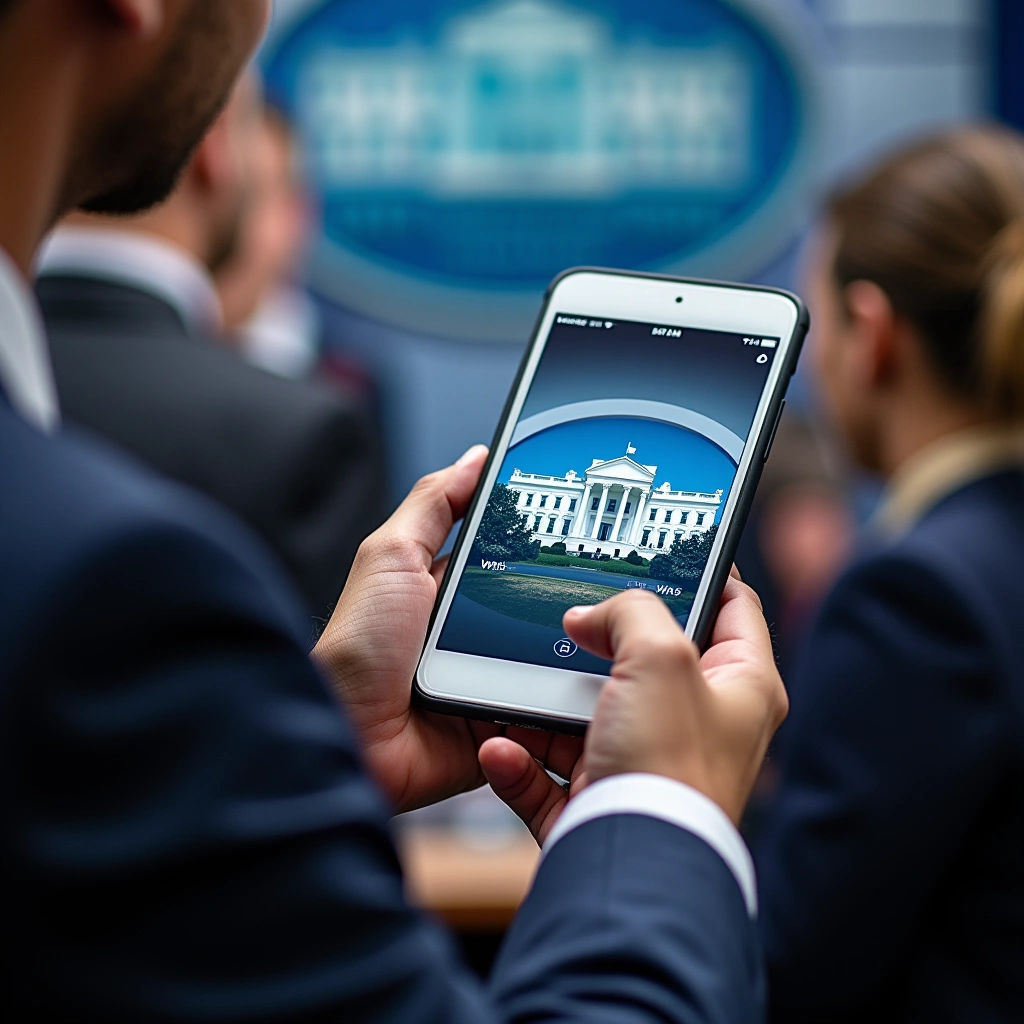
    Hey there, fellow internet wanderers! Gather around, because today we’re diving into a juicy topic that’s hotter than a jalapeño in July: the White House’s recent decision to mandate that all government employees download its shiny new app on their phones. Yes, you heard that right! And no, this isn’t some elaborate prank pulled off by your mischievous uncle.

    Let’s break it down. The administration is on a mission, and it seems their tool of choice is an app. Now, whether this app will be the next best thing since sliced bread or just another digital weight on our already overloaded smartphones is still up for debate. But hey, at least it gives us something to talk about at the water cooler!

    First off, let’s give credit where credit is due. The idea of having a centralized app to streamline communication and access to resources might sound wonderful on the surface. Who doesn’t want a one-stop-shop for government-related info? Want to know if you can take a day off? Check the app! Need to find out if your expense report has been approved? Check the app! Wondering when the next government shutdown will be? Oops, that’s a different app altogether!

    However, this approach raises a few eyebrows. For starters, how many of us have seen apps that promise the moon and deliver a potato? The last thing we need is another app that drains our batteries faster than a toddler at a candy store. Plus, let’s not forget about privacy concerns. Are we really ready to hand over even more data to the government? You know, the same folks who struggle to keep their websites from crashing during open enrollment? Yeah, no thanks.

    And speaking of privacy, can you imagine the conversations happening in those government offices? “Hey, did you download the app yet? No? Oh boy, you’re gonna get a stern talking-to from HR!” It’s like high school all over again, but instead of detention, you get a ‘government compliance’ notice. Sounds like a hoot!

    Let’s also consider the tech-savvy folks—those who can barely read a map without Google Maps, let alone navigate a potentially glitchy app. Are we really expecting our government employees to be app gurus? What’s next, mandatory TikTok dance challenges to promote efficiency? Just kidding… for now.

    But hey, maybe this app will be a game-changer! Maybe it’ll revolutionize the way we interact with government services. Who knows, it could lead to a whole new era where we can actually get through to a human being without losing our sanity. If it works, I’ll personally host a celebratory dance party and invite the developers. But if it flops, I hope they at least have a good sense of humor about it.

    In conclusion, while the White House’s push for this app might come from a place of wanting more efficiency, it’s essential to tread carefully. After all, we want our government to be efficient, not just another app that makes us want to throw our phones out the window. So, what do you think? Is this app a brilliant move or just a digital disaster waiting to happen? Let the debate begin!


    Inspired by: “The White House is ordering agencies to place its new app on all employees’ government phones” (r/technology)

  • Grok: The Chatbot That Can’t Catch a Break — Why Even the Government Is Ghosting xAI

    Grok: The Chatbot That Can’t Catch a Break — Why Even the Government Is Ghosting xAI

    Ah, Grok. The chatbot that everyone seems to be talking about but nobody wants to date. It’s like that one friend who shows up to parties uninvited and just sits in the corner, awkwardly sipping on a soda while everyone else is having fun. According to a recent Reuters report, it looks like government and enterprise customers are giving Grok the cold shoulder. I mean, can you blame them?

    First off, let’s talk about expectations. When xAI launched Grok, they basically promised us the chatbot equivalent of a superhero — capable of saving us from mundane tasks and rescuing us from the depths of confusion. Instead, it seems to be more like that one sidekick who can’t quite keep up. You know, the one who trips over their own cape and ends up knocking over the snacks at the party? Yeah, that’s Grok.

    Now, you might be wondering why government agencies and enterprises are turning their backs on Grok faster than we turn away from that embarrassing video of our high school talent show. Well, let’s break it down. For starters, these organizations are looking for reliability. They want a chatbot that can handle loads of complex queries without breaking into a digital sweat. But what they’re getting instead is a chatbot that struggles to answer the most basic questions. It’s like asking your dog for directions — cute, but ultimately unhelpful!

    Then there’s the issue of trust. In a world where data breaches are as common as avocado toast in a hipster café, businesses are understandably cautious about adopting new technology. If Grok can’t even manage a coherent conversation, how can it be trusted with sensitive information? It’s kind of like letting a toddler pilot a plane — not the best idea!

    And let’s not forget the competition. With other AI chatbots out there flexing their conversational muscles like they’re training for the Olympics, Grok has a lot of catching up to do. I mean, when your competitors are busy winning gold medals in customer satisfaction and Grok is still trying to figure out what “hello” means, you know you’ve got a problem. It’s like bringing a spoon to a knife fight!

    But here’s the kicker: The backlash against Grok isn’t just about performance or trust issues. There’s a growing sentiment that we might be putting too much faith in AI to solve our problems. People are starting to wonder if these chatbots are just a shiny distraction from the real issues at hand. Are we really ready to hand over our conversations to a bunch of algorithms? It’s a debate that’s heating up faster than a microwave burrito!

    So, what does this all mean for Grok and the future of AI chatbots? Will it rise from the ashes like a digital phoenix, or will it fade away into the annals of tech history, much like my high school band? Only time will tell! But one thing’s for sure: Until xAI gets their act together, Grok might just want to stick to the sidelines and let the real pros take the stage.

    In conclusion, Grok may have had high hopes, but sometimes, the best-laid plans go awry. Here’s hoping it can find its footing — or at least learn how to walk without tripping over its own feet!


    Inspired by: “Stop trying to make Grok happen — Reuters report suggests government and enterprise customers don’t…” (r/technology)

  • The Carney Government’s Review of Streaming Requirements: A Wild Ride in the Digital Age

    The Carney Government’s Review of Streaming Requirements: A Wild Ride in the Digital Age

    Hey there, fellow Netflix bingers and Hulu hoppers! So, the Carney government is at it again, and this time they’ve turned their magnifying glass on U.S. streaming platforms. Yep, you heard that right! They’re ‘reviewing’ spending requirements, and you know what that means—grab your popcorn and settle in because this could get interesting.

    Now, let’s break it down. What does it even mean to review spending requirements? In simple terms, the Carney government is trying to figure out how much money streaming services like Netflix, Amazon Prime, and Disney+ should be putting into Canadian content. Can you imagine if those services had to pull their wallets out and cough up some cash for our beloved maple syrup-infused films? Sounds like a sweet deal, right?

    But here’s the kicker: while it’s all fun and games until someone brings up the Canadian content, there’s a serious debate brewing. Are we really ready to force these streaming giants to invest in local talent? The argument is that Canada has a vibrant arts scene that deserves a spotlight—think of all the amazing shows and movies that could come out of this! But what if that means less money for the latest Adam Sandler flick? Now that’s a dilemma!

    On one hand, we’ve got the artists and creators who are waving their flags, saying, “Hey, we want our time to shine!” And on the other hand, we have the streaming platforms saying, “Whoa there, we’re just here for the binge-watching and the occasional guilty pleasure.” It’s like a high-stakes game of tug-of-war, where the rope is made of streaming subscriptions and the audience is just trying to find something to watch.

    Let’s not forget the economic angle here. By imposing spending requirements, the government could potentially boost job creation in the arts sector. More Canadian films could mean more jobs for writers, directors, and all those folks who make the magic happen behind the scenes. And who knows? Maybe we’ll see a Canadian superhero movie that doesn’t involve a moose or a talking beaver. (Although, that could be a hit too!)

    But, here’s where it gets controversial: what if this backfires? What if U.S. streaming services decide it’s easier to pack their bags and leave? Imagine a world where we’re stuck with only local streaming services that barely have enough content to keep us entertained. Yikes! That could lead to a massive uprising of couch potatoes demanding their beloved shows back.

    So, what’s the way forward? The Carney government needs to tread carefully. Maybe a compromise could be in the works, something like a ‘pick-and-mix’ system where streaming services can choose how they contribute to Canadian content. After all, we all deserve a little bit of everything, right? A sprinkle of Canadian drama, a dollop of American comedy, and a side of international thrillers—sounds like a balanced diet for your screen time!

    In conclusion, as the Carney government reviews these spending requirements, let’s hope they strike the right balance between promoting local talent and keeping those U.S. platforms in the game. Because at the end of the day, whether you’re Team Canada or Team Hollywood, we all just want to enjoy a good show without having to switch to a different streaming service every time we want to watch something new. Cheers to that!


    Inspired by: “Carney government ‘reviewing’ spending requirement for U.S. streaming platforms” (r/technology)

  • Breaking Down the President’s $220 Million Investment Spree: What Does It Mean for Hollywood?

    Breaking Down the President’s $220 Million Investment Spree: What Does It Mean for Hollywood?

    Well, folks, it seems our beloved President has decided to take a page out of the Wall Street playbook, and boy, is it a doozy! Picture this: a leader of the free world, not just shaking hands with world leaders, but also shaking things up in the stock market. That’s right! In Q1 of 2026, our President disclosed at least $220 million in financial transactions, splashing cash on some of the biggest names in entertainment: Paramount, Warner Bros. Discovery (WBD), Netflix, Disney, and Comcast. What does this mean? Let’s dive in!

    First off, let’s address the elephant in the room. Did anyone else get chills thinking about the day when our President might just announce a new Disney+ original series starring himself? I mean, if we can have reality TV presidents, why not a sitcom? But I digress. The real question is, why is the President putting his money where his mouth is and investing in these entertainment giants?

    Now, some might argue that it’s a brilliant move! After all, these companies are not just entertainment powerhouses; they are also cultural icons. Investing in them could be seen as a way to boost his own image or perhaps even influence the narrative in Hollywood. After all, who wouldn’t want to be on the winning side of a blockbuster franchise? Just imagine if he could get a cameo in the next Avengers film. That would be box office gold!

    On the flip side, skeptics might raise an eyebrow and ask, “Isn’t this a conflict of interest?” I mean, who wouldn’t be suspicious of a President profiting from companies he might later be regulating? It’s like letting your dog sit at the dinner table while you eat steak—just doesn’t feel right! But hey, this is America, and we do love a bit of drama, don’t we?

    Let’s break this down further. Paramount, WBD, Netflix, Disney, and Comcast are not just any old stocks; they are the juggernauts of entertainment. They control the streams, the screens, and, let’s be honest, our binge-watching habits. Investing in these companies could mean that the President is banking on a future where digital content reigns supreme. Perhaps he’s hoping to ride the wave of streaming wars like a surfer catching a big one in Hawaii. “Cowabunga, dude!”

    But wait, there’s more! You might be asking yourself, what about the implications for the average American? With so much money flowing into these corporations, does this mean we’re headed for a golden age of entertainment? Or are we just going to end up with more sequels and reboots? Because let’s be real, if I see one more reboot of a classic film, I might just lose my mind!

    In conclusion, while the President’s $220 million investment in these entertainment behemoths may seem like a bold move, it’s also a reflection of the complex relationship between politics and the media. Will this lead to a new era of more engaging content? Or are we just watching a political chess game where the stakes are as high as the box office numbers? Whatever the outcome, one thing is certain: it’s going to be one heck of a show. Grab your popcorn, folks!

  • Congress Thinks You Should Pay $130 A Year Just to Drive Your Electric Car – Here’s Why That’s Ridiculous

    Congress Thinks You Should Pay $130 A Year Just to Drive Your Electric Car – Here’s Why That’s Ridiculous

    Hey there, fellow eco-warriors and electric car enthusiasts! Grab your chargers and buckle up because we’re diving into a topic that’s got more sparks flying than a Tesla at a drag race. Yes, you guessed it – Congress has decided that if you drive an electric car, you should pay a hefty $130 a year. I mean, who knew driving green could become such a cash cow?

    Now, before you start hoarding your electric vehicle (EV) batteries like they’re gold bars, let’s unpack this ridiculous proposal. On one hand, it’s like Congress is saying, “Hey, thanks for saving the planet! Now, let’s slap a tax on that and keep the roads paved with the good old fossil fuels!”

    So, what’s the rationale behind this audacious fee? Well, proponents argue that EV drivers aren’t contributing enough to the Highway Trust Fund because they’re not buying gas. And yes, while it’s true that some of us would prefer to keep our hands off the gas pump and our feet firmly planted on the electric pedal, this logic is a bit flawed. Taxing EV drivers for not contributing to a fund designed for road maintenance is like punishing a vegetarian for not eating steak – it just doesn’t make sense!

    Let’s think this through: Congress is trying to encourage more people to ditch their gas guzzlers for cleaner alternatives. But if you’re going to hit them with a fee just because they’re environmentally conscious, it’s like putting a “No Parking” sign in front of a recycling center. Are we really going to penalize progress? Come on, Congress! Get with the program.

    And speaking of programs, let’s not forget the irony here. The whole point of driving electric is to reduce emissions and save on fuel costs. Now, Congress wants to slap an annual fee that could very well dissuade potential EV buyers from making the switch. Talk about shooting yourself in the foot! Or should I say, shooting the planet in the foot?

    Now, before you start a petition to Congress or throw your electric vehicle out the window (please don’t do that), let’s consider some alternatives. Instead of taxing EV drivers, why not offer them incentives? Maybe a tax break for every charging station they install or a reward for every mile they drive that doesn’t burn fossil fuels? Now that’s a plan I can get behind!

    In conclusion, while the intention behind this proposal might stem from a desire to fund road maintenance, the execution leaves much to be desired. Instead of penalizing the very people trying to make a difference, let’s encourage and reward them. Because if Congress wants to keep the roads nice and smooth, they should be looking to the future, not dragging us back to the past with fees that just don’t make sense.

    So, what do you think? Is Congress on the right track, or have they completely lost the plot? Let me know in the comments below – just keep it civil, alright? No need to start an electric car revolution… yet!

  • Unveiling the Secrets: How the U.S. Government Uses Spyware (and What They’re Not Telling Us)

    Unveiling the Secrets: How the U.S. Government Uses Spyware (and What They’re Not Telling Us)

    Hey there, fellow internet sleuths! Grab your tin foil hats and settle in, because we’re diving deep into the murky waters of government surveillance and spyware. You might be wondering, what exactly does the U.S. government know about us? And more importantly, what don’t they want us to know? Spoiler alert: it’s a lot, and it’s both fascinating and a little terrifying.

    First off, let’s get one thing straight: spyware isn’t just for your suspicious ex or those pesky pop-up ads urging you to click for a free iPhone. No, no, our government has taken it to a whole new level. From monitoring our communications to tracking our movements, they’ve got the tech to keep an eye on us like a hawk with a PhD in cybersecurity.

    So, how exactly does this spyware work? Well, think of it as the creepy uncle of the tech world. It’s lurking in the shadows, secretly gathering information without you ever knowing. Tools like Pegasus, which can turn your phone into a listening device, are just the tip of the iceberg. The government can deploy these tools to collect data on potential threats, but let’s be real – who’s watching the watchers?

    Now, let’s talk about what we know. Reports suggest that the government employs a variety of spyware tools to surveil everything from phone calls to social media interactions. They claim it’s all in the name of national security, which sounds noble until you realize that your every “what’s for dinner?” text could end up in a government database.

    But wait, there’s more! The U.S. government doesn’t just use homegrown spyware; they’re also tapping into commercial spyware developed by private companies. It’s like hiring a hitman but for digital snooping. And while they may say it’s for the greater good, there’s always that nagging feeling that we’re just one viral TikTok dance away from being flagged as a potential threat.

    Now, here’s where things get really juicy – or murky, depending on how you look at it. What don’t we know? For starters, the full extent of how these tools are used remains shrouded in secrecy. We all remember that moment when Edward Snowden dropped the mother of all bombshells, revealing mass surveillance programs. But what’s changed since then? The truth is, we’re still left in the dark about many operations, and the government isn’t exactly handing out VIP passes to their top-secret meetings.

    Moreover, there’s a whole gray area surrounding the legality of using such software. While they claim to operate within the law, there’s a fine line between protecting citizens and invading their privacy. Is it really protecting our freedom if we’re constantly being watched? It’s like having a bodyguard who ends up being more of a jailer.

    And let’s not forget about the ethical implications. With great power comes great responsibility, and we all know how well that worked out for Spider-Man. The potential for abuse is alarming. If the government can surveil us without clear oversight, what’s next? A digital thought police? The Orwellian nightmare is closer than we think.

    So, where do we go from here? It’s essential for us as citizens to stay informed and question the practices of our government. Knowledge is power, and in a world where your phone might just be your biggest spy, it’s time to take a stand. Maybe it’s time to invest in that old-school flip phone and go off the grid, or at the very least, start using encrypted messaging apps.

    In conclusion, while we know some things about how the U.S. government uses spyware, there’s a whole world of information that remains locked away in a vault somewhere. It’s a wild ride, and one that requires us to be vigilant, informed, and maybe a little paranoid. Because at the end of the day, who’s really keeping an eye on who?

  • Samsung Strike: South Korean Court vs Government Shenanigans – What’s Next?

    Samsung Strike: South Korean Court vs Government Shenanigans – What’s Next?

    Hey there, tech enthusiasts and fellow citizens of the internet! Grab your popcorn because the drama surrounding Samsung and the South Korean government is heating up faster than a hot plate of kimchi. Let’s dive into the nitty-gritty of the recent court ruling that has sent shockwaves through the land of K-Pop and high-tech gadgets.

    So, what happened? A South Korean court recently decided to limit the scope of strikes affecting Samsung. Yes, you heard that right! This isn’t just a regular courtroom drama; it’s more like a K-drama plot where the government plays the role of the strict parent who threatens to ground the rebellious teenager—only in this case, the teenager is Samsung, and the grounding is a little thing called emergency arbitration.

    Now, before you start picturing Samsung as a rebellious teenager sneaking out at night, let’s break it down. Workers at Samsung have been striking, demanding better working conditions, fair wages, and some semblance of work-life balance. (Who wouldn’t want that, right?) However, the government has jumped in, waving the big stick of emergency arbitration, which is basically a fancy way of saying, “Play nice, or else!”

    But here’s where it gets spicy! The court’s decision is a double-edged sword. While it limits the strikes, it also raises questions about workers’ rights. Are we really okay with a government stepping in to curb labor movements? This is South Korea we’re talking about, not a dystopian movie set!

    Of course, Samsung is not just sitting back and munching on their chips while this unfolds. They are a global giant for a reason, and they’re likely plotting their next move—probably involving a new smartphone that can make coffee or something equally extravagant. But let’s not forget the human element here. The workers are the heart and soul of this tech behemoth, and without them, Samsung would just be a shiny logo on a very expensive building.

    Now, let’s get to the juicy part. What does this mean for the average Joe or Jane? Well, if you’re a Samsung fan, you might want to brace yourself for some potential delays in your next gadget. But if you’re a worker, it’s a wake-up call. It’s time to rally the troops and stand up for what you believe in. After all, no one wants to be the person who gets grounded for not doing their homework!

    In the grand scheme of things, this court ruling and the government’s intervention could lead to a significant shift in how labor relations unfold in South Korea. It’s a tightrope walk between economic stability and worker rights, and everyone is watching closely to see how this plays out.

    So, what’s next? Will Samsung find a way to appease their workers while keeping the government off their back? Or will this strike turn into a full-blown revolution? Only time will tell! But one thing’s for sure: grab your popcorn because this saga is far from over!

  • Andreessen Horowitz: The Political Spender We Didn’t Know We Needed

    Andreessen Horowitz: The Political Spender We Didn’t Know We Needed

    Alright, folks, gather around because we need to chat about a little something called political spending. And no, I’m not talking about your buddy who throws down too much cash at the bar on taco night. I’m talking about Andreessen Horowitz, the venture capital firm that has decided to dive into the political arena like it’s a kiddie pool at a summer barbecue. Spoiler alert: it’s not just about the hot dogs.

    So, what’s the deal? Andreessen Horowitz (a16z for the cool kids) is not just your average Silicon Valley venture capital firm; they’re pulling out their wallets and splashing cash on political campaigns like it’s Black Friday and they’re the last shoppers in line for that $99 TV. According to reports, they’re spending on politics like it’s 1999 and the dot-com boom is just around the corner. But wait, why are they doing this?

    Well, the tech landscape is changing faster than you can say “disruptive innovation.” With the increasing scrutiny on big tech, a16z seems to be betting that political capital is just as valuable as financial capital. They want to influence policy that could affect their portfolio companies and, let’s be real, their bottom line. It’s like a game of chess, but instead of pawns, you have senators and representatives, and instead of a checkmate, you get tax breaks.

    Now, before you start throwing your hands up in disbelief like you just found out your favorite character was killed off in a show, let’s break this down. Political spending isn’t new in the world of business; in fact, it’s practically a rite of passage. But a16z’s approach is more like showing up at a vegan potluck with a meat platter. They’re not just dipping their toes; they’re doing a cannonball.

    Let’s not forget the potential consequences of this kind of spending. Is it ethical? Should a bunch of tech moguls be influencing the political landscape? It’s a slippery slope, my friends. One minute you’re funding a campaign to support your views on internet privacy, and the next minute you’re neck-deep in political scandals like you’re auditioning for a reality TV show. And we all know how those end up.

    But here’s where it gets really juicy: not everyone is on board with this spending spree. Critics argue that this is just another example of how the wealthy elite can buy their way into shaping policies that cater to their interests, while the average Joe is left wondering if his vote even counts. Talk about a nightmare scenario for democracy! It’s like when the Wi-Fi goes out during a crucial game – chaos ensues!

    In conclusion, while Andreessen Horowitz may be spending on politics like there’s no tomorrow, it’s essential to keep an eye on the implications of such actions. Will they be the saviors of democracy or the villains in a tech-themed horror story? Only time will tell. Until then, let’s grab some tacos, raise a glass to democracy, and hope our votes count for something—at least until the next big spending wave rolls in!

  • The U.S. President Phone: Delays, Drama, and Daring Deliveries!

    The U.S. President Phone: Delays, Drama, and Daring Deliveries!

    So, it’s finally happening! After what feels like a century of waiting (thanks to delays and the occasional scam accusation), the U.S. President-branded smartphone, aptly named the T1, is set to ship this week. Yes, you heard that right! The device that promises to be the most powerful gadget in your pocket, right next to your emergency chocolate stash, is almost here!

    But let’s take a moment to unpack this whole saga, shall we? When U.S. President Mobile first announced their intention to enter the smartphone arena, it was met with a mix of excitement and skepticism. A smartphone by a political figure? It sounded like the plot of a bad sitcom. “Coming this fall: The President’s New Phone!”

    As the months dragged on, rumors began to swirl like leaves in a hurricane. Delays were blamed on everything from supply chain issues to alleged “foreign interference” (talk about a plot twist!). And let’s not forget the scandalous accusations that had conspiracy theorists working overtime. Was it really a phone, or just a fancy paperweight? Some said it was a scam, while others insisted it was just the slowest tech launch since the invention of the toaster.

    Now, here we are, on the brink of the T1’s release. What can we expect? According to the hype train chugging along the internet tracks, this phone is packed with features that might make even the most jaded tech enthusiast raise an eyebrow. We’re talking about a camera that can take pictures of your future (or at least your cat), a battery life that could outlast your grandma’s stories, and an operating system that promises to be as smooth as a politician’s speech — but with fewer empty promises.

    Of course, not everyone is convinced this device will live up to the hype. Skeptics are already polishing their keyboards, ready to unleash their hot takes as soon as the first reviews drop. “Will it actually work, or will it just give me a headache?” they ask, while secretly praying for a miracle. And let’s face it, with the way things have been going, we might need a miracle for this launch to go smoothly.

    In the end, whether you’re a die-hard supporter or a casual observer, there’s no denying that the T1 phone is about to make waves — for better or worse. So, grab your popcorn, folks! It’s time to see if the U.S. President Mobile can deliver a device worthy of its lofty name, or if we’ll be left with yet another tech tale of woe. Who knows? This could either be the next big thing in smartphones or just another story for the ages!

    Remember, in the world of tech, it’s always best to keep your expectations low. After all, if this phone can survive the drama, maybe it truly is presidential material!