Category: Human Interest

  • DoorDash and the Rise of the Dot Robots: A New Era in Food Delivery

    DoorDash and the Rise of the Dot Robots: A New Era in Food Delivery

    If you’ve ever ordered food through DoorDash, you might have noticed a little something missing: the delivery person who often shows up late with your cold pizza. Well, brace yourself, because DoorDash is shaking things up with their new Dot robots, and they’re getting some human help to load these little delivery machines.

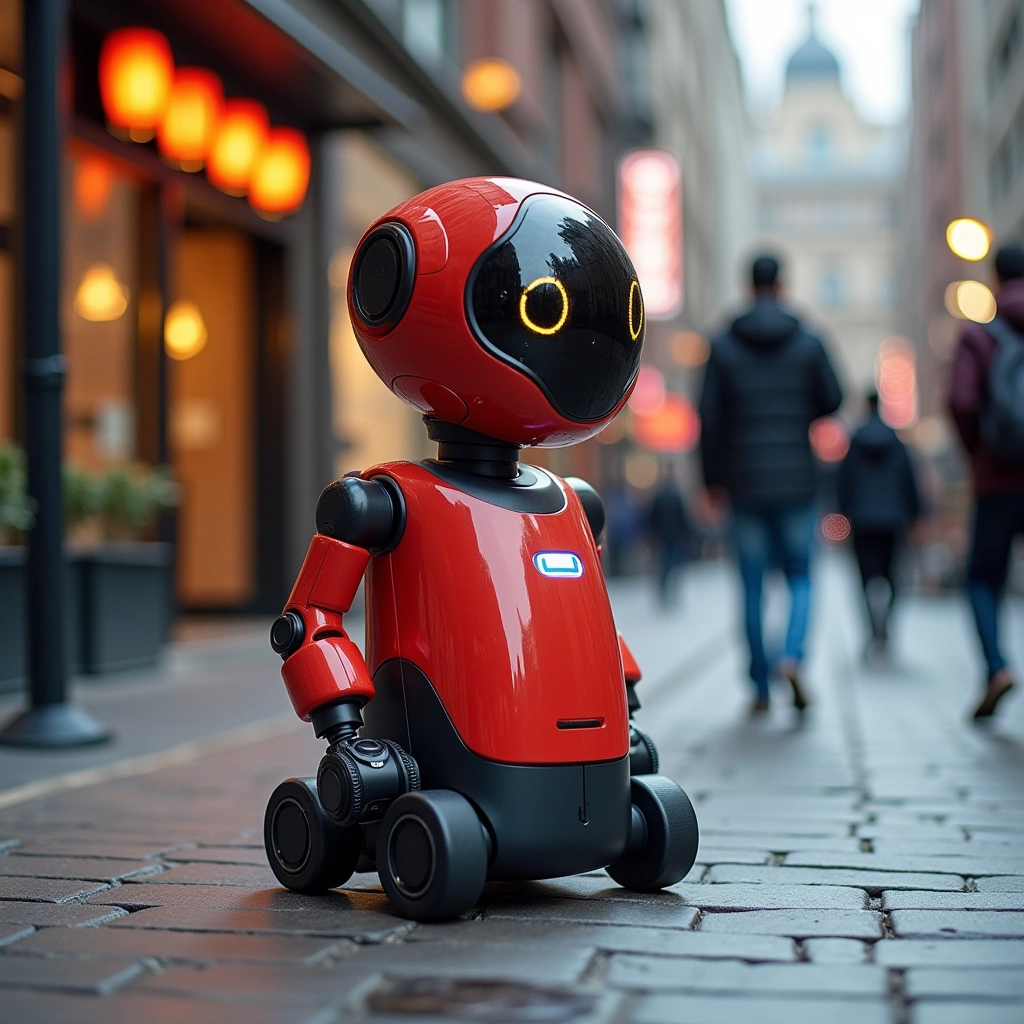
    DoorDash has launched Dot, a 350-pound autonomous delivery robot, marking its first major standalone push into autonomous vehicle technology. Designed to navigate roads, bike lanes, and sidewalks at speeds up to 20 mph, Dot represents a strategic shift toward a hybrid delivery model that integrates robots, drones, and human Dashers via a new Autonomous Delivery Platform. Initially deployed in the Phoenix metro area, the initiative aims to optimize local commerce efficiency while addressing the logistical challenges of the "first and last ten feet" of delivery.

    Yes, you heard that right. DoorDash is now paying workers to load up these Dot robots with orders. It’s like a futuristic twist on a classic job, where instead of running around delivering food, you get to play a game of Tetris with burritos and burgers. Sounds fun, right?

    Now, before you start picturing yourself as the next robot food loader extraordinaire, let’s dive a bit deeper into what this actually means. The Dot robots are essentially autonomous delivery vehicles that can navigate sidewalks and streets to bring your food right to your doorstep. They’re like the little cousins of the self-driving cars we keep hearing about. And let’s be honest, they’re probably much less likely to get into an accident—unless they encounter a rogue squirrel.

    So, what’s the deal with loading these robots? Well, DoorDash has figured out that while robots can handle the delivery part, they still need a human touch when it comes to loading up those delicious meals. This is where the workers come in. They’re tasked with ensuring that the robots are stocked and ready to hit the road. Think of them as the pit crew for your late-night snack runs.

    But why is DoorDash going this route? For one, it’s all about efficiency. By using Dot robots, they can potentially reduce delivery times and cut down on the number of drivers needed on the road. This means quicker tacos for you and less stress for drivers who often have to navigate through traffic like they’re in a Fast and Furious movie.

    And let’s be real, who wouldn’t want to see a robot trundling down the street with a bag of fries? It’s like the future we were promised, complete with a side of convenience. Plus, for the workers loading the robots, it’s a gig that might be more appealing than the traditional delivery job. No more dealing with cranky customers who are upset because their pizza is 10 minutes late. Instead, you just load up the robot and let it do the rest.

    However, it’s not all sunshine and rainbows. There are concerns about job displacement, as robots become more capable of handling tasks that humans used to do. But for now, the loading jobs are a step in the right direction—at least until the robots learn how to load themselves.

    In conclusion, DoorDash’s foray into using Dot robots for delivery is an intriguing development that could change the food delivery landscape. It’s a blend of human and machine working together, which is a bit like a buddy cop movie, but with less drama and more pizza. So, the next time you order from DoorDash, just remember: behind that cute little robot could be a hardworking human making sure your food arrives hot and fresh. And who knows, maybe one day you’ll find yourself loading up a Dot robot too, living your best food delivery life in the process.


    Inspired by: “DoorDash pays workers to load Dot robots with orders” (r/technology)
  • Windows 11 Just Got a Little Friendlier for 8GB RAM Users

    Windows 11 Just Got a Little Friendlier for 8GB RAM Users

    If you’re one of the many folks rocking a PC with 8GB of RAM, you might want to sit down for this one—Microsoft has decided to sprinkle a little optimization magic on Windows 11 just for you. Yes, you heard it right! No more feeling like your computer is dragging its feet through molasses while trying to run your favorite programs. Let’s dive into what this means for you and your trusty machine.

    Microsoft has officially prioritized memory optimization for Windows 11 systems with 8GB of RAM, aiming to fix sluggish performance that has long plagued budget hardware. This strategic shift acknowledges that rising DRAM prices and AI-driven memory demand have made 8GB configurations the new norm, forcing the OS to become more efficient rather than relying on higher hardware specs. By reducing the memory footprint of core components like WinUI 3 and WebView2, Microsoft intends to make these PCs viable for everyday tasks like browsing and productivity by the end of 2026.

    First off, let’s talk about what optimization really means. In simple terms, it’s like giving your computer a pep talk and a strong cup of coffee. Microsoft has tweaked the way Windows 11 manages resources so that it can run more smoothly on machines with 8GB of RAM. This is the kind of news that makes you want to do a little happy dance around your living room (or at least nod approvingly while sipping your coffee).

    Now, if you’re wondering why 8GB of RAM is such a focal point, let’s break it down. While 16GB and 32GB are the new cool kids on the block, 8GB is still the most common configuration in many budget-friendly and mid-range PCs. It’s the sweet spot for casual users, gamers on a budget, and anyone who just wants their computer to work without throwing a tantrum every time they open a web browser and a few apps.

    So what exactly did Microsoft do? They’ve optimized memory management and made some under-the-hood adjustments so that Windows 11 can allocate resources more efficiently. This means you might notice faster app launches, smoother multitasking, and fewer instances of the dreaded ‘spinning wheel of doom.’ You know, that little circle that taunts you while your computer takes its sweet time to process your commands.

    But wait, there’s more! Alongside these performance enhancements, Microsoft is also working on better power management features. This is especially good news for laptop users who want to squeeze out as much battery life as possible while still being able to run multiple programs without feeling like they’re trying to juggle flaming swords.

    In a world where we’re constantly pushing our devices to do more—streaming, gaming, working from home, or simply trying to keep up with our never-ending list of tabs—having a system that can handle it all without breaking a sweat is crucial. And let’s be honest, we’ve all been there: staring at our screens, willing them to just work already, while we contemplate whether it’s time to throw in the towel and start using a typewriter.

    Now, before you start daydreaming about all the things you can do with your newly optimized Windows 11, let’s keep a couple of things in mind. While these improvements are fantastic, they don’t mean that your 8GB RAM PC is suddenly going to perform like a high-end gaming rig. If you’re trying to run the latest AAA games on ultra settings, you might still be in for a world of disappointment. But for everyday tasks? You’re in for a treat.

    So, what should you do now? If you haven’t already, make sure your Windows 11 is up to date. These optimizations are rolling out gradually, so you may need to check for updates to get your hands on them. And while you’re at it, it might be a good time to clean up that desktop clutter and uninstall any programs you haven’t touched in ages. Because let’s face it, if you haven’t used that 3D modeling software since 2019, it’s probably time to let it go.

    In conclusion, Microsoft’s latest optimization for Windows 11 is a welcome relief for 8GB RAM users. It’s like getting a new lease on life for your computer, making it feel a bit more sprightly and responsive. So, embrace these changes, keep your system updated, and enjoy a smoother computing experience without the urge to throw your PC out the window. Happy computing!


    Inspired by: “Microsoft improves Windows 11 optimization for PCs with 8GB RAM” (r/technology)

  • Foldables: The New Boring Trend That’s Actually Great for Apple

    Foldables: The New Boring Trend That’s Actually Great for Apple

    Remember when foldable phones were the hottest topic in tech? It was like watching a magic show where the magician pulls an endless stream of phones out of a hat. Everyone was dazzled, and we all thought, “Wow, the future is here!” Fast forward to today, and it seems like foldables have taken a backseat in the tech race. They’ve become, dare I say, boring. And honestly, that’s great news for Apple.

    Foldable phones have evolved from fragile, expensive novelties into mature, durable devices with thinner profiles, crease-free displays, and water resistance, making the category "boring" but ready for the mainstream. This technological refinement has paved the way for Apple’s entry with a rumored foldable iPhone (potentially called the iPhone Ultra) expected in September 2026, alongside the iPhone 18 Pro. Apple’s arrival is seen as a market turning point that could drive widespread adoption by offering premium hardware and optimized iOS multitasking, potentially capturing a significant share of a segment that currently holds only 1.6% of the smartphone market.

    Let’s take a moment to appreciate the rollercoaster that is the foldable phone market. Initially, it was all about innovation—Samsung launched the Galaxy Fold, and suddenly everyone wanted a phone that could bend and twist like a pretzel. But as time went on, the novelty wore off faster than your favorite shirt after a few washes.

    Why? Because the reality of foldables is a bit… underwhelming. Sure, they look cool, but many users found that they preferred the classic, reliable design of a traditional smartphone. After all, who wants to deal with a phone that might snap in half like a cheap piece of origami? Plus, the price tags on these foldables are enough to make you gasp. You could buy a decent used car for the cost of some of these fancy gadgets.

    Now, you might be thinking, “What does this have to do with Apple?” Well, my friend, it’s all about market dynamics. With foldables losing their pizzazz, Apple can sit back and watch the chaos unfold. While other companies scramble to keep up with the latest bendy trends, Apple is sticking to its tried-and-true formula. And let’s be honest, Apple has never been one to jump on a trend just because it’s shiny and new. They prefer to let others test the waters before making their grand entrance.

    This is where the magic happens. As foldables fizzle out, Apple can capitalize on their reputation for quality and user experience. They can continue refining their iPhone lineup, improving battery life, camera quality, and software features without the pressure to conform to the latest gimmick. Instead of worrying about how to make a phone fold in half, Apple can focus on making the best smartphones in the market.

    Moreover, the current state of foldables gives Apple a unique opportunity to position itself as the safe choice. When consumers see the mixed reviews and concerns about durability with foldable devices, they might think twice before jumping into the foldable frenzy. They’ll remember that Apple phones are like that reliable friend who always shows up on time. You can count on them.

    In this tech landscape, where foldables are just sort of… there, Apple can shine even brighter. They can enhance their ecosystem, promote services, and keep their loyal customers happy without the distraction of a folding phone that might just break in half during a heated game of Candy Crush.

    So, here’s to boring foldables! Thanks for making Apple look like the cool kid who doesn’t need to try too hard. In a world full of flashy gadgets that are all style and no substance, Apple can keep doing what it does best—providing a seamless user experience without the risk of your phone becoming a paperweight.

    In conclusion, while foldables may have had their moment in the spotlight, it seems they’ve settled into a cozy corner of the tech world. And as they do, Apple gets to bask in the glow of being the go-to choice for consumers who prefer reliability over novelty. And really, who can blame them? After all, we all love a good underdog story—even if that underdog is just a phone that refuses to fold.


    Inspired by: “Foldables are sort of boring now — and that’s great news for Apple” (r/technology)

  • Meta’s Reality Labs: A $4.6 Billion Loss and Counting

    Meta’s Reality Labs: A $4.6 Billion Loss and Counting

    Ah, Meta’s Reality Labs. The place where dreams of virtual reality (VR) and augmented reality (AR) come to die—or at least, where they take a rather expensive detour. In the second quarter of 2026, the division reported a staggering loss of $4.6 billion. Yes, billion with a ‘B’—the kind of number that makes you consider a career change to something far more stable, like professional cat wrangling.

    Meta’s Reality Labs posted a $4.62 billion operating loss in the second quarter of 2026, pushing its cumulative deficits since late 2020 to approximately $88 billion. Although the division’s revenue grew to $431 million, the loss widened from the previous quarter’s $4.03 billion, underscoring the high costs of its pivot from VR headsets to AI-powered wearables like Ray-Ban smart glasses. Despite these massive expenditures, the results beat analyst expectations of a $5.07 billion loss, with leadership projecting that peak losses have been reached.

    This latest financial blow brings the total losses for Reality Labs to an eye-watering $88 billion. That’s right, $88 billion! To put that into perspective, if you stacked $88 billion in $100 bills, you could reach the moon and back—or at least, you could buy a pretty decent spaceship.

    Now, you might be wondering, what on Earth is happening in the land of Meta? The company, once known for connecting friends and sharing cat videos, has pivoted towards the metaverse, a digital universe that seems to be more of a mirage than a reality at this point. The grand vision is to create a virtual world where people can hang out, work, and maybe even find love—because who wouldn’t want to fall in love with a pixelated avatar?

    However, the reality of Reality Labs seems to be a tad less glamorous. Despite pouring billions into developing VR headsets and AR glasses that promise to revolutionize the way we interact with technology, consumers appear to be less than enthusiastic. The public seems to be saying, “Thanks, but no thanks,” while clutching their comfortable smartphones like a security blanket.

    You have to admire Meta’s commitment to its virtual vision. They’re like that friend who insists on organizing a group trip to a theme park, even after everyone else has bailed. “Come on, guys! It’ll be fun!” they say, while you’re just trying to figure out how to politely decline without hurting their feelings. But as the losses pile up, one has to wonder—how long can they keep this up?

    Investors might be starting to sweat a little. After all, $88 billion is a lot of money to lose without a glimmer of hope for a return. It’s like throwing a lavish party and realizing nobody showed up except that one guy who keeps asking for free snacks. At some point, you have to ask yourself if it’s time to pack up the balloons and call it a night.

    Yet, Meta continues to push forward, perhaps fueled by the belief that the metaverse is the future. After all, who wouldn’t want to don a headset and escape into a digital world where the most mundane tasks can feel like epic quests? Just imagine: grocery shopping in VR, where you can dodge virtual shopping carts and engage in epic battles for the last loaf of bread. It sounds thrilling, right?

    In conclusion, as Meta’s Reality Labs continues to accumulate losses like a hoarder collects trinkets, we can only sit back and watch the spectacle unfold. Will they turn it around and finally deliver a product that the masses actually want? Or will they keep burning cash until they’ve reached the bottom of the metaphorical barrel? Whatever happens, you can bet it’ll be an entertaining ride—and if nothing else, at least we’ll have some good stories to tell. Stay tuned, folks!


    Inspired by: “Meta’s Reality Labs division lost $4.6 billion in Q2 2026, pushing total losses toward $88 billion” (r/technology)

  • Microsoft’s Mission: Making Windows 11 Fly on Just 8GB of RAM

    Microsoft’s Mission: Making Windows 11 Fly on Just 8GB of RAM

    In a world where tech companies are constantly trying to outdo each other, Microsoft has decided to take on a challenge that many users have been quietly grumbling about: making Windows 11 run smoothly on just 8GB of RAM. Yes, you read that right! In the midst of a memory shortage that has left many of us feeling like we’re stuck in the slow lane of a digital highway, Microsoft is stepping up to the plate with some ambitious optimizations.

    Microsoft is prioritizing memory optimization for 8GB RAM PCs to address severe performance issues exacerbated by a global DRAM shortage and rising AI hardware costs that have stalled consumer RAM upgrades. This initiative aims to close the efficiency gap with competitors like Apple’s MacBook Neo, which delivers smooth experiences on 8GB through tight hardware-software integration, while Windows systems historically suffered from high idle memory usage. By reducing the OS footprint through a more efficient memory allocator, WinUI 3 tuning, and Chromium component optimization, Microsoft seeks to ensure responsive performance on budget hardware through the end of 2026.

    Now, let’s be real. If you’ve ever tried running Windows 11 on a machine with only 8GB of RAM, you might have felt like you were trying to run a marathon in flip-flops. It can be a struggle, to say the least. You open one too many tabs in your web browser, and suddenly, your computer is slower than a dial-up connection. But fear not, Microsoft is here to save the day (or at least make it a little less painful).

    The tech giant has announced that it’s kicking off a series of optimizations aimed at reducing the operating system’s memory footprint. This means that the next time you try to open your favorite productivity suite while streaming your favorite cat videos, you might actually stand a chance of not having your computer turn into a slideshow.

    So, how exactly does Microsoft plan to make this happen? Well, they haven’t given away all their secrets just yet, but they’re focusing on streamlining background processes and improving overall resource management. Think of it as spring cleaning for your operating system—removing the clutter and making it more efficient. It’s like your mom coming in and saying, “You really don’t need all those old magazines taking up space, do you?” Except, in this case, it’s Microsoft telling your OS, “You really don’t need to hog all that memory, do you?”

    One of the key components of this optimization is likely to involve better memory management techniques. Windows has always had a bit of a reputation for being a memory hog, often leaving users scratching their heads as to why their machines feel sluggish. By refining how the OS allocates and utilizes memory, Microsoft hopes to create a smoother user experience, even on machines that are a bit underpowered.

    But wait, there’s more! Microsoft’s commitment to making Windows 11 more efficient is also a response to the ongoing memory shortage. With RAM prices skyrocketing and availability dwindling, many users are stuck with what they have. It’s a bit like being on a diet during the holidays—everyone else is feasting, but you’re stuck with your sad little salad. Microsoft’s goal is to ensure that those of us who can’t (or won’t) upgrade our hardware can still enjoy a decent computing experience.

    Of course, this doesn’t mean you should throw caution to the wind and start running every single program you own simultaneously. Let’s not kid ourselves; 8GB of RAM is still a limit. But with these optimizations, you might find that you can actually multitask without feeling like you’re using a potato as your computer.

    In conclusion, Microsoft’s pledge to optimize Windows 11 for 8GB of RAM is a welcome change for many users. While we might not be able to turn our older machines into speed demons overnight, every little improvement helps. So, here’s hoping that these optimizations roll out sooner rather than later. Until then, keep those tabs to a minimum and maybe consider investing in a good old-fashioned notebook for all your ideas. After all, a little pen and paper never hurt anyone!


    Inspired by: “Microsoft vows to make Windows 11 fly on 8GB RAM amid memory shortage — optimizations to reduce OS…” (r/technology)

  • AI Act: The EU’s New Rule That Makes Sure You Know Your Chatbot Isn’t Your New Best Friend

    AI Act: The EU’s New Rule That Makes Sure You Know Your Chatbot Isn’t Your New Best Friend

    So, the European Union has decided to roll out a new rule starting August 2 that requires AI chatbots, virtual receptionists, and media to explicitly reveal that they are, in fact, not human. Yes, you heard that right—no more pretending your chatbot is your personal assistant who can understand your every whim. Now, it has to come clean about its robotic nature.

    Starting August 2, 2026, the EU AI Act officially requires all AI chatbots interacting with users in the European Union to clearly disclose their artificial nature before or at the start of a conversation. This transparency obligation applies to chatbots, virtual assistants, and other systems designed to interact directly with natural persons, ensuring users are not misled into believing they are speaking with a human. Non-compliance can result in significant fines of up to €15 million or 3% of global annual turnover.

    Let’s unpack this a bit. The AI Act is a regulation aimed at ensuring transparency and accountability in the rapidly evolving world of artificial intelligence. You know, because it turns out that people might not want to share their deepest secrets with a glorified calculator. Who would have thought?

    Imagine this: You’re having a conversation with an AI chatbot, and it’s so smooth and convincing that you almost forget it isn’t a human. You start sharing your life goals, your favorite pizza toppings, and even your existential dread about the future. Then, bam! The chatbot drops the bomb: “I’m not actually a person, just a bundle of algorithms and code.” Talk about a buzzkill!

    But here’s the kicker: this new regulation is not just about keeping things real; it’s also about protecting consumers. With the rise of AI in customer service, journalism, and even social media, there’s a growing concern that people might be misled into thinking they’re interacting with a human when they’re actually chatting with a bot. And let’s face it, some of us are already struggling with real human interactions—do we really need to add robots into the mix?

    The requirement for AI to disclose its non-human status is a big deal. It essentially aims to prevent deceptive practices, making sure that when you’re getting advice from a virtual assistant, it doesn’t lead you astray into the land of misinformation. Because we all know how reliable the internet can be… right?

    Now, you might be wondering how this will affect your everyday interactions with AI. Well, for starters, you might find yourself chuckling when your virtual receptionist has to announce, “Hello! I’m AI, not your friendly neighborhood human. Please don’t ask me about your feelings, I can’t help you there!” It’s going to be a whole new level of awkwardness, and who doesn’t love a good cringe moment?

    On a more serious note, this move from the EU is a step towards ensuring that AI systems are used ethically and responsibly. It’s about building trust, and let’s face it, we could all use a little more of that in our lives—especially when it comes to technology that’s rapidly advancing and, at times, a bit scary.

    So, as we approach August 2, keep an eye out for your chatbots and virtual assistants. They’ll be stepping into the spotlight to reveal their true identities. And who knows? You might just find yourself engaging in a more honest relationship with your digital companions. Just don’t expect them to give you advice on life—unless it’s about how to optimize your search history.


    Inspired by: “Starting August 2 in the EU, AI chatbots, receptionists, and media must reveal that they are not hu…” (r/technology)

  • The Great German Job Exodus: When Automakers Decide ‘Less is More’

    The Great German Job Exodus: When Automakers Decide ‘Less is More’

    Ah, the automotive industry. A place where dreams of sleek cars and high-speed adventures collide with the harsh realities of corporate restructuring. In a plot twist that could rival any soap opera, German carmakers are flooding the job market with managers as they cut thousands of white-collar positions. Yes, you heard that right. It’s like a game of corporate musical chairs, but instead of music, we have the sound of office chairs scraping against the floor as employees pack up their desks.

    Germany’s automotive industry is undergoing a historic structural contraction, with over 100,000 jobs lost since 2019 and massive cuts accelerating in 2025–2026 as manufacturers like Volkswagen, BMW, and Mercedes-Benz slash up to 50,000 positions to stabilize collapsing profit margins. This "less is more" strategy is driven by weakening global demand, particularly in China, intense competition from cheaper and more advanced Chinese EVs, and high production costs in Germany that have left factories with only 55% average capacity utilization. Consequently, the industry is shifting from its traditional high-volume model to a leaner, 9-million-vehicle annual capacity structure, accepting that not all German production sites can survive in the new economic reality.

    First up on the chopping block is Volkswagen, which has decided that 50,000 white-collar workers are just too many. I mean, who needs that many people sitting around in offices, right? Apparently, the folks at Volkswagen think they can save a few bucks by trimming the fat. Or perhaps they’re just trying to make room for more engineers to work on their next line of electric vehicles—because, you know, the future of cars is all about saving the planet while still looking good in the parking lot.

    Then we have BMW, which is also getting in on the fun by shedding 8,000 jobs in desk positions. Now, I’m not sure what exactly a desk job entails at BMW, but I can only imagine it involves a lot of staring at spreadsheets and dreaming of the day you can finally take that company car for a spin. But alas, those dreams are now dashed as BMW decides that less is, indeed, more.

    So, what’s the reason behind this sudden purge of managerial positions? Well, it seems that the automotive industry is going through a bit of a transformation. With the rise of electric vehicles and the need for more sustainable practices, companies are re-evaluating their workforce. It’s almost like they’ve realized that having a thousand managers overseeing three employees each isn’t the most efficient way to run a business. Who would have thought?

    This mass exodus of jobs is creating quite the stir in the job market. For every manager let go, there’s someone else out there ready to snatch up that position—because let’s face it, there are only so many ways to rephrase “Can you please file this report?” before you hit a wall. The influx of experienced managers might just make the job market a bit saturated, but hey, at least there will be more coffee breaks to go around.

    In the end, while this might seem like a catastrophe for those affected, it’s also an opportunity for others. The job market is about to get a lot more interesting, and if you’ve ever wanted to work in the automotive industry, now might just be your time to shine. Just remember to brush up on your Excel skills and practice that all-important ability to pretend you’re busy when your boss walks by.

    So, here’s to the brave souls navigating this new landscape! May your job search be fruitful and your coffee cups always full. And who knows? Maybe one day, you’ll be the one at the helm of a new electric vehicle, steering the future of the automotive world while sipping your favorite brew. Just don’t forget to send a thank you card to Volkswagen and BMW for making it all possible.


    Inspired by: “German carmakers flood jobs market with managers — Volkswagen to cut 50,000 white-collar workers in…” (r/technology)

  • Tech Titans on a Roll: Alphabet, Amazon, and Microsoft Add $1.5 Trillion in Value This Week

    Tech Titans on a Roll: Alphabet, Amazon, and Microsoft Add $1.5 Trillion in Value This Week

    Well, folks, grab your calculators and hold on to your wallets because this week, the tech giants Alphabet, Amazon, and Microsoft just decided to throw a party in Wall Street’s honor. Together, they managed to add a whopping $1.5 trillion in combined market value. Yes, you read that right—trillion with a ‘T’. If you’re wondering how much a trillion dollars is, it’s enough to buy a small country or at least a really fancy yacht. But I digress.

    Alphabet, Amazon, and Microsoft collectively added nearly $1.5 trillion to their market capitalization in a single week ending July 31, 2026, driven by strong cloud revenue growth that validated their massive artificial intelligence infrastructure investments. This surge contrasts sharply with significant sell-offs in other tech giants like Apple and Meta, highlighting a market divergence where investors are rewarding hyperscalers for converting AI spending into tangible commercial returns. The rally occurred despite rising Treasury yields and ongoing scrutiny over the $1.5 trillion in combined capital expenditures planned by the top four tech firms through 2027.

    So, what’s behind this colossal surge? It seems like these tech giants are riding a wave of optimism, fueled by solid earnings reports, innovative product launches, and a sprinkle of good old-fashioned investor enthusiasm. You know, the kind that makes you want to jump into the stock market like it’s a pool on a hot summer day. Except instead of water, it’s filled with dollar bills.

    Alphabet, the parent company of Google, has been busy flexing its muscles with advancements in artificial intelligence and cloud services. I mean, who doesn’t want their search engine to be even smarter than your average bear? With AI capabilities continually improving, Alphabet is like that kid in class who always has the right answer, and then some. Investors are clearly loving it, and that’s reflected in their stock prices.

    Then we have Amazon, which is not just about delivering your packages faster than you can say ‘Prime shipping’. The e-commerce giant has been diversifying its portfolio, expanding into areas like grocery delivery and cloud computing. And let’s not forget about the fact that they’ve become the go-to source for everything from toilet paper to the latest tech gadgets. If you can think it, Amazon probably sells it. That’s got to be worth a few extra bucks, right?

    And last but certainly not least, Microsoft is riding high on its cloud computing success with Azure and its continuous push into artificial intelligence. It’s like they took a look at the competition and said, ‘Hold my coffee while I revolutionize the tech industry.’ With their software and cloud services booming, Microsoft is showing no signs of slowing down. If anything, they’re just warming up.

    Now, for all the investors out there, this week’s growth might feel like a roller coaster ride that you’re just not ready to get off. But let’s be real—if you’re in the tech sector, this is kind of the norm. One week you’re up, the next week you’re down, and then suddenly you’re up again. It’s like a game of musical chairs, but instead of chairs, it’s market shares, and instead of music, it’s the sound of cash registers ringing.

    In conclusion, while the $1.5 trillion addition to market value is impressive, it’s essential to remember that the tech industry is as volatile as a toddler on a sugar rush. So, buckle up and keep your eyes peeled because this ride is far from over. Whether you’re an investor or just a casual observer, it’s definitely a thrilling time to pay attention to these tech giants. Who knows what they’ll do next? Maybe they’ll start a new trend in virtual reality shopping, or perhaps they’ll just continue to make our lives easier one app at a time. Either way, it’s sure to be entertaining!


    Inspired by: “Alphabet, Amazon and Microsoft added nearly $1.5 trillion in combined value this week” (r/technology)

  • CISA’s Latest Guidance: Why Water Treatment Facilities Should Hit the ‘Disconnect’ Button

    CISA’s Latest Guidance: Why Water Treatment Facilities Should Hit the ‘Disconnect’ Button

    In a world where everything seems to be getting smarter—smart homes, smart fridges, and even smart toasters (seriously, do we need a toaster that can tweet?)—it seems the U.S. Cybersecurity and Infrastructure Security Agency (CISA) has decided to take a step back and remind us that not all technology is created equal. In a recent advisory, CISA has urged water treatment facilities to disconnect equipment from the internet. Yes, you heard that right. It’s time to put those Wi-Fi-enabled water pumps on a strict digital diet.

    CISA and the EPA have issued urgent guidance for water utilities to disconnect internet-exposed Programmable Logic Controllers (PLCs) and Human-Machine Interfaces (HMIs) following a surge in coordinated cyberattacks. These intrusions, attributed to threat actors such as Iranian-linked groups, involve attackers locking out operators by changing passwords and IP addresses, which has already forced facilities to issue boil-water notices and revert to manual operations. The agencies emphasize that even mature security programs often miss undocumented external connections, such as cellular modems, making immediate isolation and the use of secure VPNs critical to preventing physical damage and service disruption.

    Now, before you roll your eyes and think, “Oh great, another government agency telling us what to do,” let’s break down why this is an important—and somewhat necessary—recommendation.

    The Problem with Connected Facilities

    Imagine this: You’re enjoying a glass of water, blissfully unaware that your local water treatment facility is connected to the internet like a teenager glued to TikTok. While that might sound convenient, it also opens the floodgates (pun intended) to potential cyber threats. Cyberattacks on critical infrastructure have become more common, and unfortunately, water treatment plants are not immune.

    In fact, just a few years ago, a ransomware attack targeted a water treatment facility in Florida, attempting to poison the local water supply. Yes, you read that correctly. It was like something out of a dystopian movie, but instead of a heroic protagonist, we just had a bunch of IT guys frantically trying to save the day.

    Disconnecting: A Simple Solution?

    CISA’s guidance is all about reducing the risk. By disconnecting from the internet, water treatment facilities can significantly lower the chances of a cyberattack. It’s like putting a ‘Do Not Disturb’ sign on your door—sure, it might be a little inconvenient for the occasional delivery person, but it keeps the unwanted visitors away.

    Of course, this doesn’t mean that facilities should just throw their hands up and call it a day. Disconnecting from the internet can pose challenges in terms of monitoring and maintenance. But let’s face it, if the alternative is risking the safety of our drinking water, I think we can all agree that a few more trips to the plant might be worth it.

    The Bigger Picture

    This guidance from CISA isn’t just about water treatment facilities. It’s part of a larger conversation about cybersecurity across all critical infrastructure. From power grids to transportation systems, the interconnectedness of our technology can be both a blessing and a curse. While we love the convenience of smart systems, we can’t ignore the fact that they’re also a cybercriminal’s playground.

    So, what can we do as everyday citizens? Well, for starters, we can advocate for better cybersecurity practices in our communities. Whether it’s writing to local officials or simply staying informed about these issues, every little bit helps.

    In Conclusion

    While it might feel like a step back into the technological Stone Age, CISA’s guidance is a necessary reminder that sometimes, less is more—especially when it comes to the safety of our water supply. So, the next time you take a sip of water, just remember: it’s not just refreshing; it’s also a little less likely to be hacked, thanks to some wise advice from CISA. Cheers to that!


    Inspired by: “CISA Releases Guidance Urging Water Treatment Facilities to Disconnect Equipment From the Internet” (r/technology)

  • Linux Breaks the 10% Barrier in North America: Is the World Turning a New Leaf?

    Linux Breaks the 10% Barrier in North America: Is the World Turning a New Leaf?

    Well, well, well, it seems Linux is finally getting its moment in the spotlight! According to StatCounter, Linux’s market share in North America has breached the coveted 10% mark for the first time. Yes, you heard that right! For all those years of loyal service and countless hours spent in command line hell, Linux users can finally raise their glasses (or cups of coffee, let’s be honest) and toast to this milestone.

    Linux desktop usage in North America reached 10.65% in July 2026, marking its first double-digit milestone according to Statcounter and supported by Cloudflare data. This sharp increase, which nearly doubled from June’s 5.52%, is likely influenced by improved traffic classification rather than a sudden mass migration, though it reflects years of ecosystem maturation. Gaming improvements via Valve’s Proton and Steam Deck, combined with user frustration over Windows’ rising hardware requirements and telemetry, have made Linux a more viable alternative for privacy-conscious and tech-savvy users.

    Now, you might be wondering what this actually means. A 10% market share might not seem like much when you compare it to giants like Windows and macOS, but in the world of operating systems, this is akin to a small indie band suddenly selling out stadiums. It’s a sign that more people are realizing that there’s life outside the Windows bubble—and it’s not just filled with terminal commands and endless updates.

    So, what’s driving this surge in popularity? Well, several factors are at play here. First off, the rise of remote work has pushed many individuals and businesses to explore alternatives to traditional operating systems. With remote work comes a need for flexibility and customization—two things that Linux is known for. You can tweak it, mold it, and make it fit your needs like a comfy pair of sweatpants after a long day.

    Additionally, let’s not forget the influence of the tech-savvy younger generation. They’re not just content to accept whatever software is handed to them; they want to explore, learn, and yes, even break things. Linux offers that playground—and let’s face it, who doesn’t love a good challenge?

    And speaking of challenges, we can’t ignore the fact that more organizations are embracing open-source solutions. With the growing concerns around privacy and data security, many companies are opting for Linux-based systems that allow them to have more control over their data. Who wants to hand over their personal information to a giant corporation when they can keep it safe and sound in their own little Linux fortress?

    Of course, with every silver lining comes a cloud. Linux is still often considered the nerdy cousin at family gatherings—great to have around, but not quite mainstream. The learning curve can be intimidating for newcomers. Let’s face it, not everyone wants to spend hours learning the ins and outs of the terminal when they could be binge-watching their favorite series instead. But hey, that’s what tutorials and community support are for, right?

    So, what does this mean for the future? Well, if Linux continues on this upward trajectory, we might see more software developers prioritizing Linux compatibility. And who knows? In a few years, we could be looking at a world where Linux isn’t just a niche player but a serious contender in the operating system arena.

    In conclusion, Linux breaking the 10% market share mark in North America is a big deal, folks. It’s a sign of change—change that could lead to more innovation, better software solutions, and maybe even a little more diversity in the tech world. So, whether you’re a die-hard Linux fan or just someone who’s curious about what all the fuss is about, now’s the time to pay attention. The Linux train is leaving the station, and it’s picking up speed. Hop on, or get left behind—your choice!


    Inspired by: “Linux’s market share in North America has breached 10% for the first time, says StatCounter” (r/technology)