Category: Business

  • Tokenized Securities: The Future of Finance or Just Another Tech Buzzword?

    Tokenized Securities: The Future of Finance or Just Another Tech Buzzword?

    There is a good chance that this … catalyst for exponential growth of tokenized securities. Tokenization provides an opportunity to update the technology behind capital markets and increase access to capital globally ….

    The financial world is buzzing, and it’s not just because of the latest stock market fluctuations. No, this time it’s all about the Depository Trust & Clearing Corporation (DTCC) and its shiny new Tokenization Service (DTS). Yes, you heard that right—tokenization is making its way into the world of traditional finance, and major players like JPMorgan, Morgan Stanley, and Bank of America are jumping on the blockchain bandwagon.

    So, what’s the big deal? Well, the DTS is designed to connect traditional securities infrastructure with the magical world of blockchain technology. It’s like mixing peanut butter and chocolate—two great tastes that taste great together, assuming you’re into that sort of thing. The platform currently supports a modest 34 assets, which is a starting point, but let’s be honest, it’s just the tip of the iceberg.

    Now, these aren’t just any banks; we’re talking about the financial behemoths that oversee more than $114 trillion in assets. Yes, trillion with a ‘T’. That’s enough money to buy a small country or fund several years’ worth of overpriced avocado toast for millennials. The DTCC’s goal here is to allow these institutions to convert eligible holdings into digital tokens that can be easily transferred. It’s like turning your grandma’s old jewelry into digital art—except, you know, with a lot more regulatory scrutiny.

    But why tokenization? Well, in theory, it promises faster transactions, lower costs, and more transparency. Imagine being able to transfer your stocks as easily as sending a text message. You’d no longer need to wait for days to settle a trade or pay exorbitant fees—just a quick click, and voilà! You’re now the proud owner of a digital token representing your share in a company. Easy peasy, right?

    Of course, it’s not all sunshine and rainbows. The transition from traditional securities to tokenized assets raises a few eyebrows. There are questions about security, regulation, and whether this is just a trendy buzzword that will fade away like last year’s fashion. After all, we’ve seen plenty of tech innovations come and go, leaving a trail of confused investors in their wake. Remember when everyone thought crypto was going to replace cash? Yeah, that’s still a work in progress.

    Still, the involvement of major banks does lend some credibility to the idea. If they’re willing to invest time and resources into tokenization, perhaps there’s something to it. Maybe, just maybe, this is the future of finance. Or maybe it’s just a way for these banks to keep up with the tech-savvy crowd.

    In conclusion, the DTCC’s Tokenization Service could very well be the start of a new era in finance—or it could just be another tech trend that fizzles out. Either way, it’s going to be interesting to see how this all plays out. Will we see a world where our stocks are just digital tokens floating around in cyberspace? Only time will tell, but for now, keep your eyes peeled. The financial landscape is changing, and you might just want to keep your digital wallet handy.


    Inspired by: “Major Banks Sign on as DTCC Launches Tokenized Securities Service” (r/Crypto)

  • A Stabbing Incident in South Korea: Supermarket Shenanigans Gone Wrong

    A Stabbing Incident in South Korea: Supermarket Shenanigans Gone Wrong

    Skip to main content Seoul Economic Daily Seoul Economic Daily KST Seoul Economic Daily Korea’s Leading Business News Since 1960 한국어 Menu Saved Articles Newsletters AI KEY Settings | Summary | Save A A A Image.

    So, here we are in 2023, and it seems like our news feed has decided that ‘mass stabbing’ is the new ‘mass shooting’—a lovely trend that’s making headlines for all the wrong reasons. In a rather shocking incident at a supermarket in Incheon, South Korea, up to eight people have been injured in a stabbing spree. Yes, you read that right, folks—when you thought grocery shopping was just about picking up avocados and avoiding the impulse buy of a giant inflatable unicorn, it turns out that some people have a different agenda.

    According to reports (which I’m sure were delivered with the same level of disbelief that we all feel), one unfortunate soul is even in cardiac arrest. Because, you know, nothing screams ‘normal day at the supermarket’ quite like a sudden medical emergency paired with a side of chaos. Can you imagine the poor cashier? One moment they’re ringing up your organic kale, and the next they’re dodging flying salad dressings and trying to figure out how to call 911 without losing a grip on the register?

    Now, let’s take a moment to reflect on the fact that supermarkets are supposed to be a safe haven. A place where you can grab your essentials, maybe sample a cheese or two, and leave with a cart full of groceries without having to worry about dodging knives. But alas, it seems that the tranquility of supermarket shopping has been shattered, at least in Incheon.

    While we’re not quite sure what led to this unfortunate turn of events, it does raise some questions. Was it a dispute over the last pack of organic toilet paper? A disagreement about the price of bananas? Or possibly an intense argument about who gets to use the self-checkout first? Whatever the reason, it’s safe to say that this isn’t the kind of drama anyone signed up for when they decided to go grocery shopping.

    In a world where everyday activities can turn into headline news, one can only wonder what’s next. Will we see ‘mass brawls’ at the local coffee shop over the last pumpkin spice latte? Or perhaps ‘food fights’ at fancy restaurants? It’s a slippery slope, my friends.

    In conclusion, we can only hope that those injured in this incident recover quickly. And let’s keep our fingers crossed that supermarket managers everywhere are taking notes on how to keep the peace in aisle five. Because if there’s one thing we all deserve, it’s to shop for groceries without the added thrill of a near-death experience. Stay safe out there, folks!


    Inspired by: “Multiple casualties reported in mass stabbing at supermarket in South Korea” (r/World)

  • When Cyberattack Meets Ice Cream: The Great French Supermarket Freezer Meltdown

    When Cyberattack Meets Ice Cream: The Great French Supermarket Freezer Meltdown

    French broadcaster BFMTV published an image showing a freezer in an ice cream aisle displaying a temperature of 26.5C .

    Ah, France—a country known for its exquisite cuisine, picturesque landscapes, and apparently, its vulnerable supermarket refrigerators. In a plot twist that even the most imaginative screenwriters couldn’t have conjured, several major French supermarket chains, including Intermarché and Cooperative U, found themselves in the midst of a cyberattack that led to the unthinkable: defrosting fridges. Yes, you heard that right. Those glorious freezers filled with your favorite frozen delights were left high and dry, or rather, warm and soggy.

    Reports suggest that around 150-200 Intermarché stores and nearly 100 Cooperative U outlets were affected by this cyber fiasco. And just when you thought it couldn’t get worse, whispers in the digital wind hint that E. Leclerc may have also been caught in the crossfire. Talk about a cold war, huh?

    Now, let’s take a moment to appreciate the sheer absurdity of this situation. Imagine being an unsuspecting shopper, strolling down the frozen aisle, dreaming of a pint of the finest French ice cream, only to find that your dreams have been replaced with a puddle of regret. It’s like a bad rom-com—plenty of drama, a hint of chaos, and a whole lot of melted ice cream.

    As if that weren’t enough, the Paris prosecutors confirmed that the cyberattack was no small potatoes (or should we say, no small frozen peas). Reports indicate that the attack was so severe that it even prompted outbreaks of fire in some locations. Yes, while you’re picturing the chaos of melted ice cream, let’s not forget the fact that some stores might have turned into mini infernos. Who knew a cyberattack could lead to both food spoilage and spontaneous combustion?

    Now, you might be wondering, what’s the real cost of this ice cream apocalypse? Well, estimates suggest that the losses could run into millions. That’s right, millions! Not just in terms of lost food but also in potential sales and the inevitable customer dissatisfaction. Because nothing says ‘I love France’ quite like a soggy bag of frozen fries.

    So, what can we learn from this? First off, maybe it’s time for supermarkets to invest in some better cybersecurity measures. After all, if hackers can manipulate freezers, what’s next? Are they going to take over the coffee machines and serve us decaf? The horror!

    In the meantime, as we wait for the dust—or should we say, frost—to settle, let’s all take a moment to appreciate our refrigerator’s role in our lives. It’s not just a box that keeps our food cold; it’s a bastion against cybercriminals. So, the next time you reach for that frozen pizza, give your fridge a little pat and say, “Thank you for not melting on me.”

    In conclusion, while the French may be known for their culinary prowess, it seems they might have to add a new skill to their repertoire: cyber defense. And who knows? Maybe next time they’ll hire a hacker to hack the hackers. Because let’s face it, if anyone can turn a disaster into a gourmet experience, it’s the French.


    Inspired by: “France supermarkets say cyberattack forced defrosting of refrigerators in over 200 stores” (r/World)

  • Morgan Stanley’s Tokenized Stocks: A 2027 Surprise Party You Didn’t Ask For

    Morgan Stanley’s Tokenized Stocks: A 2027 Surprise Party You Didn’t Ask For

    Our Insights Morgan Stanley’s latest updates on markets, economies, global trends and more. Investment Banking Healthcare’s Next Growth Drivers: M&A, Innovation and AI How healthcare leaders are navigating patent expirations, healthcare M&A and AI adoption to shape the future of the industry.

    So, here’s a fun little nugget of news: Morgan Stanley has decided to take its sweet time with tokenized stocks, pushing back their support to Q1 2027. Yes, you heard that right. It’s like waiting for a new season of your favorite show and finding out it’s been delayed indefinitely. Just when you thought you could get in on the latest financial innovation, Morgan Stanley pulls the rug out from under you.

    Now, if you’re scratching your head wondering what a tokenized stock actually is, let me break it down for you. Tokenized stocks are essentially digital representations of stocks that can be traded on blockchain platforms. They promise to make trading easier, faster, and more accessible. Imagine being able to buy a slice of your favorite company without having to go through the traditional stock market rigmarole. Sounds great, right?

    However, Morgan Stanley’s cautious approach highlights a critical point: just because something sounds good on paper doesn’t mean it’s ready for prime time. The financial ecosystem is evolving faster than a toddler on a sugar rush, and with that evolution comes a whole lot of uncertainty. It’s like trying to build a sandcastle while the tide is coming in; you might get a few good towers up, but it’s only a matter of time before it all washes away.

    The digital asset strategy head of Morgan Stanley has hinted that they expect to support tokenized equities by Q1 2027. This means we’ve got a bit of a wait ahead of us, folks. If you’re hoping to dabble in tokenized stocks to diversify your portfolio, you might want to consider picking up a hobby in the meantime. Maybe learn to knit? Or finally tackle that pile of laundry you’ve been avoiding? Who knows, by 2027, knitting could be the new cryptocurrency!

    In all seriousness, the delay underscores the importance of a cautious approach to innovation in the financial sector. It’s not just about jumping on the latest trend; it’s about ensuring that the infrastructure and regulations are in place to support it. After all, we don’t want another FTX situation on our hands, do we?

    Morgan Stanley’s decision may be frustrating for those eager to dive into the world of tokenized stocks, but it does serve as a reminder that sometimes, good things come to those who wait. Or at least, that’s what my mom always told me when I was waiting for my birthday cake. So, mark your calendars for Q1 2027, and in the meantime, maybe stock up on some popcorn for the wait. You’ll need it!


    Inspired by: “Morgan Stanley delays support for tokenized stocks to Q1 2027” (r/Crypto)

  • Paris’s Oldest Covered Food Market Goes Up in Flames: A Culinary Catastrophe

    Paris’s Oldest Covered Food Market Goes Up in Flames: A Culinary Catastrophe

    Dec 23, 2019 … But on a recent weekday morning, an uncharacteristically small crowd browsed designer clothes and artisanal chocolates in the grand halls.

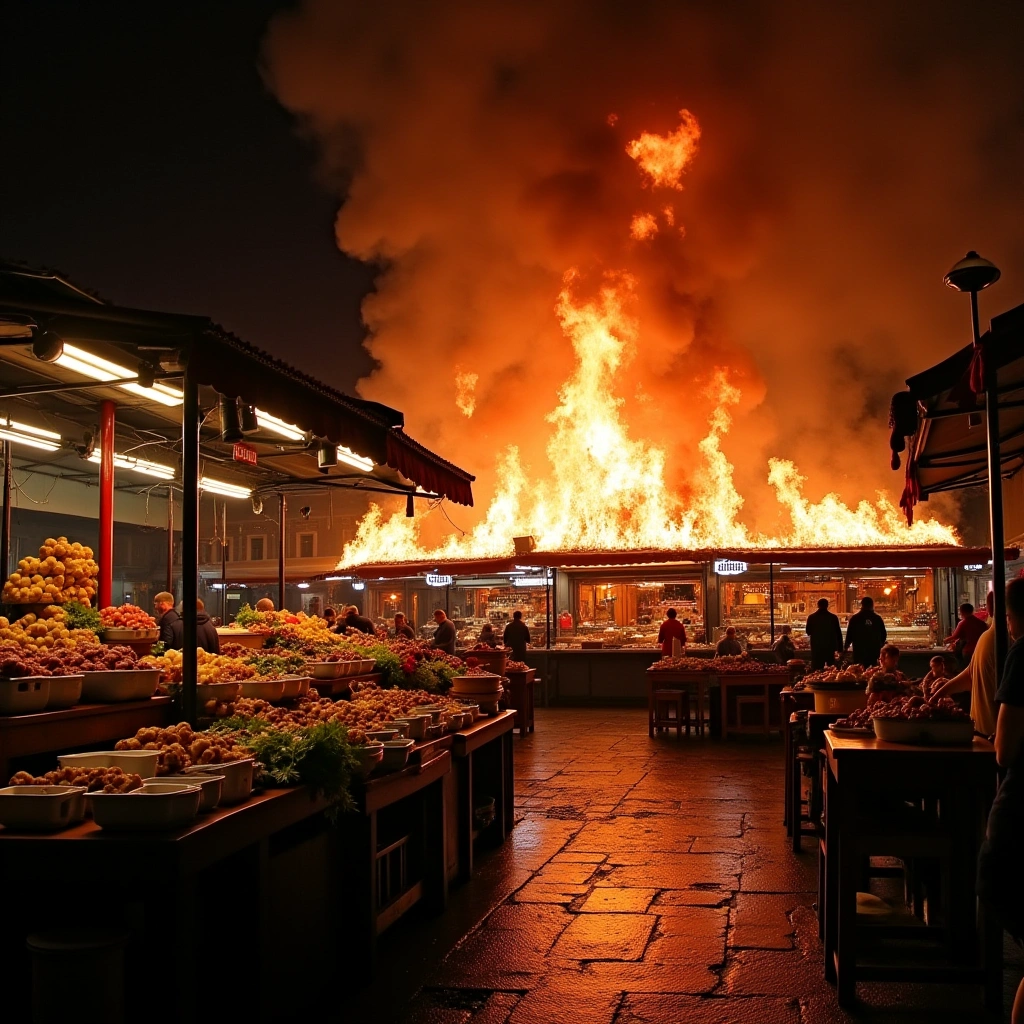
    In a shocking turn of events that has left foodies and history buffs alike reeling, Paris’s oldest covered food market, the Marché Couvert des Enfants Rouges, has been completely destroyed by a fire. Yes, you read that right—the flames didn’t just roast a few hot dogs; they obliterated an entire culinary landmark. The incident unfolded overnight on a seemingly ordinary Monday, leaving the Parisian skyline a little less vibrant and a whole lot smokier.

    Now, for those who might not be familiar with the Marché Couvert des Enfants Rouges, let’s just say it was no ordinary market. Established in 1628—yes, that’s over 400 years ago—this place was a beloved hub for locals and tourists alike. It was like the grandmother of all food markets, serving everything from fresh produce to gourmet cheese and, of course, the oh-so-fabulous French pastries. You could easily spend an entire afternoon wandering through the aisles, sampling cheeses that had been aged longer than most of us have been alive, and pondering the mysteries of life while staring at those perfectly flaky croissants.

    But alas, all good things must come to an end, and in this case, it seems that end involved a lot of fire and smoke. Authorities have yet to determine the cause of the blaze, which is just the cherry on top of this unfortunate sundae. Because really, what’s a historical landmark without a good mystery? Maybe it was a rogue baguette seeking revenge for all those times it was left uneaten? Who knows?

    In the wake of this disaster, many are left wondering what comes next for the market. Will it be rebuilt? Will they stick to the original design, or will some architect decide that a modern twist is in order? I mean, can you really have a covered market without a few hipster touches? Perhaps an artisanal avocado toast stand is in our future. Just what we need, right?

    The loss of such a significant cultural site is not just a blow to the locals who frequented it for their weekly grocery runs, but also to tourists who were looking for an authentic taste of Parisian life. Now, instead of marveling at the array of colorful fruits and vegetables, they’ll have to settle for a slightly charred memory of what once was.

    As the city mourns this culinary catastrophe, let’s all take a moment to appreciate the magic that was the Marché Couvert des Enfants Rouges. Here’s hoping that this historic market can rise from the ashes—preferably with a fireproof plan in place. Until then, we’ll just have to find another place to indulge our cravings for those delectable pastries and gourmet treats. Maybe we can convince the firefighters to whip us up a croissant or two while they’re at it. After all, they’re the real heroes here, saving what they could from the flames while the rest of us stand by and lament the loss of our beloved food haven.


    Inspired by: “Fire burns down Paris’s oldest covered food market” (r/World)

  • Stocks Soar as Oil Prices Take a Dive: Thanks, Trump?

    Stocks Soar as Oil Prices Take a Dive: Thanks, Trump?

    Oops, something went wrong Skip to navigation Skip to main content Skip to right column Stocks rise as oil prices tumble after Trump hails ‘energy ceasefire’ AFP Mon, October 12, 2026 at 1:30 PM GMT+11 4 min read CL=F -1.58% Ukrainian President Volodymyr Zelensky appeared to express surprise at Donald Trump’s ceasefire announcement but added that his country supported it and it was ‘important that Russia support it as well’ (Handout) Most stock markets rose Monday as oil prices tumbled after Don

    Ah, Monday mornings. The time of the week when we all need a little extra caffeine and a good dose of global market news to kickstart our brain cells. So, here’s a juicy tidbit to chew on: stock markets around the world decided to throw a little party early this Monday, and it seems like Donald Trump is the surprise guest who brought the snacks. Wait, what?

    Yes, you heard that right! Stocks were on the rise, all thanks to a little something Trump called an “energy ceasefire” between Russia and Ukraine. Now, I’m not sure if that sounds more like a diplomatic breakthrough or an awkward family reunion where someone finally agrees to stop arguing about politics, but hey, we’ll take it!

    As if that wasn’t enough to get your investment juices flowing, oil prices decided to fall faster than my willpower at a dessert buffet. This drop in oil prices came just as news broke about some fresh Houthi attacks on Saudi Arabia. You’d think that would send markets into a tailspin, but no! Instead, it seems like the investors collectively shrugged and said, “Eh, it’s Monday. Let’s just focus on the positive, shall we?”

    So, what does this all mean for us non-financial wizards? Well, if you’ve been holding onto stocks like they’re a precious family heirloom, now might be a good time to do a little happy dance. It appears that investors are optimistic about the potential for reduced energy prices, which could lead to a boost in consumer spending. And we all know that happy consumers are like the holy grail for any economy.

    But let’s not get too carried away here. While we’re all for a good stock market rally, it’s essential to remember that markets can be as unpredictable as a cat on a hot tin roof. Just because Trump threw around a catchy phrase like “energy ceasefire” doesn’t mean we’re out of the woods yet. It’s a bit like saying you’ve solved all your problems because you’ve managed to find your missing sock—there’s still a lot of laundry to deal with.

    So, as we watch the markets dance in the wake of this news, let’s keep our fingers crossed that this energy ceasefire holds and that oil prices stay low. Because if there’s one thing we can all agree on, it’s that nobody likes filling up their tank while simultaneously feeling like they’re emptying their wallet.

    In conclusion, Monday might just be a little brighter for investors today. Thanks to Trump’s announcement, stocks are rising and oil prices are falling. Just remember, it’s a volatile world out there, so keep your eyes peeled and your portfolios diversified. Because who knows? Tomorrow might just have a different surprise guest on the market stage.


    Inspired by: “Stocks rise as oil prices tumble after Trump hails ‘energy ceasefire’” (r/World)

  • What’s Up with 4,393 ETH from the Ethereum Foundation? A Routine Move or a Market Shake-Up?

    What’s Up with 4,393 ETH from the Ethereum Foundation? A Routine Move or a Market Shake-Up?

    Ethereum Foundation-linked wallets have transferred 4,393 ETH, valued at approximately $11.13 million, to Kraken . This transaction comes after a decade in which these wallets have moved a total of 49,751 ETH.

    So, you may have heard through the grapevine—or perhaps through a very specific Twitter feed—that a whopping 4,393 ETH has recently made its way from Ethereum Foundation-linked wallets to Kraken. Now, before you start hyperventilating or plotting your next big crypto investment, let’s unpack what this all means.

    First off, let’s clarify the players in this little drama. The Ethereum Foundation is like the wise old wizard of the Ethereum ecosystem. They’re responsible for the development and promotion of Ethereum, and they have a stash of ETH that could make even Scrooge McDuck jealous. Now, when wallets associated with such a prominent entity start moving significant amounts of ETH, people tend to raise an eyebrow.

    So, what’s the deal with this transfer? Is it a sign of impending doom for the Ethereum market, or just a strategic financial maneuver? Let’s get into it.

    The Move: Strategic or Suspicious?

    The Ethereum Foundation has been known to make transfers to various exchanges like Kraken for a variety of reasons. Sometimes, it’s to support liquidity or maybe to fund development projects. You know, the usual stuff that keeps the crypto world spinning. But when the number is as eye-popping as 4,393 ETH, it raises a few questions.

    Could this be a signal that the Foundation is planning to cash out? Or is it just a routine move that happens to catch the attention of crypto enthusiasts and conspiracy theorists alike?

    Market Reactions: Panic or Calm?

    In the world of cryptocurrency, the market is like a teenage drama—full of ups, downs, and unexpected plot twists. When news of this transfer hit the streets, the reactions were as varied as the flavors at an ice cream shop. Some traders started selling off their ETH, fearing a massive dump that could send prices spiraling down faster than a roller coaster. Others, however, took a deep breath and shrugged it off, thinking, “It’s probably just routine.”

    The Liquidity Factor

    Let’s talk about liquidity. The Ethereum Foundation transferring ETH to Kraken could actually be a good thing for liquidity in the market. By moving assets to a major exchange, they might be preparing to ensure that there are enough funds available for trading, development, or even a new initiative. It’s like ensuring there’s enough popcorn for the movie night—nobody wants to be left without snacks, right?

    Final Thoughts: A Case of Over-Analysis?

    At the end of the day, whether this transfer is a grand scheme or just the Foundation doing their financial housekeeping, it’s worth keeping an eye on. Sure, it’s easy to jump to conclusions and assume the worst, but let’s not forget that the crypto world is filled with twists and turns.

    So, let’s all take a collective deep breath. The Ethereum Foundation has made transfers before, and they’ll likely do it again. Whether it’s a dump or just another day at the office for them, only time will tell. In the meantime, keep your eyes peeled and your wallets ready—after all, in crypto, you never know when the next big move will happen!


    Inspired by: “4,393 ETH From Ethereum Foundation-Linked Wallets Hits Kraken: Dump or Routine Move?” (r/Crypto)

  • When the Ceiling Decides to Drop In: A Daegu Supermarket Saga

    When the Ceiling Decides to Drop In: A Daegu Supermarket Saga

    Ceiling collapse at Daegu supermarket injures 36 Published : Oct. 10, 2026 – 13:18:39 Add The Korea Herald on Google Bookmark Event Link copied! Hwang Dong-hee Books Performance Heritage Subscribe + Part of the ceiling at a supermarket in Buk-gu, Daegu, collapsed on Saturday, leaving dozens of people with minor injuries.

    Ah, the joys of grocery shopping! You grab your cart, maneuver through the aisles, and fill it with all the essentials—milk, bread, and that overpriced avocado you swear you’ll use in a salad one day. But what happens when the ceiling above you decides it’s time to make a dramatic exit? Well, that’s exactly what went down at a supermarket in Daegu, South Korea, leaving 36 shoppers with minor injuries and a story they’ll probably tell for years to come.

    On a seemingly ordinary Saturday morning, at 10:16 a.m. to be precise (because who doesn’t love a timestamp?), parts of the ceiling took a nosedive, causing chaos in the aisles. Fire officials reported that a total of 66 people were inside the store at the time. Thankfully, everyone managed to evacuate, although not without a few bumps and bruises. Nine of the injured were sent to the hospital—again, nothing life-threatening, which is good because we wouldn’t want anyone to miss the latest supermarket sale.

    Now, let’s take a moment to appreciate the bravery of those who were inside. Imagine standing there, contemplating whether to buy that fifth tub of ice cream (because who doesn’t need options?) when suddenly, the ceiling decides to join the party. You’d think it was a scene straight out of a disaster movie, but no, this was real life. Firefighters quickly arrived on the scene, proving once again that they are the true heroes—dashing in to check for any remaining shoppers and ensuring that no one was left behind.

    The incident occurred on the second floor of a four-story building, which, let’s be honest, raises some serious questions about the structural integrity of this supermarket. I mean, if the ceiling can’t hold itself together, what about that fancy organic quinoa section?

    In the aftermath, officials are surely scratching their heads, pondering how this could happen. Was it poor maintenance? An unexpected weight-bearing issue? Or did someone just decide that the ceiling had overstayed its welcome? Whatever the cause, it’s a reminder that even in a place where you go to buy your weekly groceries, the unexpected can happen.

    So, what can we learn from this? First, always keep an eye on your surroundings—especially if you’re under a ceiling that looks like it might be having a bad day. Second, maybe skip the impulse buy of that extra tub of ice cream next time—who knows what could fall on you while you’re making your decisions? And finally, let’s take a moment to appreciate the first responders who risk their lives to ensure our safety, even amidst the chaos of falling ceilings and grocery store drama.

    In conclusion, while the Daegu supermarket ceiling collapse wasn’t exactly the kind of excitement anyone was looking for, at least it provided a wild story for those involved. Next time you’re in a supermarket, just remember: the only thing that should be falling is the prices on your favorite snacks. Stay safe out there, folks!


    Inspired by: “Ceiling collapse at Daegu supermarket injures 36” (r/World)

  • CFTC’s Latest Move: Swapping Out the Old Definition for a New Era of Prediction Markets

    CFTC’s Latest Move: Swapping Out the Old Definition for a New Era of Prediction Markets

    Prediction Markets: How They Work Addiction Risks New CFTC Rules Polymarket 24/7 Trading Push Japan’s Prediction Startups Prediction Market Billionaires Back Forward Politics Finance Facebook X LinkedIn Email Link Gift Expand The Commodity Futures Trading Commission headquarters in Washington.

    The Commodity Futures Trading Commission (CFTC) is at it again, folks! They’re not just sitting around twiddling their thumbs while the world of finance evolves. Nope, they’ve decided to take a bold step by proposing to expand the definition of swaps to include prediction markets. Yes, you heard that right – sports, politics, cultural trends, and even the weather could soon fall under their watchful eye.

    Now, before you start picturing a bunch of CFTC officials in suits and ties, clutching their briefcases while trying to predict who will win the next Super Bowl, let’s break this down a bit. The CFTC is essentially saying, “Hey, we want to make sure we have our hands on the wheel when it comes to these prediction markets.” And honestly, who could blame them? They’re trying to avoid a regulatory tug-of-war with state authorities, which is about as fun as watching paint dry.

    So, what exactly are prediction markets? Imagine a group of people betting on the outcome of an event, like whether your favorite team will make it to the playoffs or if your neighbor’s cat will win a beauty contest. These markets allow participants to trade contracts based on the likelihood of certain events happening. It’s kind of like betting, but with a fancy name that makes it sound much more legitimate.

    The CFTC’s proposal is all about asserting jurisdiction over these markets and ensuring that they operate under the same rules and regulations that govern traditional swaps. You know, because nothing says ‘fun’ like a little regulatory oversight. But in all seriousness, the agency claims this move aligns with its historical understanding of event contracts under the Commodity Exchange Act. In other words, they’re not just throwing spaghetti against the wall to see what sticks; they’re trying to create a coherent framework that fits within the existing regulations.

    Now, let’s talk about the implications of this change. On one hand, it could provide a level of legitimacy to prediction markets, which could attract more participants. More participants mean more money flowing in, and who doesn’t love a good influx of cash? On the other hand, it could also bring a whole new level of scrutiny to these markets. If you thought the IRS was nosy about your Bitcoin transactions, just wait until the CFTC starts poking around in your betting history.

    Of course, every regulatory change comes with its fair share of critics. Some folks are concerned that this could stifle innovation in the prediction market space. After all, the last thing we need is for regulators to come in and put a damper on what could be the next big thing in betting. But then again, if you’ve ever tried to navigate the world of betting laws, you’ll know that it’s a bit like trying to find your way through a maze blindfolded.

    As this proposal gets kicked around, we can expect some lively discussions in the financial and betting communities. Will it lead to a boom in prediction markets? Or will it just be another case of regulators trying to keep up with the fast-paced world of finance? Only time will tell.

    So, keep your eyes peeled and your wallets ready, folks! The world of prediction markets is about to get a whole lot more interesting – and possibly a little more regulated. And who knows, maybe one day you’ll be able to place a bet on whether the CFTC will expand its jurisdiction even further. Now that’s a prediction worth making!


    Inspired by: “CFTC Proposes to Expand Definition of Swaps to Include Prediction Markets Trading” (r/Business)