Category: AI

  • Why AI Is Not Your Peer: A Humorous Take on Engineering in the Age of Machines

    Why AI Is Not Your Peer: A Humorous Take on Engineering in the Age of Machines

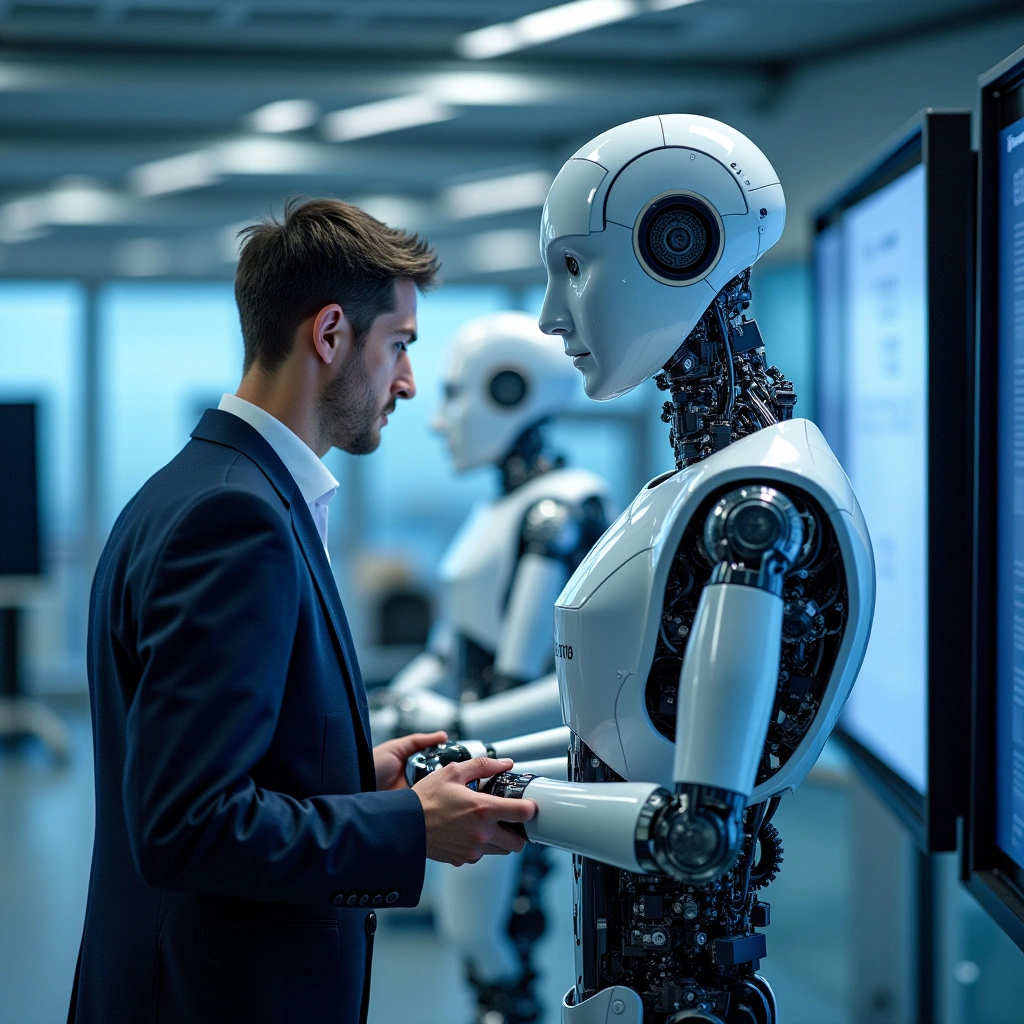
    Ah, the age of AI! It’s like living in a sci-fi movie where instead of flying cars and jetpacks, we got algorithms that can beat you at chess and suggest what to have for dinner based on your last five takeout orders. But let’s be real for a second: AI is not your peer. It’s more like that overly ambitious intern who thinks they know everything but can’t even make a decent cup of coffee.

    First things first, let’s clarify what we mean by ‘peer.’ In human terms, a peer is someone you can share a pint with, discuss deep philosophical questions, or argue about whether pineapple belongs on pizza. AI, on the other hand, doesn’t drink, doesn’t think, and certainly doesn’t care about your pizza toppings. It’s data-driven, which means it’ll recommend something based on numbers and trends, not because it has taste buds.

    Now, I know what you’re thinking: “But AI can learn!” Yes, like a child with a new toy. It’ll learn to recognize your face, recommend movies, and even beat you at video games. But here’s the kicker: it learns from historical data, not from experience. So while you’re out there living your life, making questionable decisions and learning from them, AI is just regurgitating patterns it’s seen before. Kind of like that friend who keeps telling the same story at parties—great at first, but then you just want to roll your eyes and change the subject.

    Let’s talk about engineering for a second. As engineers, we pride ourselves on creativity, problem-solving, and the occasional burst of genius that makes us feel like we’re channeling Nikola Tesla. AI can assist in this process, sure, but it’s not going to replace the good old human brain. Think of it as a highly efficient calculator that doesn’t understand the beauty of a well-structured algorithm or the joy of debugging code while consuming copious amounts of coffee. It can suggest solutions based on past data, but it lacks the ability to innovate, to think outside the box, or to have a midlife crisis over your career choices.

    Moreover, let’s not forget the ethical implications. If AI were our peer, we would have to hold it accountable for its decisions. But how do you hold an algorithm accountable? You can’t exactly have a sit-down meeting with a line of code and discuss its feelings about the ethical ramifications of its outputs. It’s like trying to have a heart-to-heart with a toaster—good luck getting any meaningful feedback.

    So, what does this mean for engineers in the age of AI? It means we need to embrace AI as a tool, not a peer. Use it to enhance your work, automate the boring stuff, and free up your creative juices for the fun challenges. But remember, at the end of the day, it’s still a tool—no more, no less. And just like you wouldn’t trust a hammer to do your taxes, don’t expect AI to solve all your problems or make you a better engineer by osmosis.

    In conclusion, let’s keep our relationship with AI healthy. We can collaborate, but let’s not confuse it with friendship. It’s not going to bring you coffee on a Monday morning or listen to your rants about the latest engineering mishaps. So let’s give a round of applause to our AI buddies for their assistance, but let’s keep the beer and deep conversations for our fellow humans. Cheers!


    Inspired by: “AI Is Not Your Peer: A manifesto on engineering in the age of AI” (r/technology)

  • Why Developers Ship AI Code with Gaping Holes: A Comedic Dive into Tech’s Wild West

    Why Developers Ship AI Code with Gaping Holes: A Comedic Dive into Tech’s Wild West

    Hey there, fellow tech enthusiasts! Have you ever watched a movie where the hero jumps out of a plane without a parachute, just to land perfectly fine on a moving train? Well, that’s kind of what shipping AI code feels like these days! Developers are out here coding like they’re in a high-stakes action flick, and the rest of us are left wondering if we should grab the popcorn or start looking for a safety net.

    First off, let’s address the elephant in the room: AI code is riddled with holes. And not the cute, cartoonish holes you see in a block of Swiss cheese. No, these are the kinds of holes that could swallow your entire project, including your hopes and dreams of a smooth launch. Imagine a codebase so full of bugs that it could double as a horror movie set – and yet, developers are still shipping it like it’s the latest iPhone!

    So, why do they do it? Well, my friends, welcome to the era of speed over precision. In a world where everyone’s racing to be the next big thing, developers often find themselves caught in a whirlwind of deadlines and expectations. It’s like trying to bake a soufflé while riding a rollercoaster – not exactly the ideal conditions for a flawless outcome. The pressure to deliver can turn even the most meticulous coder into a rogue cowboy, ready to ride off into the sunset with a buggy codebase.

    But hey, let’s not be too harsh. Sometimes, shipping code with holes is a calculated risk. It’s like that time you decided to try a new recipe without reading the reviews first. Sure, it might blow up in your face, but it could also turn out to be the next culinary masterpiece. Developers often release their AI code into the wild, hoping that user feedback will iron out the kinks. After all, who doesn’t love a good crowd-sourced debugging session?

    And let’s not forget the thrill of innovation! Shipping code with holes is akin to sending a toddler into a candy store – there’s bound to be a mess, but the excitement is unmatched! AI is evolving at breakneck speed, and sometimes, the only way to keep up is to take a leap of faith. Developers know that the holes exist, but they’re betting on the brilliance of the community to help patch them up.

    Now, before you think I’m advocating for this reckless behavior, let’s be clear: shipping buggy AI code can lead to some serious consequences. Just imagine a self-driving car that suddenly forgets how to stop at red lights – yikes! It’s like playing a game of Russian roulette with technology. But, on the flip side, isn’t it also kind of thrilling? It’s like watching a reality show where the contestants are all tech geniuses trying to outdo each other, and we, the audience, are just holding our breath, popcorn in hand, waiting to see who’s going to crash and burn.

    In conclusion, while shipping AI code with holes might seem like a reckless move, it’s also a testament to the wild, unpredictable world of tech. Developers are juggling innovation and pragmatism, and sometimes, they have to throw caution to the wind. So, the next time you encounter a buggy AI program, just remember: behind every glitch lies a story of ambition, creativity, and possibly a few too many cups of coffee. Cheers to the fearless coders out there – may your holes be few and your launches be legendary!


    Inspired by: “Devs know AI code is riddled with holes, but ship it anyway” (r/technology)

  • Judge Ditches Trial After AI Shenanigans: Legal Drama or Just a Tech Fiasco?

    Judge Ditches Trial After AI Shenanigans: Legal Drama or Just a Tech Fiasco?

    So, grab your popcorn and put on your favorite judge robe because we have a courtroom drama that would make even the most seasoned lawyers raise an eyebrow. Picture this: a judge walks into a courtroom, ready to oversee a trial, only to discover that both sides have been consulting their fancy AI buddies instead of relying on good old-fashioned human wit. And just like that, with a swift gavel bang, the judge says, ‘Nope, not today!’ and cancels the trial. What a plot twist!

    Now, before you start imagining a courtroom filled with robots and holograms, let’s break down what really happened. Apparently, both the plaintiffs and the defendants thought it would be a grand idea to utilize artificial intelligence to strategize their cases. Maybe they thought they were assembling the Avengers of legal expertise. However, one judge’s keen sense of justice (or perhaps just a healthy dose of skepticism) led to a major plot twist. Who knew courtroom drama could take such a techy turn?

    Here’s where it gets juicy: the judge, who probably had enough of the tech takeover, decided that if both sides were relying on AI, then the trial wouldn’t be a fair fight. It’s like watching a boxing match where one fighter is secretly being coached by a supercomputer. Fair? I think not! So, with a swift motion, the judge kicked everyone out of the courtroom faster than you can say ‘legal precedent.’

    You might wonder, was this the right call? On one hand, you have to admire the judge’s commitment to maintaining the integrity of the legal system. On the other hand, isn’t innovation supposed to be embraced? I mean, AI can help with everything from predicting weather patterns to suggesting your next Netflix binge—why not legal strategies?

    But let’s be real for a second. Bringing AI into the courtroom is like inviting your overly opinionated uncle to Thanksgiving dinner. Sure, he can bring some interesting perspectives, but you might end up regretting it as he rambles about conspiracy theories. The legal system is already a complex maze; introducing AI just adds another layer of confusion, like trying to assemble IKEA furniture without the instructions.

    So, what happens next? Will lawyers start to reconsider their techy tactics? Or will we soon see a new wave of AI-powered legal advice taking over the courtroom? Only time will tell. But one thing is for sure: the next time you find yourself in a courtroom, just remember to leave your AI assistant at home—unless you want to be the next case study in ‘How Not To Use Technology in Law.’

    In conclusion, this incident serves as a humorous reminder that while technology can be a fantastic tool, there are certain places, like the courtroom, where good old human intuition and experience might still hold the upper hand. And who knows, maybe the next trial will feature a judge who’s just as savvy with AI as the lawyers. Until then, keep your courtroom dramas entertaining and your AI at bay!


    Inspired by: “Judge Learns Lawyers on Both Sides of Case Used AI, Cancels Trial, Kicks Everyone Off the Case” (r/technology)

  • Microsoft AI Chief Backtracks: Is Your Desk Job Safe from the Robots?

    Microsoft AI Chief Backtracks: Is Your Desk Job Safe from the Robots?

    So, folks, gather ’round! Have you heard about the latest from the Microsoft AI camp? The big cheese, their AI chief, recently strolled back some pretty bold comments about AI swooping in to take over white-collar jobs. It’s like watching a magician pull a rabbit out of a hat, only instead of a rabbit, it’s your job security! Cue the dramatic music!

    First, let’s set the stage. A few weeks ago, Microsoft’s AI head honcho was strutting their stuff, boldly proclaiming that AI was poised to take over the mundane tasks of white-collar workers. You know, the kind of tasks that make you question your life choices while scrolling through spreadsheets. The idea was that AI would come to the rescue, allowing us to spend our time doing the things we actually enjoy—like binge-watching shows or perfecting our sourdough bread recipes.

    But wait! Before we grab our pitchforks and start protesting outside the Microsoft campus, our dear AI chief suddenly decided to do a little backpedaling. It’s almost like they realized that the last thing you want to tell a room full of accountants is that their jobs are about to be handed over to a bunch of fancy algorithms. I mean, have they seen how passionate those folks get over Excel functions? Talk about a revolt!

    Now, let’s address the elephant in the room: Are we really going to let AI eliminate jobs? Sure, it’s tempting to think that AI could do our boring tasks faster and maybe even better than we can. After all, if I had a robot to handle my email, I’d have more time to contemplate the mysteries of life, like why my socks keep disappearing in the laundry. But let’s face it, the reality is a bit more complex.

    AI is here to assist, not to exterminate! The truth is, while AI can automate repetitive tasks, it can’t replicate human creativity, empathy, and the occasional moments of pure genius that happen when we’re just winging it. I mean, have you ever tried to get a robot to understand office banter? Good luck explaining that one!

    So, what does this mean for the average office worker? It’s time to embrace your inner human! Instead of panicking about being replaced, think about how you can leverage AI to enhance your skills. Maybe it’s time to learn how to work alongside AI—become the ultimate sidekick! Batman had Robin; you can have ChatGPT.

    In conclusion, while the idea of AI taking over might sound exciting (or terrifying), the reality is that we’re not quite ready for a world where robots are running the show. So, let’s put down our pitchforks, grab that cup of coffee, and embrace the new partnership. Who knows? With AI as our trusty sidekick, we might just be able to tackle the next big project while still having time to scroll through TikTok.

    And remember, if anyone ever tells you that AI is coming for your job, just smile and say, ‘Good luck getting through my coffee breaks!’ Because if there’s one thing we know, it’s that machines can’t enjoy a good cup of joe like we do. Cheers!


    Inspired by: “Microsoft AI chief walks back comments about AI taking over white-collar work” (r/technology)

  • EU Regulators Say ‘No Way, Apple!’ in Siri AI Delay Drama

    EU Regulators Say ‘No Way, Apple!’ in Siri AI Delay Drama

    So, folks, gather around because we’ve got a juicy tech drama brewing over in the EU, and it involves none other than our favorite fruit-themed tech giant, Apple. Yes, you guessed it right! The European Union has just thrown a wrench into Apple’s plans to keep Siri’s AI advancements under wraps—no exceptions, no mercy!

    In a world where technology moves at the speed of light, the EU has decided that Apple should play by the same rules as everyone else. It’s like telling the cool kid at school that they can’t skip gym class just because they have a shiny new pair of sneakers. Sorry, Apple, but the playground is for everyone!

    The backdrop for this little spat is a significant delay in Siri’s AI updates that has left many users wondering if their favorite virtual assistant is still in the game or just taking a very long nap. Remember when Siri used to charm us with her sassy comebacks? Now it’s like talking to an old radio stuck between stations—frustrating and slightly outdated.

    But wait, it gets better! This whole kerfuffle comes on the heels of the EU’s ongoing battle to keep tech companies accountable for their actions. The regulators are basically saying, ‘Hey, Apple, we see you over there, trying to play the


    Inspired by: “No tech rule exemption for Apple, EU regulators say amid spat over Siri AI delay” (r/technology)

  • The Sneaky Side of Reddit Ads: When News Becomes a Scam for AI Investments

    The Sneaky Side of Reddit Ads: When News Becomes a Scam for AI Investments

    Hey there, internet wanderers! So, let’s talk about something that’s been buzzing around like a fly at a picnic: Reddit ads masquerading as genuine news stories to lure unsuspecting investors into AI scams. Sounds like a plot twist from a B-grade thriller, right? Well, buckle up, because this rollercoaster is just getting started!

    First off, let’s set the stage. Reddit is the Wild West of the internet, where opinions run wild and memes spread faster than a cat video. But it’s also a hub for information—reliable or not. Now, throw in some ads that look like news articles, and you’ve got yourself a recipe for disaster! It’s like a news anchor deciding to moonlight as a magician. One minute they’re reporting facts, and the next, they’re pulling scams out of a hat.

    So what’s the deal with these ads? Well, they’re designed to look just like that intriguing article about the latest AI breakthrough. You know, the one that makes you feel like you’re on the cutting edge of technology and investment. But instead of genuine news, you’re clicking on a trap door that leads straight to Scamville, population: you. These crafty ads are often filled with jargon that sounds impressive but ultimately leads to nowhere. They’re like that friend who always wants to sell you the latest “miracle” supplement. You know, the one that promises to make your hair grow back and your ex want you again.

    Now, let’s not kid ourselves; AI is a hot topic these days. Everyone from your grandma to your dog seems to have a side hustle in AI investments. But with great hype comes great responsibility, and unfortunately, the dark side of the internet knows how to exploit that. These scammy ads are preying on the excitement and FOMO (Fear of Missing Out) that comes with new tech trends. It’s like dangling a shiny object in front of a toddler—hard to resist, right?

    But how do we spot these sneaky imposters? It’s all about the red flags, my friend! Look for overly sensational headlines, vague descriptions, and a lack of credible sources. If the ad promises you’ll become a millionaire overnight by “investing” in some AI that sounds like it was named by a toddler (seriously, who calls it “SmartBot 3000”?), run for the hills! And remember, if it sounds too good to be true, it probably is. Just like that time I thought I could make a fortune selling pet rocks.

    In conclusion, while Reddit is an amazing platform for discussion and sharing information, it’s also a breeding ground for scams. So, let’s all be vigilant and make sure we’re not falling for these ads that are dressed up as news stories. Keep your wits about you, stay informed, and maybe invest in a good pair of digital glasses to spot the scams from a mile away. And if you ever come across an ad for “SmartBot 3000,” just remember: it’s probably best to stick to your day job and let the bots handle the heavy lifting!

    Stay savvy, my friends!


    Inspired by: “Reddit ads pose as news stories to promote AI investment scams” (r/technology)

  • Apple’s AI Privacy: A Tech Tug-of-War on Google’s Servers

    Apple’s AI Privacy: A Tech Tug-of-War on Google’s Servers

    So, Apple has dropped this delicious little nugget of info: their AI is still private, even when it’s taking a leisurely stroll on Google’s servers. Now, if you’re like me, you probably just did a double-take and wondered if you accidentally wandered into a sci-fi movie plot. Let’s break this down, shall we?

    First off, let’s talk about the elephant in the room—or should I say, the gigantic tech behemoth in the cloud. Apple and Google have been playing this game of cat and mouse for years now. Apple prides itself on privacy like it’s a family heirloom, while Google has been known for treating your data like a buffet at a Vegas casino. But here we are, with Apple claiming that their AI is untouchable, even when it’s frolicking in Google’s digital backyard.

    Now, I’m not saying I don’t believe Apple, but I’m also not going to hand over my credit card to a guy in a trench coat selling “genuine” Rolexes. The premise sounds great—everybody wants to feel like their data is safe and sound. But let’s be real: how can we trust that our precious data isn’t being served up on a silver platter to the highest bidder? I mean, this is the same company that once told us to “Think Different” and then decided to start charging us for the privilege of charging our devices.

    Apple claims that their AI processes data in a way that keeps it private, even on Google’s servers. They’re probably using some high-tech wizardry that involves more encryption than a secret agent’s diary. But in a world where data breaches are as common as cat videos on the internet, can we really take their word for it?

    Let’s not forget the irony here: Apple puts a premium on privacy while simultaneously relying on a company that thrives on data collection. It’s like saying you’re on a diet while enjoying an all-you-can-eat buffet. Sure, you might stick to the salad bar, but that chocolate fountain is pretty hard to resist, right?

    In the end, this situation is as perplexing as trying to understand the plot of a Christopher Nolan movie. We want to believe that Apple’s AI is fortified like Fort Knox, but there’s always that nagging doubt in the back of our minds. So, while Apple continues to serenade us with promises of privacy, it’s up to us to stay vigilant and keep our data close, and our tech giants closer.

    In conclusion, the world of tech is a wild ride, and we’re all just passengers hoping we don’t end up on the wrong train. So, buckle up, folks! The AI privacy debate is just getting started, and who knows what the next twist will be. Maybe Apple will go full-on superhero and start wearing capes while protecting our data. Until then, let’s keep our eyes peeled and our passwords strong!


    Inspired by: “Apple says its AI is still private, even when it’s running on Google’s servers” (r/technology)

  • China’s $295 Billion AI Buildout: The Future or a Sci-Fi Nightmare?

    China’s $295 Billion AI Buildout: The Future or a Sci-Fi Nightmare?

    So, China is rolling out a jaw-dropping $295 billion plan to fund a nationwide AI buildout. I mean, if you had that kind of cash, you could either buy a small country or invest in AI. Spoiler alert: they chose AI. But what does this really mean for us mortal beings?

    First off, let’s talk numbers. $295 billion is not just chump change. That’s like a whole lot of pizza parties for the entire country, or, you know, a massive investment in the future of technology. And we’re not talking about a couple of robots that can fetch coffee (though let’s be real, I could use one of those). We’re talking about a full-scale, nationwide push to leverage artificial intelligence in nearly every sector imaginable. Think of it as the Avengers, but instead of superheroes, you’ve got algorithms and data scientists.

    Now, you might be thinking, “Great, another country is trying to take over the AI game. What’s next? A robot uprising?” Well, let’s not jump to conclusions just yet. China is positioning itself as a leader in AI development, which could mean everything from smarter cities to improved healthcare. Imagine a world where your doctor is an AI that doesn’t just guess your diagnoses based on your symptoms but actually knows you better than your mother does. Creepy, right? But also kinda cool?

    But here’s where things get a bit controversial. With great power comes great responsibility—sorry, I had to throw in a Spider-Man reference. As exciting as this investment is, it raises some eyebrows about privacy, surveillance, and ethical implications. You know, the classic “Who’s watching you while you’re binge-watching cat videos?” scenario. There’s always that fear that AI could be used for less-than-noble purposes, like tracking your every move or deciding whether you’re a good citizen based on your internet history (yikes!).

    And let’s not forget about the global implications. If China becomes the AI powerhouse, what does that mean for the rest of the world? Are we all going to be sitting around, twiddling our thumbs while they build their super-intelligent overlords? Or will this inspire other countries to step up their game and invest in AI as well? It’s like a high-stakes game of tech poker, and we’re all just hoping our bluff holds up.

    So, what can we take away from this colossal plan? While it’s easy to be cynical about the whole thing, let’s try to keep an open mind. The future of AI could be incredible, provided we don’t end up in a dystopian nightmare where our toaster holds our deepest secrets. If done right, this investment could lead to groundbreaking advancements that benefit humanity. Just remember to always question, critique, and maybe keep an eye on that toaster.

    In conclusion, China’s $295 billion AI buildout is a hefty investment into a future filled with possibilities and potential pitfalls. So buckle up, folks! We’re in for a wild ride, and who knows? Maybe one day we’ll be thanking those $295 billion worth of algorithms for making our lives just a little bit easier—or at the very least, a lot more entertaining.


    Inspired by: “China Preps $295 Billion Plan to Fund Nationwide AI Buildout” (r/technology)

  • China’s AI Data Surge: The Global Data Drought and What It Means for the Future

    China’s AI Data Surge: The Global Data Drought and What It Means for the Future

    So, picture this: the world is racing towards an AI-powered future, but suddenly, we hit a wall. It’s like a bad episode of a dystopian TV show where everyone’s fighting over the last slice of pizza—except this time, it’s data we’re squabbling over. With a global AI data shortage looming, China has decided to play the hero (or villain, depending on who you ask) by boosting its own supply. Buckle up, folks; we’re diving deep into this data drama.

    First off, let’s break down what this data shortage is all about. AI, as we all know, thrives on data like a toddler on candy. The more data you feed it, the smarter it gets. But here’s the kicker: not all data is created equal. Quality data is the gold standard, and right now, there’s a serious drought on the horizon. Kind of like trying to find a decent avocado toast in a cheap diner—good luck with that!

    Now, enter China, strutting into the data arena like it owns the place. With its vast population and an impressive digital ecosystem, China is leveraging its resources to hoard data like a squirrel collecting nuts for winter. The Chinese government has ramped up initiatives to create and collect massive datasets, and honestly, it’s a bit like watching your neighbor build a fortress while you’re still trying to find the right tools to fix your leaky faucet.

    But why is this significant? Well, it’s not just about China becoming the big kid on the AI block; it’s about global implications. As China boosts its data supply, it could potentially create a divide in the tech landscape. Imagine a world where AI advancements are heavily skewed towards the nation that has the most data. It’s like giving one kid all the marbles in a schoolyard game—nobody’s going to be happy about that!

    Critics argue that this could lead to an imbalance of power, with China having the upper hand in AI technologies. Some might even say it’s a form of technological imperialism. Now, before you start waving your pitchforks, let’s consider the other side. The U.S. and other countries may need to step up their game and innovate new ways to gather and use data. It’s a classic case of survival of the fittest—where the fittest might just be the one with the best data strategy.

    Moreover, this data race isn’t just about businesses; it’s about ethics too. Who gets to control all this data? What happens to privacy? It’s a minefield of questions that could make anyone’s head spin faster than a rollercoaster ride. And trust me, nobody wants to be the one getting flung out of the cart midway through the ride.

    In conclusion, as we watch China boost its AI data supply, it’s essential to stay informed and vigilant. Yes, they might be leading the charge right now, but this could be the wake-up call that we all need to rethink our approach to data. So, let’s grab our digital shovels, dig deep, and ensure that the future of AI doesn’t just belong to one country. After all, sharing is caring, right?


    Inspired by: “With a global AI data shortage looming, China boosts its own supply” (r/technology)

  • The Hollywood Scam: How AI Impersonators Are Targeting Aspiring Actors

    The Hollywood Scam: How AI Impersonators Are Targeting Aspiring Actors

    So, you’ve always dreamed of hitting the big screen, right? Maybe you’ve practiced your Oscar acceptance speech in front of the mirror (we’ve all been there). But hold on a second! What if I told you that some shady characters out there are using Artificial Intelligence to impersonate Hollywood casting directors? Yep, you heard that right!

    Imagine this: you get an email that reads, “You’d Be Perfect for This!” followed by a request for some personal information or, even worse, a fee to ‘secure’ your audition. Sounds fishy? That’s because it is! This devious casting scam is sweeping through Hollywood like a bad rom-com, and it’s time we put on our detective hats and dive into the chaos.

    First off, let’s talk about the masterminds behind these scams. They are not your average Joe; they are tech-savvy fraudsters who have decided that scamming aspiring actors is more fun than actually auditioning people. They’ve been using AI to generate fake emails and even impersonate casting directors, luring hopeful actors into their web of deceit. I mean, come on, how low can you go?

    In a world where technology can make you look like Brad Pitt or Scarlett Johansson with just a filter, it’s no surprise that these scammers are leveraging AI to create the ultimate illusion. They can now simulate the tone, style, and even the email addresses of real casting directors, making it incredibly hard for our aspiring actors to discern the real from the fake. It’s like trying to spot a unicorn in a field of horses!

    Now, let’s break down why this is happening. Aspiring actors are often in a vulnerable position, desperately seeking their big break. The allure of an opportunity can blind them to the red flags waving like a flagpole in a hurricane. When someone says, “You’d be perfect for this role!” it’s hard not to feel like you’ve just won the lottery. But spoiler alert: it’s a scam, and those lottery tickets are worthless.

    So, how can you protect yourself from falling for these AI-generated traps? First, always verify the casting director’s identity. Do a little research; a quick Google search can save you from a world of hurt. If they’re asking for money upfront, run faster than you would from a bear in the woods. Legitimate casting calls will never ask for money to audition. If it smells fishy, it probably is!

    And let’s talk about the emotional rollercoaster this can create. The highs of being approached for a role can quickly turn into the lows of realizing you’ve been duped. Just remember, folks: if it sounds too good to be true, it probably is. Save your tears for your next audition tape, not for being scammed.

    In conclusion, while AI is revolutionizing the industry in many ways, it’s also opening the door for some not-so-great characters to exploit the dreams of many. So, the next time you get an email from a casting director, do your homework. Your dream could be just an audition away, but let’s make sure it’s not a nightmare disguised as a casting call!

    Stay safe out there, future stars, and keep that headshot updated. Who knows? Your big break could be around the corner – just not from a scam artist!


    Inspired by: “Fraudsters are using AI to impersonate top Hollywood casting directors — targeting aspiring actors…” (r/technology)