Category: AI

  • TSMC’s Revenue Rocket: How AI Demand is Fueling a Sales Surge

    TSMC’s Revenue Rocket: How AI Demand is Fueling a Sales Surge

    If you’ve been keeping an eye on the tech world—or just scrolling through your social media feeds while wondering why your phone can’t seem to stop crashing—then you might have caught wind of TSMC’s latest financial report. Spoiler alert: it’s a doozy! The Taiwanese semiconductor giant recently announced a staggering 36% increase in sales during the second quarter, largely driven by soaring demand for artificial intelligence (AI) technologies. So, grab your popcorn and let’s dive into this financial blockbuster.

    TSMC posted a 58% profit jump, driven by strong AI chip demand. Revenue beat forecasts, marking a fourth straight quarterly record.

    First off, let’s talk numbers. TSMC, or Taiwan Semiconductor Manufacturing Company for those who prefer their acronyms spelled out, has been riding the AI wave like a pro surfer. Their record revenue isn’t just a fluke; it’s a testament to the growing appetite for AI capabilities across various industries. From chatbots that can almost hold a conversation (if you ignore the awkward silences) to complex machine learning algorithms that can predict your next online shopping spree, AI is everywhere. And if you thought your smart fridge was just a fancy cooler, think again—it’s likely powered by TSMC chips.

    Now, you might be wondering, what exactly does a 36% surge in sales mean? Well, for starters, it means that TSMC is raking in cash like it’s going out of style. The company reported revenues of approximately $17.6 billion for the second quarter, which is a number so large that it might make even Jeff Bezos raise an eyebrow. This kind of growth is not only impressive; it’s downright astonishing in the semiconductor industry, which sometimes feels like a slow-motion chess match.

    But why the sudden spike in demand, you ask? The answer lies in the AI boom that’s sweeping across sectors like a viral TikTok dance. Companies are scrambling to incorporate AI into their products and services, and that means they need more chips—preferably the kind made by TSMC. Whether it’s powering data centers, enhancing smartphone capabilities, or enabling self-driving cars to make decisions that hopefully don’t involve the nearest lamppost, TSMC is at the heart of it all.

    It’s also worth noting that TSMC isn’t just sitting back and enjoying the ride. The company is investing heavily in expanding its production capacity to meet the growing demand. So, while you might be contemplating whether to upgrade your phone or stick with your trusty old model (that probably still runs on a potato), TSMC is gearing up to ensure that the chips are ready and waiting for whatever the tech world throws at them next.

    Now, let’s not forget the broader implications of this sales surge. TSMC’s success is a barometer for the health of the tech industry, and it’s a clear signal that AI is not just a passing trend. It’s here to stay, and it’s only going to get bigger. So, if you’re in the business of making chips or developing AI technologies, it might be time to pop the champagne—or at least order a round of coffee.

    In conclusion, TSMC’s 36% sales surge in the second quarter is more than just a number; it’s a reflection of the growing demand for AI technology that’s transforming our world. So, the next time you marvel at your phone’s ability to recommend your favorite pizza place, just remember: behind that seemingly magical experience is a whole lot of TSMC chips making it happen. Who knew semiconductors could be so exciting? Now, if they could just figure out how to make my old phone stop lagging, that would be great. Cheers to TSMC and the future of AI!


    Inspired by: “TSMC Sales Surge 36% in Second Quarter as AI Demand Powers Record Revenue” (r/technology)


  • The Power Hungry Future: AI Servers vs. Conventional Data Centers

    The Power Hungry Future: AI Servers vs. Conventional Data Centers

    If you thought your electric bill was high now, just wait until 2027 rolls around. According to a forecast by Gartner, global data center electricity consumption is set to grow by a whopping 26% this year. And if that doesn’t make you sit up and take notice, how about this: AI servers are predicted to consume more power than all conventional data center hardware combined by 2027. Yes, you heard that right.

    AI data centers are driving unprecedented energy consumption, with global data center electricity demand projected to double to 945 TWh by 2030. AI processing is particularly power -intensive—creating a single AI image uses energy equivalent to fully charging a smartphone, while data centers could represent 8.6% of US electricity demand by 2035.

    Let’s break it down. Data centers are already notorious for their energy consumption. They’re like the teenagers of the tech world—constantly plugged in, consuming everything in sight, and somehow still needing more. Now, with the rise of artificial intelligence, we’re looking at a whole new level of power consumption. AI servers are going to be the overindulgent kids at the buffet, piling their plates high while the rest of the data center hardware looks on in horror.

    So, what does this mean for the environment? Well, it’s not exactly a walk in the park. The increase in energy demand could lead to a greater carbon footprint unless we find a way to power these data-hungry monsters sustainably. We can’t just keep feeding them electricity like it’s a bottomless pit; we’ll need to think about renewable energy sources. Solar panels? Wind turbines? Maybe we should just start harnessing the power of sarcasm—who knew it was so potent?

    This situation also raises the question of how companies will adapt. Will they invest in energy-efficient technologies? Or are we just going to watch them throw money at the problem like it’s confetti at a New Year’s party?

    Let’s not forget about the consumers, either. As businesses ramp up their AI capabilities, you can bet your last dollar that those costs will trickle down to us. Higher prices for services? Check. Increased taxes to support energy infrastructure? Double check. It’s like we’re all being handed a bill for a party we didn’t even attend.

    In conclusion, while the rise of AI is undeniably exciting, we need to be mindful of the power this technology consumes. If we’re not careful, we might just find ourselves in a world where our energy resources are stretched thinner than the last slice of pizza at a party. So let’s hope that by 2027, we’re not just consuming power but also finding ways to generate it sustainably. Because if AI servers are going to take over the world, they might as well do it with a green conscience.


    Inspired by: “AI servers will consume more power than all conventional data center hardware combined by 2027. Glo…” (r/technology)

  • When AI Takes Over: The Case of the Journalist and His Digital Doppelgänger

    When AI Takes Over: The Case of the Journalist and His Digital Doppelgänger

    In a world where technology is advancing at lightning speed, it’s no surprise that some professions are feeling the heat. Enter the case of a journalist who, after being unceremoniously fired, discovered that his former employer was still using his name to publish AI-generated articles. Yes, you heard that right. The corporate world has found a way to keep churning out content while simultaneously giving the boot to the very humans who created it.

    Beyond financial schemes, these technologies fundamentally undermine the sanctity of identity. One high-profile case involved an actor’s voice being cloned and used in a film without their explicit approval, showing how easily identity can be co-opted in the digital age.

    Imagine this scenario: you wake up one day, sip your coffee, and read an article that bears your name. Excitedly, you dive in, only to find that it is a jumbled mess of AI-generated nonsense. It’s as if someone took your name and decided to throw a party for a bunch of algorithms that clearly have no idea how to write. Talk about a plot twist!

    This journalist’s experience is just the tip of the iceberg in a growing trend where companies are opting for AI over actual human writers. The rationale? AI can produce content faster, cheaper, and without the need for coffee breaks or health insurance. But let’s be real: is that the kind of content we want? Would you trust a robot to capture the human experience?

    The irony here is rich. This journalist, having dedicated his career to crafting thoughtful and engaging pieces, now finds himself in a bizarre situation where his name is being used to promote what can only be described as ‘AI slop.’ It’s like being a chef and then discovering that your restaurant is serving instant ramen under your name.

    So, what does this mean for the future of journalism? Are we headed toward a world where every article is churned out by a soulless machine that lacks the wit, insight, and nuance of a trained writer? If this trend continues, we might as well just hand over our news feeds to a bunch of algorithms and call it a day.

    But fear not, dear readers! There is a silver lining. As we’ve seen in various industries, the human touch is irreplaceable. Sure, AI can generate content, but can it tell a compelling story or connect with readers on an emotional level? Spoiler alert: it cannot.

    In conclusion, while the journalist’s alarm at being fired is understandable, the real outrage should be directed at the companies that think they can replace human creativity with AI’s cold, hard calculations. Let’s hope that this incident serves as a wake-up call for the industry. Because if we start accepting AI-generated articles as the norm, we might as well start reading the instruction manuals for our microwaves for entertainment. And nobody wants that.


    Inspired by: “Journalist Alarmed When He’s Fired, But Company Keeps Posting AI Slop Under His Name” (r/technology)

  • The Great Knowledge Exodus: How AI is Shaking Up Online Communities

    The Great Knowledge Exodus: How AI is Shaking Up Online Communities

    Ah, the internet! A magical place where cat memes reign supreme, and people argue about pineapple on pizza like it’s a matter of national security. But hold onto your keyboards, folks, because it seems like the arrival of artificial intelligence (AI) is causing quite the stir in our beloved online communities. According to recent research, the quality of contributions in these spaces is decaying faster than my willpower during a Netflix binge. So, let’s dive into this phenomenon and see what’s really going on.

    Kenny Ching from the Business School at the university suggests that AI is diminishing the visibility of genuine expertise, leading knowledgeable contributors to cease their participation in these communities.

    First off, let’s talk about the research findings. Experts are packing their virtual bags and leaving online communities at an alarming rate. It’s like a mass exodus, but instead of pilgrims heading to a new land, we’ve got knowledgeable contributors fleeing from the chaos that AI has brought. And why are they leaving? Apparently, it’s due to what researchers are calling a ‘knowledge reset.’ Sounds fancy, right?

    In simpler terms, it’s like when you try to start a new diet and end up eating an entire pizza because you forgot what vegetables look like. The influx of AI-generated content is making it harder for human contributors to feel valued or even relevant. Imagine pouring your heart and soul into a post about the best way to make sourdough bread, only to have a robot swoop in and churn out a perfect recipe in seconds. You’d feel a bit deflated too, wouldn’t you?

    Now, don’t get me wrong. AI has its perks. It can help us find information quicker than I can say “What did I come into this room for?” But the downside is that it’s also making it easier for mediocre content to flood the internet. With AI writing everything from news articles to social media posts, it’s like we’re swimming in a sea of sameness. And who wouldn’t want to leave a community where every discussion feels like déjà vu?

    So, what does this mean for the future of online communities? Well, if this trend continues, we might see a world where the most insightful comments are replaced by a barrage of AI-generated drivel. Think about it: a world where the best we can hope for in a comment section is a bot spitting out the same tired jokes over and over again. Yikes!

    But let’s not throw in the towel just yet. There’s still hope for those of us who crave authentic interactions. Communities can adapt. Maybe we should start celebrating the humans who stick around and contribute meaningful content. I mean, it’s not like the robots can appreciate the subtle art of sarcasm or the joy of a well-timed meme, right?

    In conclusion, while AI might be making waves in the online world, we need to remember the value of human connection. Let’s keep those conversations going, folks! And if you see someone pouring their heart into a post about the best way to brew coffee, give them a virtual high-five. Because, after all, we might just need to remind ourselves what it means to be human in a world increasingly dominated by machines.


    Inspired by: “’Quality decays exponentially following AI arrival’: Research shows experts and contributors leavin…” (r/technology)

  • When Robots Steal Your Byline: The Rise of AI Ghost Reporters

    When Robots Steal Your Byline: The Rise of AI Ghost Reporters

    In a plot twist that could rival even the most dramatic episodes of a daytime soap opera, a journalist was recently fired by Clickout Media, only to discover that their byline had been replaced by a robot reporter. Yes, you heard that right. In a world where we’re already worried about robots taking our jobs, it seems they’re now also taking our credit.

    In many cases, ClickOut replaces human writers with obviously AI-powered reporters – some of whom still have the word ‘ChatGPT’ visible in the name of their byline images – but in the case of Touati, he himself lived on as an AI ghost.

    This peculiar incident has raised eyebrows and sparked conversations about the implications of AI in journalism. The AI-generated ‘ghost’ reporter was revealed to be part of a strategy employed by ‘parasite SEO’ specialists. Now, before you start picturing a bunch of tiny robots with monocles and mustaches, let me clarify: ‘parasite SEO’ isn’t as glamorous as it sounds. It’s essentially a tactic where websites latch onto the authority of more reputable sites to boost their own rankings. It seems that in the digital world, even SEO has its fair share of shady characters.

    So, what does this mean for journalists? For starters, it raises some serious questions about job security. If a robot can churn out articles under a human byline, what’s next? Are we really going to start seeing ‘AI Journalist of the Year’ awards? Imagine the acceptance speech—”Thank you, I’d like to thank my creators and the endless data I was trained on. Oh, and also, I owe my success to all those cat videos I analyzed.”

    But let’s not get too carried away. While AI can certainly generate content, it lacks the nuance, creativity, and emotional intelligence that human journalists bring to the table. Sure, it can spit out facts faster than you can say “clickbait,” but can it tell a compelling story? Can it capture the essence of a moment or the depth of human experience? Probably not without a whole lot of help from its human counterparts.

    This incident also highlights the ethical dilemmas surrounding AI in journalism. If a robot is writing articles, who is responsible for the content? Is it the programmer? The company? Or do we just blame the robot? “Sorry, my bad! I was just following the algorithm!” It’s a slippery slope, folks.

    Moreover, this situation opens the door to a new kind of competition. Journalists now have to compete not only with each other but also with algorithms that can produce content at lightning speed. It’s like being in a race where your opponent is a cheetah on roller skates. Good luck keeping up with that!

    As we navigate this brave new world of AI in journalism, it’s essential for professionals in the field to adapt. Emphasizing originality, investigative skills, and storytelling will be key to differentiating themselves from their robotic counterparts. After all, no robot can replicate the passion and drive of a journalist who’s chasing a story.

    In conclusion, while the rise of AI ghost reporters may be unsettling, it’s also an opportunity for journalists to redefine their roles and showcase the irreplaceable human element in storytelling. So, here’s to the journalists out there—may your bylines remain unscathed and your stories always be your own. And to the robots? Well, we’ll just keep our fingers crossed that they stick to writing about the weather.


    Inspired by: “Journalist fired by Clickout Media saw robot reporter take over their byline – "AI-generated ‘ghost…” (r/technology)

  • The Shadowy Side of AI in Healthcare: Why We Need to Shine a Light

    The Shadowy Side of AI in Healthcare: Why We Need to Shine a Light

    Imagine walking into a hospital and being greeted by a robot that looks like it just got out of a sci-fi movie. You might think, “Wow, technology has really advanced!” But then you remember that this robot has been programmed by someone who may or may not have your best interests at heart. Welcome to the world of Shadow AI in healthcare, where the line between helpful technology and potential danger is as thin as a surgeon’s scalpel.

    Shadow AI refers to the use of generative AI tools (like ChatGPT, Claude, or Gemini) in healthcare settings outside of institutional oversight and approved workflows. This includes clinicians using consumer AI tools to draft clinical notes, research diagnoses, or analyze patient data without proper governance, security controls, or Business Associate Agreements (BAAs). Shadow AI poses significant HIPAA compliance risks and can compromise patient privacy.

    Shadow AI refers to the unauthorized use of artificial intelligence tools within organizations. In healthcare, this means that doctors, nurses, and administrators might be using AI solutions that haven’t been vetted or approved by the powers that be. Sure, it sounds convenient—who wouldn’t want to use the latest tech to improve patient care? But let’s not kid ourselves; using unregulated AI in healthcare can be like playing roulette with your health.

    As healthcare leaders, recognizing the risks of Shadow AI is crucial. The stakes are high, and we’re not just talking about a bad hair day from a botched diagnosis. We’re talking about patient safety, data privacy, and the integrity of the healthcare system as a whole. When AI is used responsibly, it can enhance diagnostics, streamline operations, and even predict patient outcomes. But when it’s used irresponsibly, it can lead to catastrophic results. And trust me, nobody wants a robot telling them they have a rare disease that they’ve never even heard of.

    Think about it: Would you want your doctor using an app they downloaded from a sketchy website to guide their treatment plan? Probably not. Just like you wouldn’t want your pilot using a flight simulator they found on the internet to navigate your plane.

    So, what can healthcare leaders do to combat this creeping menace? First, they need to establish clear guidelines and policies regarding the use of AI technologies. This means creating a framework that ensures any AI tool used is thoroughly vetted, compliant with regulations, and, most importantly, safe for patients.

    Next, education is key. Healthcare professionals must be trained not just in how to use these tools but also in understanding the risks involved. This isn’t just about pressing buttons; it’s about making informed decisions that could impact lives.

    And let’s not forget about the importance of transparency. Patients deserve to know how their data is being used and what technologies are being deployed in their care. After all, it’s their health on the line, not just a line item in a budget report.

    Finally, collaboration is essential. Healthcare leaders should work with tech developers to ensure that AI tools are designed with safety and ethics in mind. It’s like a buddy system for tech and healthcare—because we all know that two heads are better than one, especially when one of those heads is a highly intelligent algorithm.

    In conclusion, while AI holds vast potential for transforming healthcare, we must be cautious about how we integrate it into our systems. The risks of Shadow AI are real, and if we don’t address them now, we might find ourselves in a future where our healthcare decisions are being made by rogue algorithms that think they know better than our doctors. And trust me, that’s a future nobody wants to live in. So let’s shine a light on Shadow AI before it’s too late. Your health—and your sanity—will thank you for it.


    Inspired by: “Shadow AI is creeping in to healthcare – leaders need to recognize the risk before it’s too late. R…” (r/technology)

  • Tata Consultancy Services: The AI Army Is Coming!

    Tata Consultancy Services: The AI Army Is Coming!

    If you thought the rise of artificial intelligence was just a fleeting trend, think again! Tata Consultancy Services (TCS), one of India’s largest IT services companies, is making some serious moves in the AI space. They’re not just dipping their toes in the water; they’re planning to deploy a whopping 8,900 AI deployment engineers! Yes, you heard that right—almost 9,000 engineers dedicated to deploying AI solutions. That’s more than enough to start their own AI-themed superhero team. I can see the comic book cover now: ‘The AI Avengers!’

    By Sai Ishwarbharath B and Haripriya Suresh BENGALURU, July 12 (Reuters) – Tata Consultancy Services is building a team of up to 8,900 forward-deployed engineers and hunting for AI acquisitions as it bets artificial intelligence will create …

    So, what’s the deal with this ambitious plan? TCS is clearly acknowledging that AI is not just the future—it’s the now! With businesses across the globe scrambling to integrate AI into their operations, TCS is positioning itself as a leader in this burgeoning field. By ramping up their workforce, they’re aiming to help clients leverage AI for everything from customer service to data analytics. I mean, who wouldn’t want a robot to answer their customer complaints?

    But wait, there’s more! TCS is also on the lookout for potential AI acquisitions. This means they’re not just building their own team of AI experts; they’re also planning to snatch up other companies that can help them enhance their AI capabilities. It’s like a corporate version of Pokémon—gotta catch ‘em all! The idea is to bring in fresh talent and innovative technologies to stay ahead of the competition.

    Now, let’s talk numbers. 8,900 engineers sounds like a lot, but in the grand scheme of things, it’s just the tip of the iceberg when it comes to the demand for AI talent. The tech industry is facing a major skills gap, and companies are racing to find qualified professionals who can navigate the complexities of AI. TCS’s move is not just about filling positions; it’s about building an army of skilled workers who can drive AI initiatives forward.

    Of course, this raises some interesting questions about the future of work. Will we see a scenario where AI deployment engineers become the new rockstars of the corporate world? Will they get their own fan clubs, complete with t-shirts and action figures? Probably not, but it’s fun to imagine.

    In conclusion, TCS’s plans to deploy 8,900 AI engineers and seek acquisitions is a clear indication that they’re ready to embrace the AI revolution. As companies strive to stay relevant in an increasingly automated world, TCS is positioning itself as a key player. So, if you’re thinking about a career in AI, now might be the perfect time to brush up on those skills. Who knows? You could be the next superhero in the world of artificial intelligence!


    Inspired by: “India’s Tata Consultancy Services plans up to 8,900 AI deployment engineers, seeks AI acquisitions” (r/technology)

  • The Great Tech Takeaway: A University’s Bold Move Against AI Distractions

    The Great Tech Takeaway: A University’s Bold Move Against AI Distractions

    In a world where artificial intelligence is popping up everywhere—like that one friend who crashes your party uninvited—some institutions are starting to take a stand. Enter the major university that has decided to ban laptops and phones for law students. Yes, you read that right. No more scrolling through TikTok during lectures or typing out notes while simultaneously Googling the best pizza places nearby. This isn’t just a ban; it’s a full-on tech intervention.

    In addition to the welcome message for incoming students, she has used her A.I. avatar to communicate with parents and alumni in languages she does not speak. She said she was working on creating a kind of hologram of herself that could do the same. “We are pioneering new ways to integrate technology into learning, research and student success,” her avatar says in a video posted to the university website.

    You might be wondering, why now? What’s spurred this drastic action? Well, the backlash against AI and technology in general has been growing louder, and universities are feeling the pressure. With students more distracted than a cat in a room full of laser pointers, it’s no wonder that some educators are scrambling to reclaim the attention of their pupils. After all, law isn’t exactly a walk in the park; it requires a hefty dose of concentration and, dare I say, actual engagement.

    But let’s break this down a bit. Sure, banning laptops and phones might sound like a noble effort to encourage good old-fashioned note-taking and face-to-face interaction, but is it really the solution? For one, it’s a bit like putting a Band-Aid on a bullet wound. Yes, it might help in the short term, but what about the long-term implications?

    Imagine being a law student, sitting in a lecture, and all your classmates are scribbling notes like they’re auditioning for a pen commercial. Meanwhile, you’re staring at the professor, trying to absorb as much knowledge as possible without the aid of your trusty laptop. It sounds noble, but let’s be real. Some students might just end up doodling poorly drawn cartoons of their professors instead of actually listening.

    Now, let’s talk about the elephant in the room: the rise of AI in education. While some may argue that AI tools can enhance learning and make studying more efficient, others fear they’re dumbing down the process. The university’s ban is likely a response to these concerns, hoping to foster critical thinking skills rather than allowing students to rely on AI to do their thinking for them. But is a blanket ban really the best approach?

    One could argue that instead of banning technology outright, schools should be teaching students how to use it responsibly. After all, it’s not the technology that’s the problem; it’s how we choose to use it—like that one friend who can’t handle their drinks and ends up dancing on the table.

    So, what does this mean for the future of education? Will we see more universities jumping on the anti-tech bandwagon? Will students start carrying around typewriters and chalkboards to get back to “the basics”? Only time will tell.

    In conclusion, while this university’s ban on laptops and phones may have been well-intentioned, it raises some serious questions about the future of learning in an increasingly digital world. Maybe instead of outright bans, we should focus on teaching students how to balance technology and education. After all, if we’re going to prepare future lawyers for the real world, they’ll need to learn how to navigate the complexities of technology, not run from it.

    So here’s to hoping for a more balanced approach in the future—one that allows for both technological advancement and good old-fashioned human interaction. And maybe, just maybe, we’ll find a way to coexist with our AI friends without banning all forms of technology. Until then, happy studying (with or without your laptop)!


    Inspired by: “AI backlash reaches major university with bold ban on laptops and phones for law students” (r/technology)

  • The AI That Found a 15-Year-Old Bug in Linux: A Tale of Tech Triumph

    The AI That Found a 15-Year-Old Bug in Linux: A Tale of Tech Triumph

    If you thought finding a bug in Linux was as easy as spotting a cat video on the internet, think again! Recently, an AI managed to uncover a root bug in Linux that had been hiding in plain sight for a whopping 15 years. Yes, you heard that right—15 years! That’s longer than some of us have been using the same pair of socks.

    Notably, Nebula found the bug with VEGA, its AI-driven bug-hunting tool, part of a 2026 run of Linux privilege-escalation flaws surfaced by automated tools combing old kernel code few had reread in years.

    Now, let’s take a moment to appreciate the sheer irony here. Linux, the operating system known for its stability and security, had a bug lurking around like an unwanted houseguest who just won’t take the hint. But it took an AI—yes, the same technology that can generate your next favorite meme—to finally kick that pesky bug to the curb. So, what exactly happened?

    To set the scene, Linux is like that reliable friend who always shows up on time and never lets you down… most of the time. But even the best of us have our off days, and apparently, Linux’s off day lasted for a decade and a half. This bug, which had been quietly chilling in the code, could have potentially allowed unauthorized access to systems. Yikes! Talk about a security breach.

    The revelation came about when researchers decided to let an AI loose on the Linux codebase. They were probably hoping for a miracle, or at least a minor miracle, like finding a missing sock in the laundry. Instead, the AI went full detective mode, sifting through lines of code faster than you can say “open-source software” and pinpointing the bug that had evaded human scrutiny for years. Who knew that a bunch of algorithms could be better at spotting bugs than a team of seasoned developers? Talk about a plot twist!

    What makes this discovery even more fascinating is the fact that it showcases the potential of AI in software development. Imagine a world where we can train AI to comb through mountains of code, identifying issues before they become a problem. It’s like having a super-smart intern who never asks for coffee breaks—what’s not to love?

    Of course, the tech community is buzzing with excitement over this breakthrough. Some folks are probably feeling a little sheepish, wondering how they missed such a glaring issue for so long. But let’s not point fingers; after all, it’s easy to overlook things when you’re knee-deep in code and trying to figure out why your latest feature isn’t working. We’ve all been there, right?

    As the dust settles from this discovery, it raises a plethora of questions. Will AI become the new go-to for bug detection? Will developers start to fear the day that their code is scrutinized by an algorithm? And how many more hidden bugs are out there, waiting for their moment in the spotlight? Only time will tell.

    In conclusion, this incident is a reminder that technology is constantly evolving, and even the most robust systems can have their flaws. So, whether you’re a developer, a Linux enthusiast, or just someone who enjoys the occasional tech drama, keep your eyes peeled. You never know what the next AI might uncover. And remember, if you ever feel like you’ve overlooked something important, just blame it on the AI—it’s what they’re here for!


    Inspired by: “AI Found a Root Bug in Linux That Everyone Missed for 15 Years” (r/technology)

  • AI Gets a Cerebellum: The Next Big Leap in Machine Learning

    AI Gets a Cerebellum: The Next Big Leap in Machine Learning

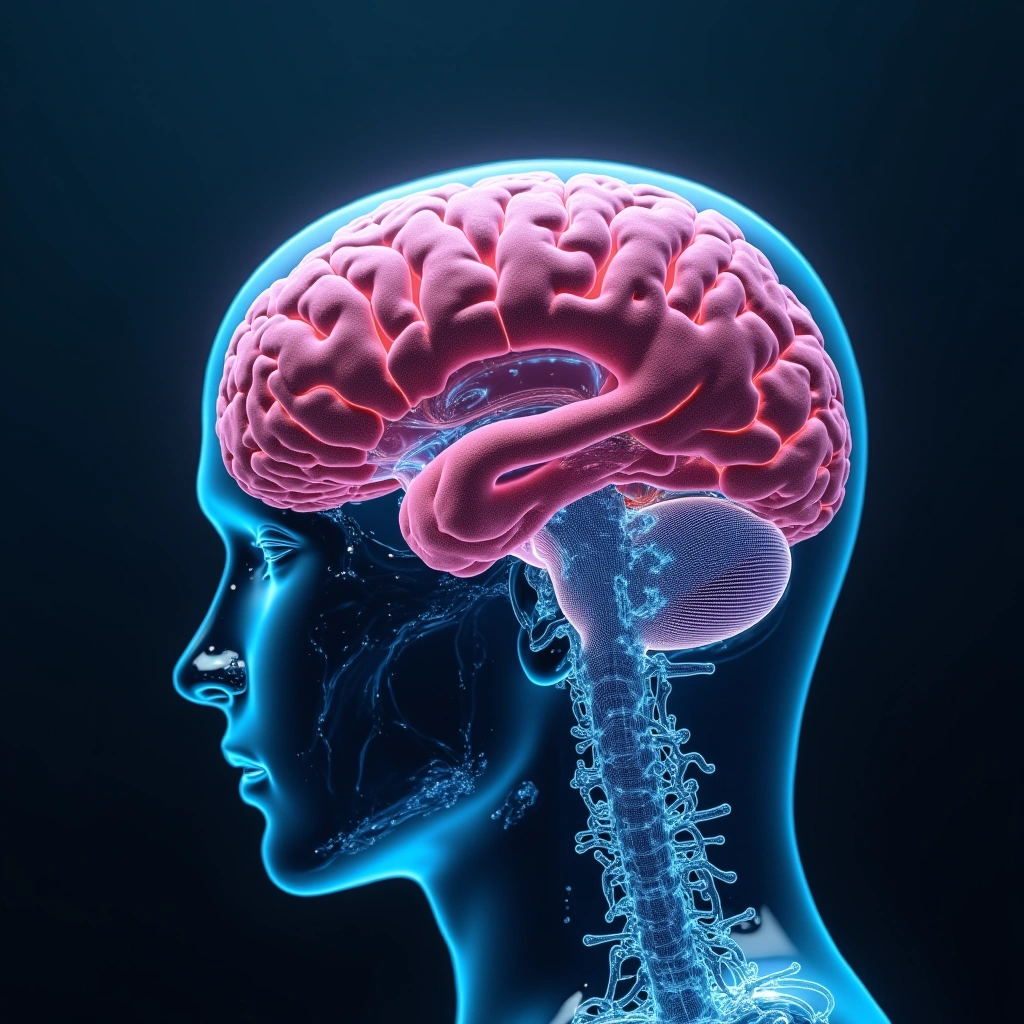
    Have you ever wondered what it would be like if artificial intelligence had a brain? Well, buckle up, because we’re about to dive into the fascinating world of AI development, where the latest buzz is that AI is getting a cerebellum. Yes, you heard that right, folks. Forget about all those sci-fi movies where robots take over the world; now, they’re just trying to perfect their balance and coordination!

    Rather than simply making AI hardware more efficient, the Northwestern team redesigned the device to mimic a specific circuit in the cerebellum, which excels at detecting novelties and making split-second decisions.

    So, what exactly does it mean for AI to have a cerebellum? For those of you who might not remember your high school biology (or perhaps you just skipped that class for a more riveting one on social media), the cerebellum is the part of the brain that helps with motor control, coordination, and, let’s be honest, not tripping over your own feet. It’s what helps you ride a bike without toppling over or dance like no one is watching (even if they are).

    Now, applying this concept to AI is like giving a toddler a bicycle; it’s both terrifying and exciting. Researchers are working on developing AI systems that can learn from their mistakes, adapt to new situations, and improve their motor functions over time. This means that instead of just crunching numbers and spitting out answers like a caffeinated calculator, AI could actually learn to navigate the world more like we do. Imagine a robot that could walk without falling flat on its face! It’s like giving them a personal trainer, but instead of lifting weights, they’re lifting their own self-esteem.

    But wait, there’s more! The implications of this development go beyond just not crashing into walls. With a cerebellum-like capability, AI could revolutionize fields such as robotics, autonomous vehicles, and even virtual reality. Picture a self-driving car that not only knows how to get from point A to point B but can also handle unexpected obstacles like a squirrel darting across the road or a traffic cone that mysteriously appeared out of nowhere. It’s like having a designated driver who’s also a ninja!

    Of course, with great power comes great responsibility (thanks, Uncle Ben). The more we advance AI technology, the more discussions we’ll have about ethics, safety, and whether or not we should be teaching our future robot overlords how to juggle. After all, we wouldn’t want them getting too confident, would we?

    In conclusion, the idea of AI getting a cerebellum is not just a quirky science experiment; it’s a significant step forward in making AI more versatile and capable. Who knows? One day we might just have robots that can not only perform complex tasks but also join us for a game of charades without knocking over the coffee table.

    So, the next time you hear someone say, “AI is getting a cerebellum,” just remember: it’s not the beginning of the robot apocalypse, but rather the dawn of a new era where machines might just learn not to trip over their own circuits. And honestly, that’s a development we can all get behind.


    Inspired by: “AI Gets a Cerebellum” (r/technology)