Category: AI

  • The Power Play: How Much Energy Do Data Centers and AI Really Use?

    The Power Play: How Much Energy Do Data Centers and AI Really Use?

    So, let’s talk about the elephant in the room—or rather, the data center in the corner. You might have heard whispers about how data centers and artificial intelligence (AI) are hogging up the world’s electricity like a kid at a buffet. But hold your horses! It turns out they only consume less than 2% of global electricity. Yes, you heard that right. Less than 2%!

    AI data centers are driving unprecedented energy consumption, with global data center electricity demand projected to double to 945 TWh by 2030. AI processing is particularly power -intensive—creating a single AI image uses energy equivalent to fully charging a smartphone, while data centers could represent 8.6% of US electricity demand by 2035.

    Now, before you go thinking that this is just a tiny fraction of the electric pie, let’s dig a little deeper. Sure, 2% sounds like a manageable number, but here’s the kicker: the demand for this energy is pretty much like a toddler throwing a tantrum for candy—it’s very geographically concentrated. In other words, while some regions are living it up with their data centers, other areas are just trying to keep the lights on without running out of power.

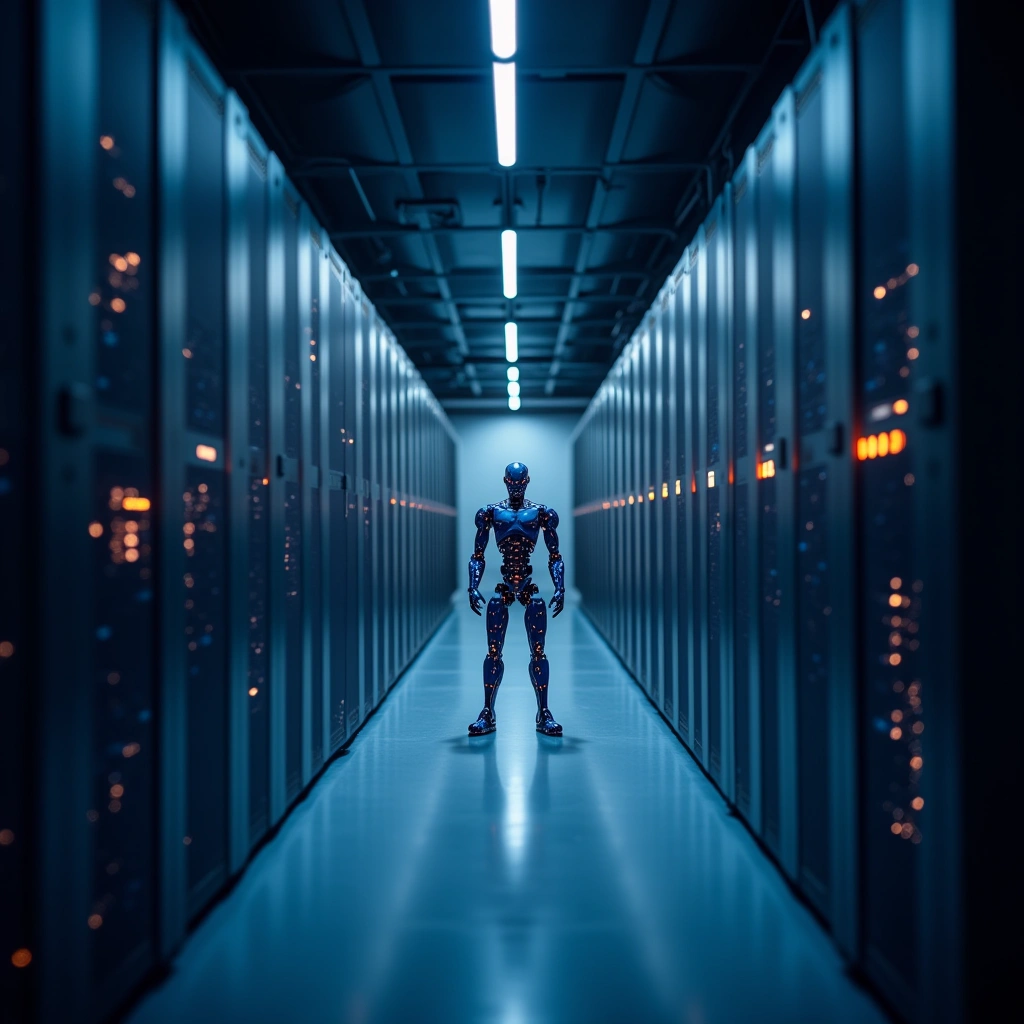
    Picture this: a giant warehouse full of servers, buzzing away like a swarm of caffeinated bees. These data centers are the unsung heroes (or villains, depending on your perspective) behind the scenes that power everything from your favorite social media app to the latest AI chatbot that probably knows more about you than your best friend does.

    But what does this 2% look like in practical terms? To put it into perspective, it’s like that one friend who shows up to a party and eats just one slice of pizza while everyone else devours the whole pie. It’s not that they’re not eating; it’s just that they’re not as ravenous as everyone else.

    Now, let’s get back to that geographical concentration. Think about it: if you live in a tech hub like Silicon Valley or Shenzhen, you’re likely surrounded by data centers like they’re Starbucks on every corner. Meanwhile, other regions might be sitting in the dark, wondering why their power bills are so high while they’re only using it for basic necessities like, I don’t know, keeping the fridge running.

    And let’s not forget about the environmental implications. As demand for data centers and AI continues to grow, so does the concern about how this energy is generated. If it’s powered by fossil fuels, we’re talking about a whole new level of carbon footprint that would make even the most laid-back environmentalist cringe.

    So, what’s the takeaway here? While the energy consumption of data centers and AI might not be the monster we once feared, it’s certainly not a picnic either. It’s a delicate balance of innovation, demand, and the need for sustainable practices. If we’re not careful, we could end up with a situation where our thirst for data and AI leads to an electrical grid meltdown, and nobody wants to be the one to explain that to their internet provider.

    In conclusion, while we can breathe a little easier knowing that data centers and AI are only responsible for less than 2% of global electricity, we should still keep an eye on the growing demand and its concentration in certain areas. Because, let’s face it, nobody wants to be left in the dark—unless, of course, we’re talking about turning off the lights to save energy. Now that’s a power move we can all get behind.


    Inspired by: “How much energy do data centers and artificial intelligence use? /// Less than 2% of global electri…” (r/technology)


  • TSMC’s Bold Move: The AI Chip Demand Surge and Arizona’s Role

    TSMC’s Bold Move: The AI Chip Demand Surge and Arizona’s Role

    If you’ve been keeping an eye on the tech world—or even if you haven’t, because let’s face it, who doesn’t love a good chip story?—you might have heard that TSMC (Taiwan Semiconductor Manufacturing Company) is gearing up for some serious business in the AI chip market. They’re not just dipping their toes in the water; they’re cannonballing into the deep end with a multi-year investment plan in Arizona. And let me tell you, this isn’t just a casual stroll in the park—this is a full-on sprint.

    TSMC, or Taiwan Semiconductor Manufacturing Co., is scaling up its mega investment in Arizona by committing an additional $100 billion to aggressively expand its U.S. chipmaking footprint amid a surging multi-year structural demand for AI.

    So, what’s the big deal about AI chips, you ask? Well, if you’ve been living under a rock—or, you know, just avoiding the tech news—AI chips are the brains behind everything from your favorite virtual assistant to the algorithms that suggest what cat video you should watch next. As AI technology continues to evolve and infiltrate every corner of our lives (thanks a lot, AI overlords), the demand for these chips is skyrocketing.

    TSMC’s CEO has been quoted saying they expect ‘strong, multi-year’ demand for AI chips. That’s not just a casual prediction; that’s like saying you expect strong, multi-year demand for pizza on a Friday night. I mean, who doesn’t want pizza? Similarly, who doesn’t want faster, smarter AI?

    Now, let’s talk about Arizona. Yes, the land of sunshine, cacti, and questionable decisions about whether to wear sunscreen or not. TSMC is ramping up its investment in Arizona to build a new chip manufacturing facility. This isn’t just a whim; it’s a strategic move to cater to the increasing demand for AI chips. With the world going gaga over AI, TSMC is positioning itself as a key player in this rapidly growing market.

    But why Arizona? Well, aside from the fact that it’s a great place to avoid snow shoveling in the winter, Arizona has been making a name for itself as a tech hub. The state is luring in big names in the semiconductor industry, offering incentives and a business-friendly environment. Plus, let’s not forget the weather—who wouldn’t want to work on cutting-edge technology while basking in the sun?

    As TSMC ramps up its operations, we can expect a ripple effect in the tech industry. More jobs, more innovation, and, of course, more AI-powered gadgets that will probably end up being more intelligent than most of us.

    In conclusion, TSMC’s investment in Arizona is more than just a business move; it’s a signal that the AI revolution is here to stay. So, buckle up, folks, because if you thought your devices were smart now, just wait until TSMC cranks out these AI chips. The future is looking bright—and a little bit scary, if we’re being honest. Just remember to keep your cat videos coming; they might be the only thing that keeps the robots entertained.


    Inspired by: “TSMC expects ‘strong, multi-year’ demand for AI chips as it ramps up Arizona investment” (r/technology)

  • The AI Dilemma: When Algorithms Go Awry in the Justice System

    The AI Dilemma: When Algorithms Go Awry in the Justice System

    In a world where artificial intelligence is supposedly here to make our lives easier—like a virtual butler without the bowtie—there’s a growing concern that it’s doing the exact opposite in the realm of criminal justice. A recent lawsuit in Ontario has brought to light some troubling allegations against an AI tool that’s been accused of disproportionately placing Black prisoners in maximum security. Yes, you read that right. We’re talking about algorithms that might as well be wearing blindfolds when it comes to race.

    A panel of international legal experts discuss the difficult questions that arise when machine-learned and AI-generated data enter the courtroom.

    So, how did we get here? Well, let’s rewind a bit. AI tools are designed to analyze vast amounts of data and make decisions that ideally are free from human biases. Sounds great, right? Well, not so fast. It turns out that these algorithms can inherit biases from the data they are trained on. If the data reflects systemic racial biases—say, from historical practices of racial profiling—then guess what? The AI might just perpetuate those biases, leading to some rather unfortunate outcomes.

    In this case, the lawsuit claims that the AI tool is not just innocently crunching numbers but is actively contributing to the overrepresentation of Black individuals in maximum security prisons. This begs the question: Are we really trusting our justice system to a glorified calculator? Because if we are, we need to have a serious talk about its qualifications.

    The implications of this are staggering. Imagine being judged not by your actions, but by the cold, hard calculations of an algorithm that doesn’t know you from a hole in the wall. It’s like letting a toddler decide who gets the last cookie based on some complex formula they scribbled on a napkin. Spoiler alert: it’s not going to end well.

    Critics of the AI tool argue that it lacks transparency. It’s one thing to have a tool that analyzes data; it’s another to have a black box that spits out decisions without any explanation. If you can’t understand how an AI came to its conclusion, how can you trust it? It’s like trying to decipher the meaning of life from a fortune cookie—sure, it’s fun, but it’s probably not going to lead you to any profound truths.

    The lawsuit is not just about one tool or one algorithm; it raises broader questions about the role of technology in our justice system. Are we really ready to let machines make decisions that could affect people’s lives so profoundly? Or are we just so enamored with shiny tech that we’re willing to overlook its flaws?

    As the case unfolds, it serves as a stark reminder that while technology can be a powerful ally, it can also be a double-edged sword. We need to ensure that we’re not trading one form of bias for another—especially when it involves people’s freedom.

    In the end, we might need to rethink how we integrate AI into our justice system. Because if there’s one thing we should all agree on, it’s that justice shouldn’t be left to the whims of a soulless algorithm. Let’s leave that to the humans who are already doing a great job at messing things up on their own.


    Inspired by: “Lawsuit says AI tool disproportionately places Black prisoners in maximum security in Ontario” (r/technology)

  • When AI Advice Goes Wrong: Confidence vs. Accuracy

    When AI Advice Goes Wrong: Confidence vs. Accuracy

    In a world where artificial intelligence is becoming the go-to buddy for advice, it seems we might not be as wise as we think. Recent research has revealed a rather ironic twist: people who rely on AI for guidance can end up being three times less accurate in their decisions, yet twice as confident in their choices. Talk about a confidence boost that doesn’t come with a reality check!

    It’s a probability score that indicates how strongly the model believes a particular answer or classification is correct. However, a high confidence level does not guarantee accuracy. AI can be confidently wrong.

    Let’s unpack this, shall we? We’ve all seen those ads promising that AI can help us make better decisions, whether it’s picking the right stock, deciding on the perfect vacation destination, or even choosing the right toppings for our pizza (pineapple, anyone?). But it turns out that trusting our digital overlords might lead us down a path of misguided certainty.

    Picture this: you’re faced with a decision. You could trust your gut, which has served you well through countless questionable life choices, or you could consult an AI that’s been fed more data than a college student during finals week. You choose the AI, and suddenly, you feel like a genius. “Look at me! I’m so smart, I’m consulting an AI!” But hold your horses! Just because you feel like a genius doesn’t mean you actually are one.

    The research suggests that while people are becoming increasingly confident in their decisions after receiving AI advice, the accuracy of those decisions plummets. It’s like getting a pep talk from a motivational speaker who’s never actually succeeded at anything. You leave the session feeling pumped and ready to conquer the world, but when push comes to shove, you might just trip over your own shoelaces.

    So why does this happen? Well, it appears that AI can create a false sense of security. When we hear that sweet, sweet data-driven advice, our brains treat it like gospel. We think, “If an AI said it, it must be true!” This overconfidence can lead us to ignore our instincts or the valuable knowledge we already possess, which, let’s face it, is often based on real-life experiences rather than algorithms.

    Additionally, the researchers found that the more confident people became in their decisions, the less they tended to seek out further information or alternatives. It’s like being so sure of your choice to wear socks with sandals that you refuse to consider that maybe – just maybe – it’s not the best fashion statement. You strut around with your head held high, blissfully unaware of the fashion faux pas you’re making.

    Now, I’m not saying that AI is the villain in this story. After all, it can be a fantastic tool for analysis and insights. But it’s crucial to strike a balance between leveraging AI’s capabilities and maintaining a healthy dose of skepticism. Remember, just because the AI said it doesn’t mean it’s infallible. It’s okay to question the advice you receive, whether it’s from a machine or a friend who insists that eating kale will change your life.

    In conclusion, as we continue to navigate this brave new world of AI, let’s keep our confidence in check. It’s great to feel empowered by technology, but let’s not forget to rely on our own judgment too. After all, it’s our unique human experiences that help us make the best decisions – even if they sometimes involve a questionable pizza topping.


    Inspired by: “AI advice made people three times less accurate but twice as confident, researchers found” (r/technology)

  • TSMC’s Arizona Factory: Riding the AI Wave

    TSMC’s Arizona Factory: Riding the AI Wave

    In a world where artificial intelligence is becoming the new buzzword—much like ‘synergy’ and ‘disruptive innovation’—TSMC (Taiwan Semiconductor Manufacturing Company) is putting the pedal to the metal on its Arizona factory buildout. According to their CFO, this isn’t just another brick in the wall; it’s a strategic move to capitalize on what they’re calling the AI ‘megatrend.’ Yes, folks, the megatrend that is supposed to change everything we know about technology, and possibly even how we order pizza.

    TSMC ‘ s Arizona expansion will significantly increase global advanced chip capacity, particularly once the CoWoS packaging facility comes online. However, the expansion alone will not fully resolve the AI chip shortage, as demand continues to grow faster than supply. The Arizona complex is expected to produce a meaningful share of AI chips by 2029–2030, reducing but not eliminating supply constraints.

    Now, let’s break this down a bit. TSMC is a giant in the semiconductor industry. They’re the folks who make the chips that power everything from your smartphone to that fancy new AI assistant that probably knows you better than your best friend. And with the surge in demand for AI technologies, it’s like they’ve hit the jackpot—if the jackpot was a never-ending supply of silicon wafers.

    So why Arizona? Well, besides the sunny weather and the opportunity for some truly bizarre cactus selfies, Arizona is becoming a hotspot for semiconductor manufacturing. The U.S. government is throwing money at the industry like it’s confetti at a wedding, and TSMC wants to ensure they’re not left out of the party. Plus, having a factory closer to home means they can dodge some of the supply chain issues that have plagued the industry in recent years. Who doesn’t love a good ol’ supply chain solution?

    The CFO mentioned that they’re accelerating the buildout to meet the growing needs of AI. If you’ve been living under a rock, AI isn’t just a fad; it’s here to stay, and it’s hungry for chips—lots and lots of chips. Think of it as a toddler with an insatiable appetite for cookies, but in this case, those cookies are semiconductor chips. And TSMC aims to be the baker.

    But let’s not kid ourselves; building a factory is no small feat. It’s not like assembling IKEA furniture where you can just throw the pieces together and hope for the best. It involves meticulous planning, construction, and, of course, a team of engineers who probably have more degrees than the temperature in Phoenix during summer.

    As TSMC ramps up its efforts in Arizona, it’s a clear indication that they’re not just riding the AI wave; they’re trying to surf it with style. By investing in the local economy and creating jobs, they’re also giving a nod to the growing trend of reshoring manufacturing back to the U.S. Let’s face it, the last thing anyone wants is to be dependent on a global supply chain that can go haywire at the drop of a hat—or a pandemic.

    In conclusion, TSMC’s push to accelerate the Arizona factory buildout isn’t just about keeping up with the AI megatrend; it’s about leading it. As they prepare to churn out chips for everything from self-driving cars to AI-driven apps that can predict when you’ll need a nap, one thing is clear: the future is looking bright—at least for those in the semiconductor industry. So buckle up, because the ride is just getting started, and who knows, maybe one day we’ll all have our very own AI to help us navigate this wild world. Just make sure to keep the cookies stocked!


    Inspired by: “TSMC is accelerating Arizona factory buildout to capitalize on AI ‘megatrend,’ CFO says” (r/technology)

  • The Great Textbook Exodus: How Screens and AI Are Tanking America’s Math and Reading Scores

    The Great Textbook Exodus: How Screens and AI Are Tanking America’s Math and Reading Scores

    Let’s take a moment to talk about the educational crisis lurking in our classrooms like a forgotten lunch in a student’s backpack. You know the one—the kind that smells so bad it could be classified as a biohazard? Yeah, that’s kind of what’s happening with America’s math and reading scores right now. Spoiler alert: It’s not pretty.

    According to Horvath, student AI use is not conducive to learning because it mirrors the failures of the 20th century “teaching machines.” Students’ learning was individualized—they answered questions from the device at their own pace …

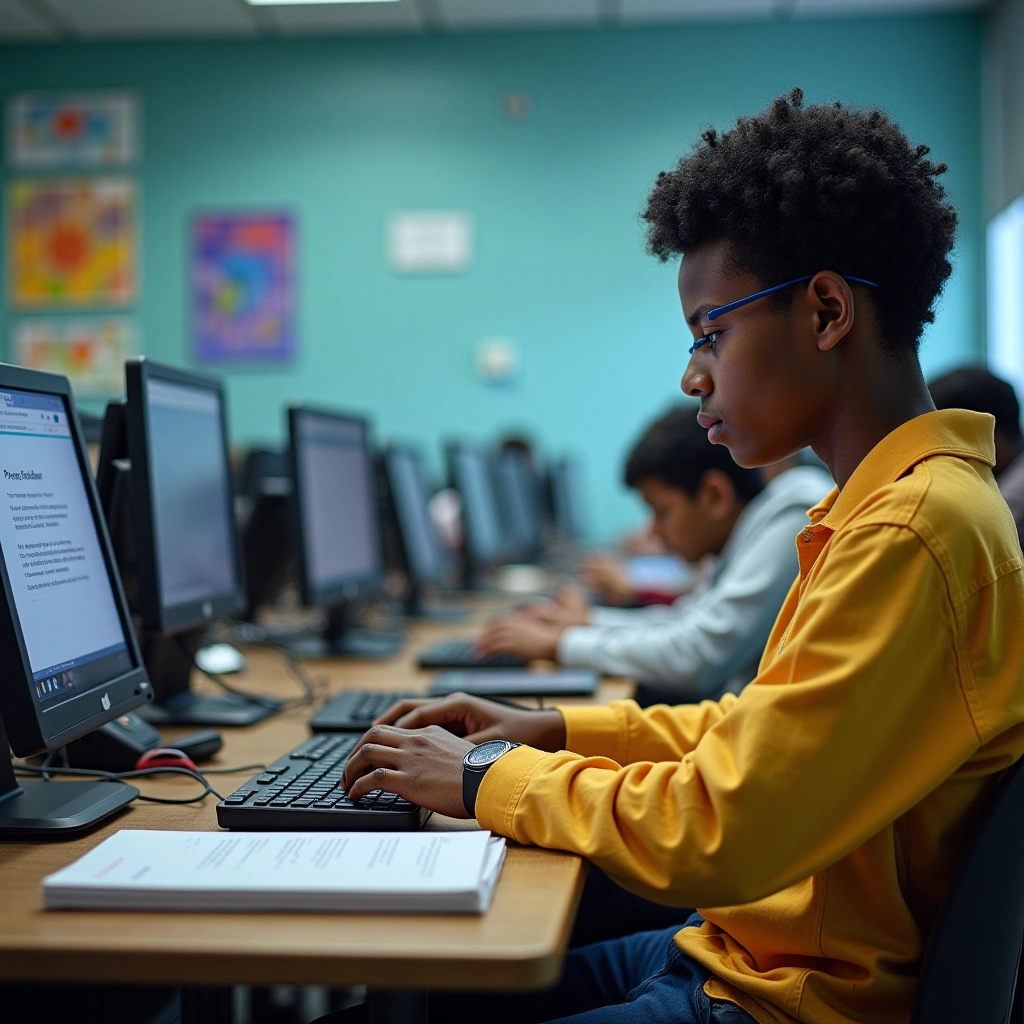
    You might have heard the news: after schools decided to swap out textbooks for screens, the results have been nothing short of catastrophic. I mean, who needs good ol’ reliable paper when you can have a shiny tablet that distracts kids with videos of cats doing backflips? Clearly, that’s where the real educational value lies.

    According to recent studies, American students’ proficiency in math and reading has dropped faster than a lead balloon. And let’s be honest, it’s not just a small dip—it’s more like a free fall into the abyss. We traded in our trusty textbooks for screens that seem to have the attention span of a gnat. Who knew that replacing something as tactile as a book would result in brain rot?

    Now, I’m not saying that technology doesn’t have its perks. I mean, who doesn’t love the convenience of Googling everything instead of flipping through pages? But when screens become the sole source of learning, it’s like trying to bake a cake with only half the ingredients. Sure, you might end up with something that resembles a cake, but it’s definitely not going to win any awards.

    And here’s where it gets even juicier. Enter AI, the shiny new toy that everyone is raving about. Schools are starting to integrate AI into their teaching methods, which sounds great in theory until you realize that AI doesn’t exactly have the best track record when it comes to accuracy. It’s like trusting a toddler to babysit your pet goldfish—sure, it sounds like a fun idea, but it probably won’t end well.

    Incorporating AI into education can be beneficial, but let’s face it: if we can’t even get kids to focus on a screen, how are we going to expect them to learn from a chatbot that can barely string a coherent sentence together? It’s like throwing spaghetti at the wall and hoping something sticks. Spoiler alert: it probably won’t.

    So what’s the solution? Well, it might be time to consider a little balance. How about we bring back textbooks alongside the tech? Imagine a world where kids can actually read and comprehend without getting distracted by the latest TikTok dance challenge. Sounds revolutionary, right?

    In conclusion, while screens and AI have their place in education, they shouldn’t be the only players on the field. Let’s not forget the good old-fashioned textbook—after all, it’s been around long enough to earn some respect. If we want to reverse this trend of declining math and reading scores, it might just be time to rethink our approach and maybe, just maybe, give those dusty old books a second chance. Because let’s face it, if we don’t, we might just end up with a generation that can’t even calculate how much pizza they need for a party. And that, my friends, is a tragedy we can’t afford to let happen.


    Inspired by: “America’s math and reading scores tanked after schools ditched textbooks for screens—and AI could w…” (r/technology)

  • The Future of Film: AI and the De-Aging Dilemma in ‘The Lord of the Rings’

    The Future of Film: AI and the De-Aging Dilemma in ‘The Lord of the Rings’

    Alright, folks, gather round because we need to talk about something that sounds like it’s straight out of a sci-fi movie: AI technology being used to de-age actors in films. Yes, you read that right! In the upcoming project, ‘The Lord of the Rings: The Hunt for Gollum,’ filmmakers are turning to artificial intelligence to make their cast look like they’ve just stepped out of the Shire, fresh-faced and ready for adventure.

    The Lord of the Rings: The Hunt for Gollum will digitally de-age some of its characters using machine learning and AI, director Andy Serkis has admitted. A prequel to the original The Lord of the Rings trilogy, Serkis' spinoff will see Elijah …

    Now, if you’re like me, your first thought might be, “Wait, are we really trusting robots to make people look younger?” Because let’s be honest, the last time I let technology handle my appearance, I ended up with a selfie filter that made my face look like a potato. But I digress.

    The use of AI in film isn’t exactly new; we’ve seen it before with the likes of de-aging effects in ‘The Irishman’ and ‘Rogue One.’ However, the stakes are higher when it comes to something as beloved as Tolkien’s universe. We’re talking about a franchise that has fans ready to defend the honor of hobbits with their lives. So, how does this all work?

    Essentially, AI can analyze thousands of images of actors from their younger years and then apply that knowledge to create a digital version that looks like they did back in the day. In simpler terms, it’s like looking at old high school yearbook photos and saying, “Wow, I used to have hair!” only this time, it’s the entire film industry getting the glow-up.

    But before you go getting all nostalgic about the good old days of practical effects and makeup, let’s consider the implications. First off, will we see a rise in actors who refuse to age? I mean, if you can keep looking 25 forever, why wouldn’t you? Imagine the casting calls: “Must be able to play a 40-year-old but look like they just graduated college.” Talk about a weird job requirement!

    Then there’s the question of authenticity. Some purists might argue that using AI to de-age actors is the cinematic equivalent of putting a filter on a classic painting. Sure, it looks nice, but does it truly capture the essence of what made it great in the first place? Will audiences be able to accept a digitally altered Aragorn as he battles his way through Middle-earth? Or will we all just sit there thinking, “Wow, he looks good for a 2,000-year-old ranger!”

    And let’s not forget the potential for mishaps. I mean, what if the AI has a bad day? One minute you’re watching Gandalf the Grey, and the next, you’ve got Gandalf the Overly-Smooth Baby Face. I can see the headlines now: “Gandalf Goes to the Gym: A Journey Through Time and Botox!”

    In conclusion, while the idea of de-aging actors with AI technology is intriguing (and a little terrifying), it does open up a can of worms regarding the future of filmmaking. Will we embrace this digital wizardry, or will we long for the days when actors just aged naturally, like fine wine or that cheese you forgot in the back of the fridge? Either way, one thing is for sure: the journey to Middle-earth just got a lot more high-tech, and I can’t wait to see how it all turns out.

    So, what do you think? Are you ready for a youthful Gollum, or are you more of a ‘let’s keep it real’ kind of fan? Let me know in the comments below!


    Inspired by: ““The Lord of the Rings: The Hunt for Gollum” Will Use AI to De-Age Actors” (r/technology)

  • Will AI Make Us More Rude? Let’s Talk About Our Digital Demeanor

    Will AI Make Us More Rude? Let’s Talk About Our Digital Demeanor

    Ah, the wonders of technology! From smartphones that can practically do our laundry (okay, maybe not yet) to AI systems that can write poetry, order pizza, and even hold a conversation. But as we bask in the glow of our digital companions, there’s a nagging question lurking in the background: Are we becoming ruder because of it?

    She says it's a huge possibility. In a recent article in Psychology Today, she says declining politeness is a serious concern, because it is essential for society's functioning. But our history of interactions on social media and now, AI, are …

    You might be thinking, “Come on, it’s just a machine!” But hear me out. When we interact with AI, we often throw politeness out the window. We type commands like we’re issuing orders to a minion rather than engaging in a conversation. “Hey Siri, play my favorite song,” sounds innocent enough, but let’s be honest: when did we stop saying please and thank you?

    It’s as if the presence of AI has conditioned us to treat these digital assistants like they’re our personal servants. And while they don’t have feelings (thank goodness, or we’d be in a world of hurt), our growing brusqueness could be seeping into our human interactions.

    Think about it: when was the last time you had a face-to-face conversation with someone and didn’t feel the urge to check your phone every five seconds? It’s a little like trying to have a deep conversation while someone is continuously tapping their watch. We’ve become so accustomed to instant responses from our machines that we expect the same from our fellow humans. And let’s be real, humans are not as fast or efficient as a well-programmed AI.

    Moreover, there’s a certain anonymity that comes with interacting with AI. If you’ve ever felt bold enough to yell at your phone when it doesn’t understand your accent (guilty as charged), you might be inadvertently practicing rudeness. This behavior can spill over into our real-life interactions, making us less patient and more irritable when people don’t meet our expectations.

    Now, let’s sprinkle in a bit of sarcasm here: Because who needs patience and understanding when you can have a robot that can tell you the weather in less than a second?

    The irony is, while we’re busy trying to streamline our lives with technology, we might be losing the very essence of what makes us human: connection. Conversations are not just about exchanging information; they’re about understanding, empathy, and, yes, a dash of politeness.

    So, what can we do? Maybe it’s time to take a step back and rethink how we communicate with our digital devices—and with each other. Try saying “please” and “thank you” to your AI. It may feel silly, but it’s a great way to remind yourself of the importance of courtesy in all your interactions. Plus, who knows? Maybe the next time you ask your AI to do something, it’ll respond with a little extra flair (or at least a better playlist).

    In conclusion, while AI can make our lives easier, let’s not allow it to make us ruder. After all, the last thing we need is to become the generation that forgot how to say thank you. So, the next time you interact with your AI, channel your inner polite human. Because if we don’t, we might just end up yelling at each other in the street like we do at our gadgets. And that would be a real tragedy.


    Inspired by: “Will AI make us more rude? « The way we talk to AI may be degrading our human interactions. »” (r/technology)

  • How Chinese Tech Giants Use AI Agents to Charm Enterprise Clients

    How Chinese Tech Giants Use AI Agents to Charm Enterprise Clients

    In the fast-paced world of technology, where innovation is the name of the game, Chinese tech giants are not just playing—they’re redefining the rules. Companies like Ant Group and Tencent have taken the concept of Artificial Intelligence (AI) agents and turned it into a secret weapon to win over enterprise clients. If you’re not familiar with this trend yet, buckle up, because it’s about to get interesting.

    Chinese tech giants are doubling down on enterprise artificial intelligence agents with new products unveiled at the country’s top AI summit, signalling heightened domestic rivalry to win over business clients as agent-based AI adoption accelerates.

    So, what exactly are these AI agents? Imagine a super-efficient assistant who never sleeps, doesn’t take lunch breaks, and has an encyclopedic knowledge of your business. That’s your AI agent. These tech titans have harnessed AI to create tools that help businesses streamline operations, enhance customer engagement, and ultimately, boost profits. It’s like having a Swiss Army knife, but instead of a toothpick and a can opener, you get data analytics and customer insights.

    Take Tencent, for instance. This company has been busy integrating AI into its WeChat ecosystem, which is basically a one-stop shop for everything from messaging to e-commerce. Businesses can use AI to analyze customer data and tailor their marketing strategies accordingly. It’s like having a personal shopper who knows exactly what you want—except this shopper is a robot, and it’s not judging you for your questionable online purchases.

    Ant Group, on the other hand, is making waves with its AI-driven financial services. They provide AI agents that help businesses assess credit risk, manage transactions, and even offer personalized financial advice. Imagine getting financial tips from a robot that has access to all your spending habits. Sounds a bit invasive, right? But hey, if it saves you from that impulse buy at 3 AM, maybe it’s worth it.

    Now, you might be wondering: why are these companies focusing on enterprise clients? Well, the answer is simple. Businesses are always looking for ways to improve efficiency and reduce costs. By utilizing AI agents, companies can automate mundane tasks, allowing human employees to focus on more strategic initiatives. It’s like giving your employees a break from the boring stuff so they can actually do what they were hired for—think big, innovate, and maybe even grab a coffee without feeling guilty.

    But here’s the kicker: it’s not just about the technology. These Chinese tech giants have also mastered the art of building relationships. They understand that enterprise clients want more than just a shiny new tool—they want a partner that can help them navigate the complexities of the digital landscape. This is where the charm offensive comes in. Ant and Tencent are not just selling products; they’re selling trust and expertise. It’s like dating, but instead of swiping right, you’re signing contracts.

    In conclusion, the use of AI agents by Chinese tech giants is a game changer for enterprises looking to innovate and thrive in a competitive market. With tools that enhance efficiency and personalized solutions that cater to specific business needs, it’s no wonder these companies are winning over clients left and right. So, if you’re still relying on spreadsheets and manual processes, it might be time to consider letting an AI agent take the wheel. After all, who wouldn’t want a tireless robot buddy in their corner?


    Inspired by: “How Chinese tech giants from Ant to Tencent use AI agents to win over enterprise clients” (r/technology)

  • Canada’s AI Data Centre Boom: What’s Happening in Oakville?

    Canada’s AI Data Centre Boom: What’s Happening in Oakville?

    So, here we are, folks. Canada, known for its maple syrup, hockey, and politeness, is getting ready to host one of its largest proposed AI data centres in Oakville, Ontario. That’s right! A data centre so big it could probably power a small village—or at least make a decent-sized coffee shop’s worth of lattes.

    A new national AI strategy by the federal government this week comes at a time when the country is confronting a wave of new high-powered data centres, while public sentiment could be souring on the impacts of the new technology.

    Now, let’s talk numbers. This proposed data centre is eyeing a whopping 320 megawatts (MW) of power. For those not fluent in energy jargon, that’s enough electricity to power approximately 200,000 homes! Imagine all the Netflix binges, video game marathons, and TikTok scrolling that could happen with that kind of juice.

    But why Oakville? Well, it’s not just because the name sounds cute. Oakville is strategically located near major highways and has access to reliable power sources. Plus, it’s a charming town that’s probably tired of just being known for its beautiful lakes and parks. I mean, who wouldn’t want to be the home of a giant data centre? It’s like being the cool kid in school, but instead of a skateboard, you have a massive server farm.

    Of course, with great power comes great responsibility. There are concerns about the environmental impact of such a large facility. Data centres consume a lot of energy and water, which could put a strain on local resources. But don’t worry—developers are promising to implement eco-friendly practices. You know, like planting trees or using renewable energy sources, which is basically the adult version of saying, “I’ll clean my room after I finish this episode.”

    Local residents are understandably excited yet cautious. On one hand, this could mean job creation, economic growth, and the chance to say, “Oh, you thought Silicon Valley was cool? Check out our mega data centre!” On the other hand, they’re also concerned about traffic, noise, and the potential for their quaint town to be overrun by techies looking for the best Wi-Fi signal.

    If this project goes ahead, it could put Oakville on the map as a tech hub, attracting more businesses and investment. But let’s not forget that with all this tech growth, we might need to start teaching the locals how to code. Because what’s a tech hub without a few coders running around?

    In conclusion, while the proposed AI data centre in Oakville is exciting, it’s essential to keep an eye on the potential impacts. Will it be the best thing to happen to the town since the invention of the double-double? Only time will tell. For now, let’s just hope they keep the coffee flowing and the servers cool!


    Inspired by: “One of Canada’s Largest Proposed AI Data Centres (320 MW) Is Planned for Oakville, Ontario” (r/technology)