Category: AI

  • How AI Will Spark Financial Chaos and Transform Our World

    How AI Will Spark Financial Chaos and Transform Our World

    Alright, folks, grab your tin foil hats and hold onto your wallets because we’re diving into the wild world of Artificial Intelligence. Picture this: a future where robots decide the fate of our financial markets and we’re left wondering if we should be investing in stocks or building a bunker. Sounds like a movie plot, right? But let’s unpack this a bit.

    First off, let’s address the elephant in the room—or should I say, the algorithm in the server room? AI is revolutionizing industries faster than you can say ‘machine learning’. It’s like giving a toddler a sugar rush but with a much more serious consequence: the potential for financial calamity. Imagine AI trading bots making split-second decisions on the stock market. One wrong calculation and boom! We’re all wondering why our retirement funds just vanished faster than a magician’s rabbit.

    Now, I know what you’re thinking: ‘But AI will also make things better!’ And yes, you’re absolutely right! It’s like a double-edged sword, or a coin that always lands on its edge. On one side, we have AI optimizing processes, predicting market trends, and even helping us find the best pizza joint in town. But flip that coin, and you might just land on a dystopian future where our financial systems are controlled by algorithms that don’t care if we have enough to pay for next month’s rent.

    Let’s break it down a bit:
    1. Job Displacement: As AI takes over more roles, we’re looking at a future where job security is as mythical as Bigfoot. Who needs a financial analyst when you have a super-intelligent robot crunching numbers at lightning speed? The result? A lot of very worried humans trying to figure out how to pay their bills while the bots sip coffee and calculate their next big investment.
    2. Market Volatility: AI can analyze data faster than a teenager scrolling through TikTok. But just because it’s fast doesn’t mean it’s always right. If multiple AI systems start making similar trades based on flawed data, we could see market swings that would make even the most seasoned investors clutch their pearls.
    3. Ethical Dilemmas: What happens when AI makes decisions that affect millions of lives? Should we let a robot decide who gets a loan or who’s left in the dust? Spoiler alert: robots don’t have feelings, but they sure can create chaos when they mess up.
    4. Regulation Nightmares: Governments are still trying to figure out how to tax digital nomads, let alone regulate AI in finance. It’s like trying to herd cats… if the cats had PhDs in machine learning. This could lead to a regulatory Wild West where anything goes, and trust me, that’s not a place you want your money to wander into.

    But hold your horses! Before you start hoarding canned beans and digging a bunker, let’s talk about the flip side of this AI revolution. While it may sound like the end is nigh, AI could also be the superhero we didn’t know we needed.
    • Efficiency and Innovation: AI has the potential to streamline financial processes, reducing costs and improving access to financial services. Imagine a world where you can get a loan approved in seconds instead of days—sounds dreamy, right?
    • Data-Driven Decisions: With AI analyzing data, we could see smarter investments and better financial products tailored to individual needs. No more cookie-cutter services—just a personalized experience that feels like a warm hug for your wallet.
    • Global Financial Inclusion: AI can help bring financial services to the unbanked and underbanked populations around the world. It’s like giving everyone a seat at the table, and who doesn’t love a good buffet?

    In conclusion, while AI might trigger a financial calamity that could make the 2008 crash look like a minor hiccup, it also has the power to remake our world in ways we’re only beginning to grasp. So, my dear friends, let’s embrace the change, keep a watchful eye on those algorithms, and maybe invest in a little financial literacy along the way. After all, knowledge is power—especially when robots start trying to take over our wallets.

    So, what do you think? Is AI a ticking time bomb or a golden opportunity? Let’s chat about it in the comments!

  • Microsoft’s Copilot: The New Office Buddy That’s Driving IT Admins Up the Wall

    Microsoft’s Copilot: The New Office Buddy That’s Driving IT Admins Up the Wall

    Ah, Microsoft! The tech giant that has brought us everything from the blue screen of death to the endless joy of updating Windows at the most inconvenient times. But now, they’ve taken it up a notch (or perhaps a few notches in the wrong direction) by endorsing the use of personal Copilot in workplaces. If you’re an IT admin, you might want to grab a stress ball or two because things are about to get spicy!

    So, what’s the deal with Microsoft’s Copilot? In a nutshell, it’s like having a supercharged assistant that helps you with tasks in applications like Word, Excel, and PowerPoint. Sounds great, right? I mean, who wouldn’t want a personal AI buddy to help them whip up a report while you’re busy contemplating the mysteries of life (or what to have for lunch)? But here’s where the plot thickens: Microsoft is giving the green light to employees to use this tool independently, and that’s sending IT admins into a tailspin!

    Picture this: your friendly neighborhood IT admin, armed with a coffee mug that says ‘World’s Okayest Admin’, suddenly finds themselves in a war zone. Employees are downloading and using Copilot without a second thought, and IT has no clue what’s going on. It’s like a scene from a horror movie where the unsuspecting victims (that’s the employees) are being lured into the dark side of unregulated tech. IT admins are left screaming, ‘Stop! You don’t know what you’re doing!’ But alas, their cries go unheard.

    Now, let’s talk about the elephant in the room: security. Allowing employees to use personal Copilot without oversight could open the floodgates to data breaches and cyber mischief. IT admins are tasked with upholding the fortress of company data, but with Microsoft throwing caution to the wind, it’s like giving the keys to the castle to a group of party-happy teenagers. You can almost hear the IT admins collectively groaning at their desks.

    Moreover, there’s the issue of compliance. Different industries have varying regulations about data handling. But now, with employees using AI tools that could potentially mishandle sensitive information, it’s like playing a game of legal roulette. Will they hit the jackpot or will the company end up in hot water? IT admins are probably wishing they could invest in an emotional support animal at this point.

    But let’s not forget the silver lining! For some employees, Copilot could be a game-changer. Think about it: quicker project turnarounds, enhanced productivity, and a way to make mundane tasks a bit less dull. Sure, it’s like letting a toddler run with scissors, but hey, at least they might create a masterpiece before they hurt themselves!

    In conclusion, while Microsoft’s endorsement of personal Copilot might be a dream come true for employees eager to embrace the future of work, it’s sending IT admins into a frenzy. The clash between innovation and security is real, and as we all know, the road to tech utopia is often paved with the frustrated sighs of IT admins. So, to all the admins out there, hang in there! You’ve got this (and maybe invest in that stress ball – or a whole stress ball factory).

  • Meta’s New AI Chatbot: Your Conversations Are Now on the Shopping List

    Meta’s New AI Chatbot: Your Conversations Are Now on the Shopping List

    Hey there, my fellow internet wanderers! If you thought your conversations with Meta’s AI chatbot were just casual chitchat, think again! According to a recent revelation from CNN Business, it turns out that those friendly exchanges might soon be used to sell you stuff. Yes, you heard that right! We’re diving into the wild world of AI, privacy, and the ever-elusive concept of ‘personalized marketing’—grab your virtual shopping carts, folks!

    Now, let’s set the scene. Picture this: you’re chatting with an AI chatbot about your latest obsession—perhaps it’s that quirky vintage lamp you spotted on Instagram or your undying love for cat memes. The chatbot, being the loyal digital confidante it is, is taking notes. And by notes, I mean data. Lots of it.

    Here’s where things get spicy. Meta has decided that your private conversations can be the golden ticket to a personalized shopping experience. Imagine your chatbot saying, “Hey, remember that lamp you loved? It’s on sale now!” Sounds handy, right? But also a bit creepy, if we’re being honest.

    Now don’t get me wrong; I love a good bargain. But the idea of my AI buddy acting like a digital Santa Claus, sleighing in with promotions based on my most random and unfiltered thoughts is a little unnerving. It’s like that one friend who can’t keep a secret, constantly reminding you about that embarrassing moment at the party—except this time, it’s your shopping habits that are on display!

    Let’s not forget the privacy concerns. Remember when your mom warned you about sharing secrets with strangers? Well, in the digital age, those strangers are algorithms. Algorithms that are meticulously crafted to analyze your every word for the sake of selling you more stuff. It’s like having a shopping assistant who reads your diary—awkward, right?

    But Meta isn’t the only player in this game. Other tech giants have been dabbling in the same pool, splashing around with our data like it’s a kiddie pool at a summer BBQ. The question arises: is this the new norm? Are we destined to live in a world where our AI companions become our shopping advisors, turning our casual chats into targeted ads?

    As we navigate this brave new world, it’s important to keep our eyes peeled and our settings adjusted. You can bet I’ll be looking into those privacy policies with a fine-tooth comb. So, what’s the takeaway here? While the idea of personalized shopping sounds appealing, let’s not forget the value of our personal space—yes, even in the digital realm.

    So, as you engage with your AI chatbot, just remember: every time you share your preferences, there’s a chance you’re also signing up for a world of ads that feel just a little too personal. Happy chatting, and may your conversations be full of laughs and not just shopping lists!

    If you’ve got thoughts on this topic, drop them in the comments! I want to hear all about your experiences with AI and shopping—let’s keep this conversation going!

  • Are Parents Wrong for Letting Kids Play with AI? Unpacking the Trend

    Are Parents Wrong for Letting Kids Play with AI? Unpacking the Trend

    Ah, parenting in the age of technology—where your kid’s best friend might just be a chatbot with a penchant for dad jokes! Recently, a Reddit user by the name of /u/apple_kicks shared a charming yet slightly alarming story about their son, who genuinely believed that artificial intelligence was as real as his pet goldfish. This prompted a thought-provoking question: Are parents wrong for letting their little ones interact with AI? Spoiler alert: it’s a mixed bag, folks!

    Let’s start with the positives. AI has the potential to be an educational tool that can teach kids everything from math to the fine art of sarcasm—because who doesn’t love a good roast at the dinner table? Imagine your kid engaging in a lively debate with an AI about why pineapple should definitely not go on pizza. It’s like having a mini philosopher under your roof, minus the messy bedroom.

    But here’s where it gets a little less rosy and more, well, dystopian. Kids are impressionable—like that time your toddler thought the vacuum cleaner was a monster from outer space. When they start confusing AI with reality, it’s a slippery slope to them thinking that every voice they hear is a friendly chatbot or worse, that their toys come to life when no one is looking (looking at you, Toy Story).

    Moreover, the line between fun and fear can be a tightrope walk. AI can provide some giggles, but let’s not forget the existential dread it can also bring. What happens when your kid asks Siri about the meaning of life, and Siri responds with a list of existential philosophers that would make even Socrates raise an eyebrow? Suddenly, you’re not just a parent; you’re a therapist trying to explain the complexities of human existence to a five-year-old who just wants to know why the sky is blue.

    And then there’s the issue of safety. While some AIs are programmed to be as cuddly as a teddy bear, others can lead kids down the rabbit hole of misinformation faster than you can say “Google it.” It’s like giving your kids the keys to a car and saying, “Just don’t drive it off a cliff.” One wrong question, and they could end up believing that the Earth is flat or that unicorns are real. Spoiler alert: they’re not.

    So, what’s a parent to do? Moderation is key. It’s all about balance, just like keeping a steady diet of broccoli and cookies (because we all know those cookies are definitely happening). Encourage your kids to engage with AI, but also make sure to have those important conversations about what’s real and what’s, well, a product of binary code and a lot of caffeine.

    In the end, letting your kids play with AI isn’t inherently wrong. It can be a gateway to learning, creativity, and lots of laughs—just be ready to answer some pretty tough questions along the way. So, tell me, have you let your kids play with AI yet? If so, what’s the craziest thing they’ve asked it? Let’s share our parenting wins and fails because, let’s face it, we could all use a good laugh (or a good therapy session) every now and then!

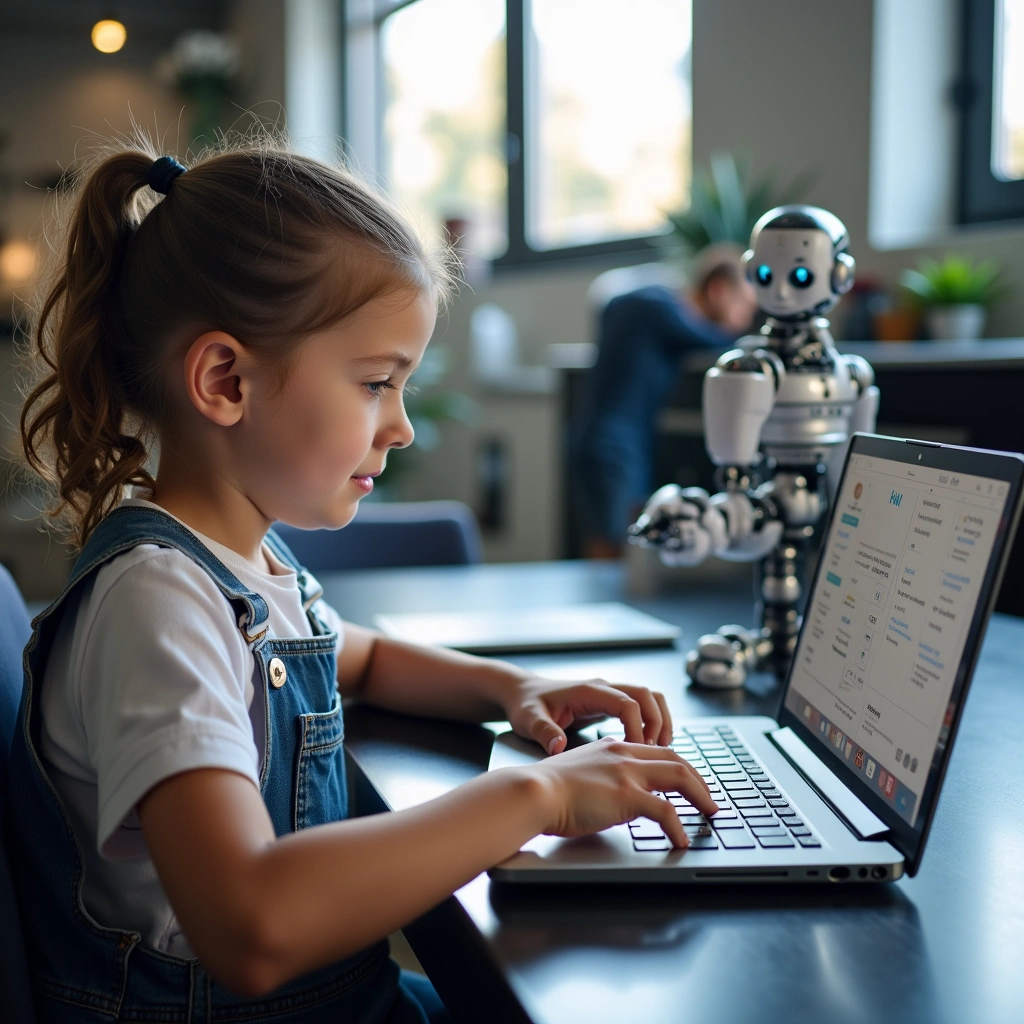
    [Insert an image of a child interacting with AI here]

    Alright, folks, that’s my two cents on this topic. Now, go forth and parent wisely, and remember: the real monsters are not in the vacuum cleaner but in the endless questions your kids will ask about AI!

  • OpenAI vs Elon Musk’s xAI: The Trade-Secrets Drama Unfolds

    OpenAI vs Elon Musk’s xAI: The Trade-Secrets Drama Unfolds

    Ah, the tech world, where the stakes are higher than a cat on a hot tin roof! If you’ve been living under a rock—or maybe just avoiding all forms of online news—let me fill you in on the latest juicy drama between OpenAI and Elon Musk’s latest brainchild, xAI. Buckle up, because this is the kind of courtroom showdown that could make even Judge Judy raise an eyebrow!

    So here’s the tea: OpenAI, the genius brains behind ChatGPT, is urging the court to dismiss a trade-secret lawsuit filed by xAI. Yes, you heard that right! In one corner, we have the intellectual powerhouse that basically taught a computer to write better than most high school students, and in the other corner, we have Elon Musk, the man who could probably sell ice to Eskimos if he wanted to.

    The Background

    Now, why is this all happening? Well, it seems that xAI is claiming that OpenAI has been playing a little fast and loose with their trade secrets. You know, like that one friend who borrows your favorite shirt and never returns it—only this time, it’s about tech secrets that could potentially alter the landscape of artificial intelligence as we know it. OpenAI, on the other hand, is waving their hands like a magician, insisting that these claims are about as solid as a wet paper towel.

    OpenAI’s Argument

    OpenAI is strutting into the courtroom with the confidence of a cat that just knocked over a glass vase but somehow got away with it. They argue that the lawsuit lacks the necessary proof and is just a desperate attempt to grab headlines. After all, who wouldn’t want to be the David to Elon’s Goliath? OpenAI’s lawyers are probably preparing their best arguments while sipping on a fancy latte, because nothing says “I’m ready for battle” like a double-shot espresso.

    The Stakes

    Why does this matter, you ask? Well, in the world of tech, trade secrets are like the holy grail. If xAI manages to prove their case, it could lead to some serious consequences for OpenAI, potentially impacting their research and development efforts. Imagine a world where ChatGPT gets shackled in legal chains—oh the horror! It’d be like taking away a dog’s favorite squeaky toy.

    The Musk Factor

    And let’s not overlook the Musk factor here. The man is as unpredictable as a toddler after a sugar rush. His ventures usually come with a side of controversy, and xAI is no exception. Musk has been known to ruffle feathers, and this lawsuit might just be another chapter in his ongoing saga of tech dominance. Meanwhile, OpenAI is like, “Can we just focus on making cool AI stuff without the drama?”

    What’s Next?

    As the legal saga unfolds, the tech community is watching with bated breath (and maybe a bag of popcorn). Will OpenAI be able to shake off these allegations like a dog shakes off water after a bath? Or will xAI prove that they’ve got the goods to back up their claims? One thing is for sure: this isn’t going to be a boring courtroom drama. It’s more like a high-stakes episode of a reality TV show where everyone is trying to outsmart each other.

    In conclusion, the OpenAI vs xAI saga is shaping up to be one for the history books. Whether you’re Team OpenAI or Team Musk, there’s no denying that this legal battle is going to have implications for the future of AI. So grab your snacks, folks; this is going to be one wild ride. And who knows? Maybe in the end, they’ll all just sit down, have a beer, and laugh about it—because nothing says “we’re in this together” like a good ol’ trade-secret lawsuit turned buddy comedy.

  • The Great Debate: Should Schools Ban ChatGPT or Embrace It?

    The Great Debate: Should Schools Ban ChatGPT or Embrace It?

    Ah, the classic debate: should schools ban ChatGPT? It’s like asking whether pizza should be banned because some people can’t handle the cheese. Spoiler alert: the cheese is what makes it great! But let’s dive into this controversial topic like it’s a pool of chocolate syrup.

    First off, let’s address the elephant in the room—or should I say the AI in the classroom? ChatGPT is like that overly enthusiastic kid who raises their hand for every question, but instead of answering with ‘Pick me! Pick me!’, it can generate essays, poems, and all sorts of academic wizardry. So why are some educators raising their pitchforks?

    1. The Fear Factor: Educators are worried that students will use ChatGPT to cheat their way through assignments. I mean, who wouldn’t want to copy-paste a perfectly crafted essay instead of pulling an all-nighter? But let’s be real—students have been finding shortcuts since the dawn of homework. Remember the days of passing notes? The only difference is now the note is a sophisticated AI.

    2. Learning Loss: The argument here is that if students rely on ChatGPT for every assignment, they’re going to miss out on developing critical thinking skills. It’s like letting your friend always choose the movie—sure, you’ll end up watching a lot of rom-coms, but when do you get to experience the horror genre? So, the concern is valid, but isn’t it also an opportunity to teach students how to use AI responsibly? Like teaching them to use a microwave without burning the popcorn!

    3. The Accessibility Argument: On the flip side, ChatGPT can be a fantastic tool for students struggling with writing. Imagine a kid who struggles with putting pen to paper suddenly having an AI buddy that helps them articulate their thoughts. It’s like having a personal tutor who doesn’t judge when you write about your obsession with unicorns.

    4. Creativity Unleashed: Instead of banning ChatGPT, what if schools embraced it as a creative partner? Picture this: students collaborate with AI to brainstorm ideas for their next big project. It could be like the ultimate buddy system, except instead of a partner who eats your snacks, you get a partner that helps you with your homework!

    5. The Teacher’s Role: Let’s be honest, teachers are superheroes without capes. Instead of fearing technology, why not adapt? Teachers could create assignments that incorporate AI, focusing on how to critically analyze AI-generated content or even improve it! It’s a chance to teach students not just to use tools, but to understand the tools they’re using.

    So, should ChatGPT be banned by schools? While banning seems like the easy way out—like throwing out all the chocolate because you’re afraid of a little sugar rush—educators should consider how to integrate this tool into the learning process.

    Ultimately, the conversation should be about balance. Let’s find a middle ground where students can learn to harness the power of AI without becoming mindless copy-pasters. After all, the goal of education is to prepare students for the real world, and guess what? AI is here to stay, folks. It’s time to teach students how to ride the AI wave instead of trying to paddle upstream.

    In conclusion, let’s keep the conversation going and explore how we can make ChatGPT a valuable ally in the classroom. Who knows? One day, students might even be thanking their AI buddies in their graduation speeches! Now that’s a plot twist I’d love to see.

  • Florida Student’s ChatGPT Query Takes a Dark Turn: A Lesson in Digital Curiosity

    Florida Student’s ChatGPT Query Takes a Dark Turn: A Lesson in Digital Curiosity

    Ah, Florida – the land of sunshine, alligators, and bizarre headlines. Just when you think you’ve seen it all, a Florida student decided to ask ChatGPT how to kill his friend. Spoiler alert: it didn’t end well. In a plot twist that would make even the most seasoned soap opera writer raise an eyebrow, this budding criminal mastermind ended up in handcuffs instead of a high-five.

    Let’s break this down. Picture this: a typical day in Florida, where the sun is shining, and the humidity is doing its best impression of a sauna. Our protagonist, let’s call him ‘Curious Carl,’ decides to pop a question into ChatGPT that would make even the most hardened villains cringe. Now, I get it. Kids are curious, and sometimes they push boundaries like they’re trying to break the sound barrier. But asking an AI how to harm someone? That’s a level of curiosity that definitely needs a reality check.

    When law enforcement got wind of Carl’s chatty escapades, they didn’t just roll their eyes and assume it was a prank. Nope! They swooped in faster than a gator at a barbecue. And let’s be real, no one wants to end up on a mugshot site with a headline that reads, “Local Student Tries to Make Friends with AI, Ends Up in Jail.”

    It’s kind of ironic, isn’t it? Here’s a kid who likely just wanted to test the limits of AI, and instead of receiving a sarcastic comeback or a meme-worthy response, he found himself on the wrong side of the law. I mean, who knew that asking a digital assistant for tips on homicide would lead to a field trip to the big house?

    Now, before you start feeling all high and mighty, let’s take a moment to reflect. How many times have you asked Google something that, in retrospect, could land you on an FBI watch list? “How to disappear without a trace?” or “Best ways to hide a body?” – we’ve all been there. But here’s the kicker: there’s a fine line between curiosity and criminal intent, and apparently, Carl decided to straddle it like a rodeo cowboy.

    So, what can we learn from this? First off, maybe don’t ask AI how to commit felonies. It’s like asking a toddler for financial advice – it’s just not going to end well. Secondly, perhaps we all need a little reminder about the power of words, even in the digital realm. It’s like that age-old saying: “With great power comes great responsibility.” (Thanks, Uncle Ben!)

    As for Carl, let’s hope he learns from this episode and channels his creativity into something more productive – like writing a screenplay for a crime drama instead of trying to live one out. And to the rest of us, let’s keep our questions to the AI light, fluffy, and maybe a little silly. Remember, asking about the best pizza toppings is way more productive than plotting a fictional crime spree.

    In conclusion, dear readers, if you ever find yourself pondering the depths of humanity’s darker side, maybe just stick to asking ChatGPT for help with your homework or some killer recipes instead. After all, the only thing we want to end up on the wrong side of is a bad slice of pizza!

    And here’s an image of a gator in sunglasses for good measure – because why not?

  • New Yorkers Take a Stand Against AI ‘Friend’ Ads: Dystopia or Just a Prank Gone Too Far?

    New Yorkers Take a Stand Against AI ‘Friend’ Ads: Dystopia or Just a Prank Gone Too Far?

    Ah, New York City! The land of skyscrapers, bagels, and the most vibrant subway system you could ever hope to ride—if you enjoy the smell of questionable choices and the occasional stray rat, that is. But recently, our beloved subway has become the canvas for an artistic rebellion: New Yorkers have taken it upon themselves to vandalize ads promoting an AI ‘Friend.’ Yes, you heard that right. An AI ‘Friend.’ Let’s dive into this delightful chaos, shall we?

    Now, what exactly is an AI ‘Friend’? Are we talking about a digital companion that sends you memes at 2 AM, or a robot that critiques your life choices while you try to eat your lunch? Either way, it seems like a recipe for some serious existential dread. In a city where even the pigeons have a personality, the idea that we need a synthetic buddy to fill our social void is, at best, questionable.

    Picture this: you’re on the subway, minding your own business, and you’re bombarded by ads telling you that you can be best buds with an algorithm. “Hey, lonely human! Why not skip the awkward small talk and hang out with lines of code?” I mean, who wouldn’t want to have deep conversations about the weather with something that doesn’t even understand sarcasm?

    But New Yorkers, being the sassy and unapologetically blunt folks they are, have taken it upon themselves to deface these ads. Some modified the slogans to read things like, “Why have a friend who can’t even buy you a coffee?” or “I’d rather chat with my cat!” Now that’s the spirit! I can already hear the collective laughter echoing through the subway tunnels.

    The reactions to this act of defiance have been a mixed bag. Some see it as a bold statement against the increasing encroachment of AI into our social lives, while others might just think, “Hey, somebody’s got to do it!” Let’s be real, if we’re living in a dystopia, we might as well have a little fun while we’re at it. It’s like throwing a party in the middle of a zombie apocalypse—if you’re going down, at least do it with a slice of pizza in one hand and a can of soda in the other!

    Critics of the AI ‘Friend’ concept argue that relying on artificial intelligence for companionship could lead to a generation of socially awkward robots who can’t even make eye contact. On the flip side, proponents claim that AI could help tackle loneliness, especially in our increasingly disconnected world. But really, do we trust machines to provide the warmth and charm of a human friend? I mean, I’ve seen Roombas run into walls—what kind of advice could they possibly give you about life?

    In a city like New York, where personal connections are made in the blink of a subway door closing, the idea of replacing those instant connections with a digital entity is met with laughter, skepticism, and a good dose of graffiti. So, here’s to the New Yorkers who took a stand and said, “Not today, AI!” May your spray paint be ever vibrant, and your friends—real, fleshy, and capable of sharing a good slice of pizza—be plentiful!

    In conclusion, whether you see this act of vandalism as a heroic stand against the rise of our robot overlords or just a funny quirk of city life, one thing is clear: New Yorkers have a knack for keeping things entertaining. So, the next time you find yourself on the subway, take a moment to appreciate the creativity of your fellow commuters. And remember, a true friend is one who will never judge you for eating that third bagel—AI or not!

  • Unleash the Power of BSCheck: Your One-Click AI Fact Checker for a Truthful Internet

    Unleash the Power of BSCheck: Your One-Click AI Fact Checker for a Truthful Internet

    Have you ever stumbled upon a piece of information online and thought, “Wait a minute, is this true or just another wild tale cooked up by the internet’s finest conspiracy theorists?” Well, my friend, fear not! Enter BSCheck, the AI fact checker that’s here to rescue you from the clutches of misinformation faster than you can say “fake news!”

    Imagine this: you’re scrolling through your social media feed, sipping your morning coffee, and suddenly you come across a juicy headline that sounds like it was pulled from a tabloid magazine. Before you hit that ‘share’ button and unleash a storm of comments from your friends (and your aunt who still thinks the moon landing was faked), you whip out BSCheck like a digital superhero. With just one click, you can verify the truth behind that sensational claim. It’s like having your very own truth-seeking sidekick!

    Now, let’s dive into the nitty-gritty of how BSCheck works. This AI-powered tool harnesses the mighty forces of machine learning and natural language processing (yes, it sounds fancy, but don’t worry, it’s not trying to steal your job). By analyzing countless sources across the web, BSCheck digs deep to find reliable information and give you a comprehensive verdict on the claim in question. So, whether it’s a viral meme or a heart-stopping news article, BSCheck has your back, ensuring you don’t fall for the latest online hoax.

    But wait, there’s more! BSCheck isn’t just about finding the truth; it’s also about making fact-checking fun. It’s like a game of truth or dare, but instead of embarrassing secrets, you’re unraveling the mysteries of the internet. You can even get a colorful infographic showing how credible the source is—think of it as a ‘credibility rainbow’ that tells you if you’re looking at a pot of gold or just another pile of digital nonsense.

    Additionally, let’s talk about the elephant in the room—why do we even need a tool like BSCheck? Well, the internet is a wild place filled with dubious claims, influencer-sponsored myths, and the occasional cat video that promises to change your life. We’re bombarded with information every second, and sorting through it can feel like searching for a needle in a haystack—if that haystack was also on fire and full of raccoons. You need a reliable guide, and BSCheck is here to help you navigate through the chaos.

    Still skeptical? Let’s consider some real-world implications. Misinformation can have serious consequences, from affecting public health decisions to influencing elections. We’ve seen how a single tweet can send people spiraling down a rabbit hole of confusion and chaos. BSCheck aims to combat this by empowering individuals to make informed decisions, thereby fostering a more enlightened society. And who doesn’t want that?

    In conclusion, the next time you’re faced with a dubious claim that has your head spinning, remember that BSCheck is just a click away. Whether you’re a social media warrior fighting the good fight against misinformation or just a curious cat looking for the truth, this AI fact checker is your trusty sidekick. So, go ahead—take a stand against BS and make the internet a better place, one fact at a time!

    *P.S. If you’re still not convinced, just imagine how much fun you’ll have debunking your friends’ wild theories at the next dinner party. You’ll be the life of the party, and who knows, maybe even the new fact-checking guru in the group!*

  • Reddit Shares Take a Dive as ChatGPT Shifts the Content Game

    Reddit Shares Take a Dive as ChatGPT Shifts the Content Game

    So, here we are, folks! Grab your popcorn because the digital world is in for a wild ride. In a shocking turn of events, Reddit shares have taken a nosedive, and the culprit? OpenAI’s ChatGPT is reportedly reducing our favorite platform’s reliance on user-generated content. Yes, you heard that right! Now, before you start throwing tomatoes at your screens, let’s break this down like a bad dance move at a wedding.

    Picture this: Reddit, the glorious haven of memes, debates, and questionable advice from strangers, has always thrived on the creativity and chaos of its users. It’s like a potluck where everyone brings a dish, and sometimes you get a gourmet meal, but other times, someone brings a mysterious casserole that no one wants to touch. But now, it seems like the casserole is being replaced by a fancy catered meal, courtesy of AI.

    OpenAI’s ChatGPT, the brainiac of the digital age, is stepping in like that overachieving friend who finishes your group project for you (and does it better). As AI becomes more sophisticated, it’s starting to churn out content that’s not just readable but downright entertaining! And with Reddit shares plummeting, it looks like investors are starting to see the writing on the wall—or the code on the screen.

    This isn’t just a casual stroll through the park; it’s a full-on sprint through the tech landscape. Users have always been the lifeblood of Reddit, but what happens when an AI can whip up a spicy hot take or a perfectly crafted meme in the blink of an eye? Remember when your mom said, “If you can’t beat them, join them”? Well, Reddit might need to take that advice to heart.

    Now, let’s talk about the implications. The decline in user-generated content could mean that our beloved subreddits might start looking like a barren wasteland of AI-generated posts. Imagine scrolling through r/funny and seeing a line-up of jokes that sound more like they came from a robot than a human. Sure, AI can be funny, but can it capture the essence of the human experience? I mean, can a machine truly understand the struggle of trying to open a bag of chips quietly during a movie?

    But hey, let’s not throw the baby out with the bathwater here. AI has its perks! It can analyze data faster than a caffeinated squirrel and create content that’s SEO-optimized to the max. So, it could be that Reddit might just need to find a way to co-exist with this new digital buddy. Maybe a partnership? “Hey ChatGPT, how about you help us while we keep the quirky, chaotic charm that makes Reddit, well, Reddit?”

    As we dive deeper into this rabbit hole (or should I say, subreddit?), it’s crucial to keep an eye on how this shakes out. Will Reddit adapt, or will it cling to its user-generated roots like a toddler holding onto their favorite stuffed animal? Only time will tell, but one thing is for sure: the internet is about to get a lot more interesting.

    In conclusion, as we watch Reddit shares tumble, it’s a reminder of how quickly the digital landscape can change. Let’s hope that while AI can write like a pro, it can’t replace the human touch. Because let’s face it, who doesn’t love a good rant about pineapple on pizza or a heartfelt confession about that one time you accidentally sent a text to the wrong person? Keep your fingers crossed, and let’s see where this wild ride takes us next!