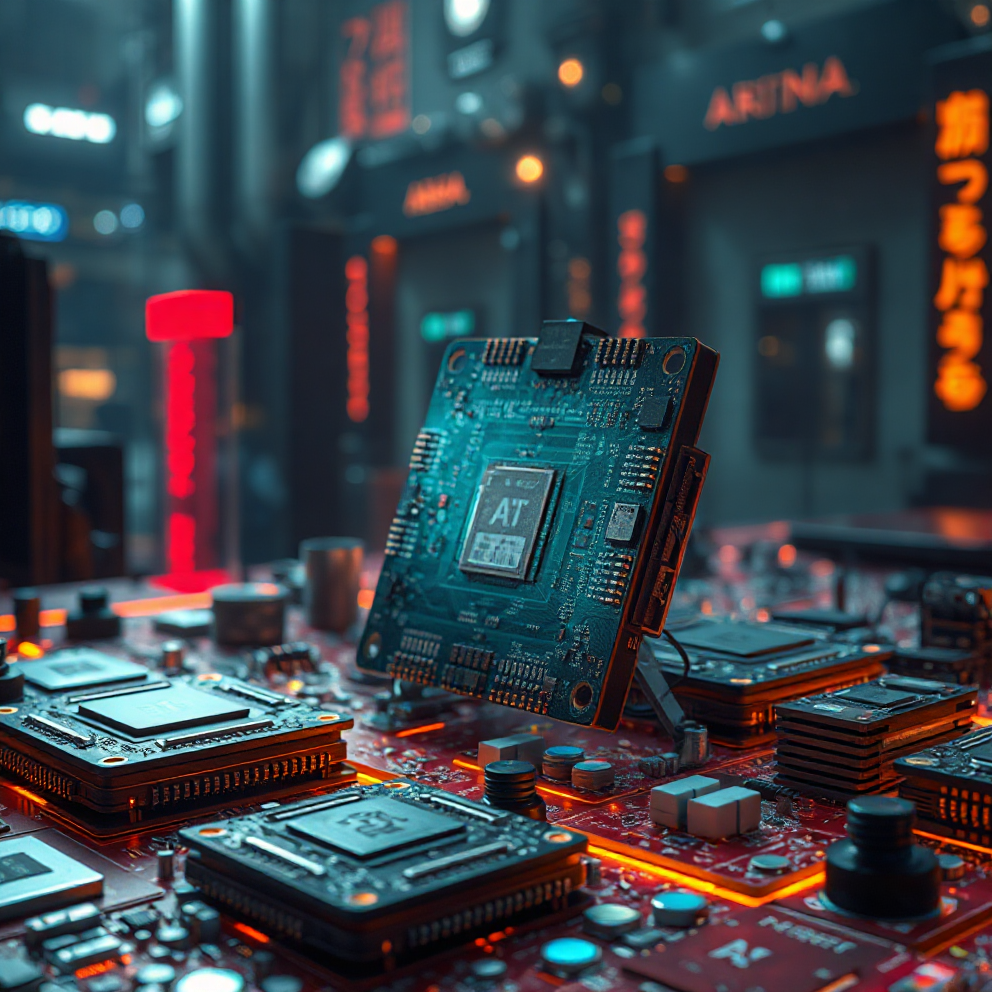
So, here we are in the midst of an AI frenzy, and it seems like Asia is the epicenter of this tech tornado. If you’ve been following the news, you might have heard whispers about a potential ‘chip wreck’ looming over the continent. Sounds dramatic, right? But let’s break it down, because just like a good plot twist in a movie, there’s more than meets the eye.
A bruising selloff, or “chip-wreck,” in several technology giants was the latest trigger for concern that the AI frenzy that’s powered the equity bull market might be overblown. The rout engulfed global stocks and sent the Nasdaq 100 down by 3.3%. A closely watched gauge of chipmakers, which had doubled from war-driven lows, slid about 8%. Losses were more pronounced in Asia, with South Korea’s Kospi plunging 10% from a record.
First off, let’s talk about chips—no, not the crunchy kind you munch on during movie night. We’re talking about semiconductor chips, the tiny pieces of technology that power everything from your smartphone to your toaster (yes, even your toaster is probably smarter than you think). As AI technologies continue to evolve and expand, the demand for these chips has skyrocketed. And guess where a significant portion of these chips is produced? You guessed it—Asia.
Now, with all this hype around AI, companies are scrambling to get their hands on as many chips as possible. It’s like a game of musical chairs, except instead of chairs, we have semiconductor fabs, and instead of music, we have a frantic race to keep up with consumer demand. And let’s be honest, when companies start to panic, you can bet your last dollar that things can get messy.
The term ‘chip wreck’ isn’t just a catchy phrase; it implies a potential disaster waiting to happen. The frenzy surrounding AI could lead to overproduction, underproduction, or even a complete breakdown in supply chains. Imagine a world where your favorite gadgets are suddenly more elusive than a good Wi-Fi signal in a crowded coffee shop. Not fun, right?
One of the major concerns is that as companies ramp up production to meet the AI demand, they might overlook quality control. It’s like that time you tried to bake cookies and ended up with a burnt batch because you were too busy scrolling through TikTok. Sure, you had good intentions, but the execution was a total disaster.
Moreover, geopolitical tensions in the region could exacerbate the situation. If countries start to impose restrictions or tariffs on chip production, we could see a domino effect that sends the tech industry into a tailspin. So, while we’re all excited about the future of AI, we might need to keep an eye on the very chips that make it all possible.
But wait, there’s more! The ‘chip wreck’ isn’t just about production; it’s also about innovation. With so many companies racing to produce chips, there’s a risk that we could see an influx of subpar products flooding the market. And nobody wants to buy a chip that’s more temperamental than a cat on a rainy day.
So, what’s the takeaway from this whole chip wreck saga? As we dive headfirst into the AI revolution, it’s essential to keep our eyes peeled for potential pitfalls. Yes, the future is bright and shiny, but it’s also a bit wobbly. Let’s hope that manufacturers can strike a balance between meeting demand and maintaining quality, or we might just find ourselves in a world where our gadgets are as reliable as a three-legged dog on a skateboard.
In conclusion, while the AI frenzy in Asia is exciting, it’s worth keeping in mind that we’re standing on a precarious cliff. One wrong step, and we could be tumbling into the abyss of a chip wreck. So, let’s tread carefully, shall we? And maybe keep a few extra bags of chips (the edible kind) on hand, just in case.
Inspired by: “AI frenzy makes Asia ripe for a ‘chip wreck’” (r/technology)