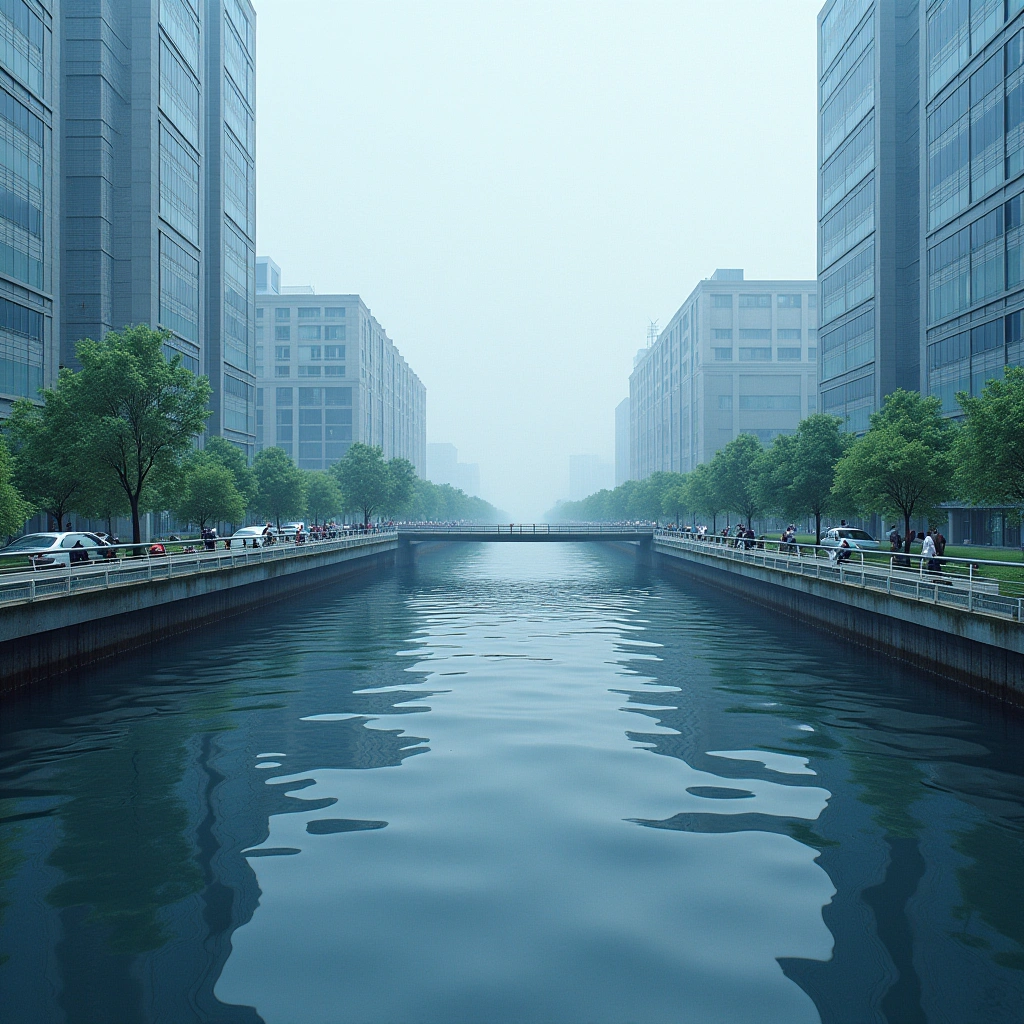
We conducted the first global survey of the large cities’ water sources, and show that previous global hydrologic models that ignored urban water infrastructure significantly overestimated urban water stress .
Have you ever thought about how the concrete jungle you call home is messing with Mother Nature? If you haven’t, don’t worry—there’s now an interactive exhibition called ‘A World Losing its Cool’ that’s here to enlighten you (and probably make you feel a tad guilty) about how our modern urban and industrial habits are throwing the earth’s hydrological cycle into disarray.
Now, before you roll your eyes and think, “Oh great, another guilt trip about my carbon footprint,” let’s break this down in a way that’s both informative and mildly entertaining.
What’s the Hydrological Cycle Anyway?
First things first—what even is the hydrological cycle? Essentially, it’s the process by which water moves through the environment, from the sky to the ground and back again. It involves evaporation, condensation, precipitation, and infiltration. Think of it as nature’s version of a never-ending game of musical chairs, except instead of chairs, it’s water molecules trying desperately to find a place to hang out.
Urban Infrastructure: The Party Crasher
Now enter urban infrastructure, the uninvited guest that shows up to the party and makes everything awkward. Roads, buildings, parking lots—they’re all great for us humans, but they don’t exactly play nice with the hydrological cycle. When we pave over the ground, we’re basically putting a giant lid on the earth that prevents water from soaking into the soil. This leads to increased runoff, which can cause flooding, erosion, and pollution. Just think about all that rainwater that could have replenished local aquifers but instead is racing down the street, probably cursing the weather gods.
The Exhibition: A Chance to Get Interactive
The ‘A World Losing its Cool’ exhibition is designed to show how these changes affect not just our local environment but the planet as a whole. It’s interactive, which is a fancy way of saying you can touch stuff—because who doesn’t love pressing buttons and playing with gadgets? You’ll get to see firsthand how urbanization alters rainfall patterns, increases temperatures, and even impacts local wildlife. Spoiler alert: the wildlife is not thrilled about it.
In addition to the interactive displays, there are expert talks and workshops that dive deeper into the science behind these changes. You might even walk away with a new appreciation for that little patch of grass you occasionally see between the cracks of the sidewalk.
Why Should You Care?
You might be thinking, “This all sounds fascinating, but I’m just one person. What can I do?” Well, my friend, the truth is that every little bit helps. Understanding the implications of urban infrastructure on the hydrological cycle can inspire you to advocate for greener city planning, support sustainable practices, or even just consider the impact of your next home renovation project. Yes, that means you might have to rethink that new driveway you’ve been dreaming about. Sorry, not sorry.
Conclusion
So, if you’re in the mood to learn about how our modern lifestyle is affecting the planet—and maybe even do something about it—check out the ‘A World Losing its Cool’ exhibition. You might leave feeling a bit more informed and perhaps a tad guilty, but hey, at least you’ll have some fun along the way. Plus, you can impress your friends with your newfound knowledge of the hydrological cycle. Who knew being eco-conscious could also make you the life of the party?
In the end, let’s face it, the planet could use a little more coolness, and it’s up to us to help bring it back.
Inspired by: “‘A World Losing its Cool’ Interactive Exhibition on how modern urban/industrial infrastructure is m…” (r/climatechange)