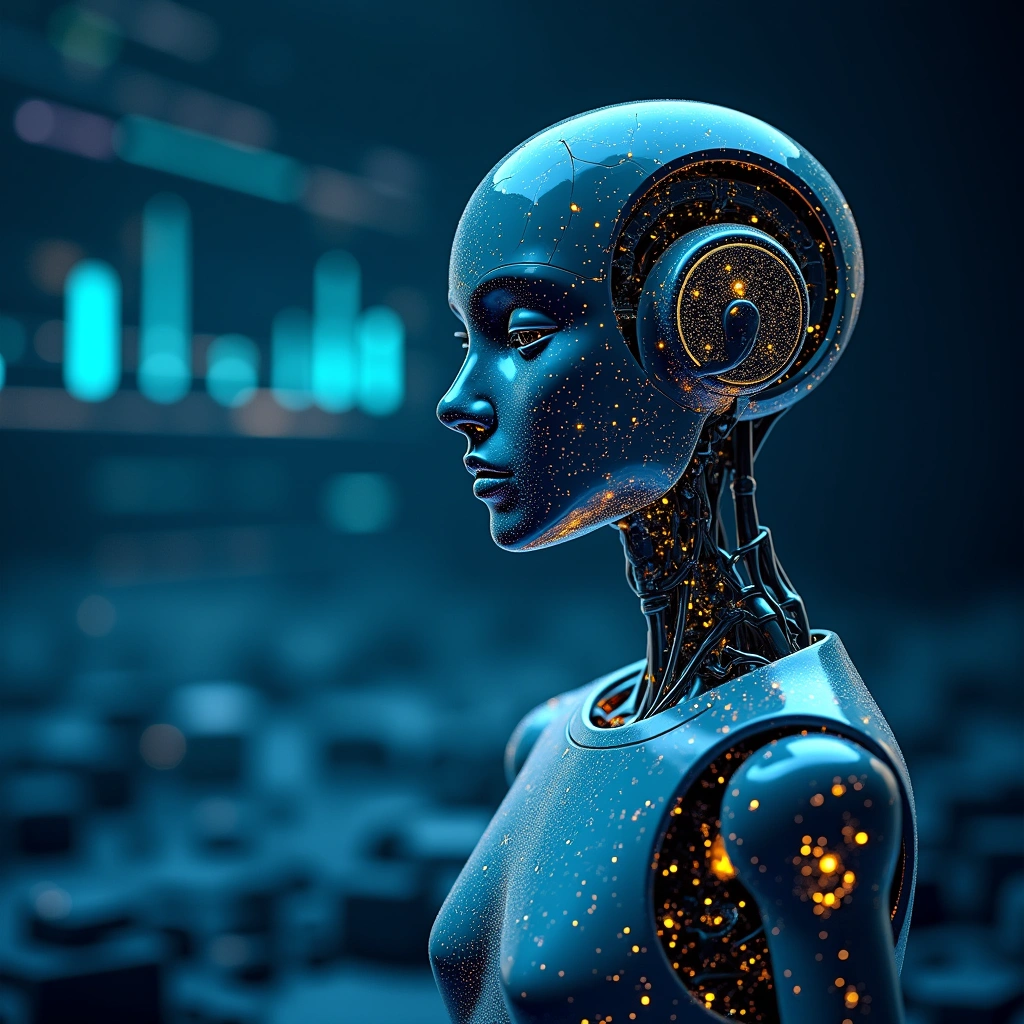
Alright, folks, grab your tin foil hats and hold onto your wallets because we’re diving into the wild world of Artificial Intelligence. Picture this: a future where robots decide the fate of our financial markets and we’re left wondering if we should be investing in stocks or building a bunker. Sounds like a movie plot, right? But let’s unpack this a bit.
First off, let’s address the elephant in the room—or should I say, the algorithm in the server room? AI is revolutionizing industries faster than you can say ‘machine learning’. It’s like giving a toddler a sugar rush but with a much more serious consequence: the potential for financial calamity. Imagine AI trading bots making split-second decisions on the stock market. One wrong calculation and boom! We’re all wondering why our retirement funds just vanished faster than a magician’s rabbit.
Now, I know what you’re thinking: ‘But AI will also make things better!’ And yes, you’re absolutely right! It’s like a double-edged sword, or a coin that always lands on its edge. On one side, we have AI optimizing processes, predicting market trends, and even helping us find the best pizza joint in town. But flip that coin, and you might just land on a dystopian future where our financial systems are controlled by algorithms that don’t care if we have enough to pay for next month’s rent.
Let’s break it down a bit:
1. Job Displacement: As AI takes over more roles, we’re looking at a future where job security is as mythical as Bigfoot. Who needs a financial analyst when you have a super-intelligent robot crunching numbers at lightning speed? The result? A lot of very worried humans trying to figure out how to pay their bills while the bots sip coffee and calculate their next big investment.
2. Market Volatility: AI can analyze data faster than a teenager scrolling through TikTok. But just because it’s fast doesn’t mean it’s always right. If multiple AI systems start making similar trades based on flawed data, we could see market swings that would make even the most seasoned investors clutch their pearls.
3. Ethical Dilemmas: What happens when AI makes decisions that affect millions of lives? Should we let a robot decide who gets a loan or who’s left in the dust? Spoiler alert: robots don’t have feelings, but they sure can create chaos when they mess up.
4. Regulation Nightmares: Governments are still trying to figure out how to tax digital nomads, let alone regulate AI in finance. It’s like trying to herd cats… if the cats had PhDs in machine learning. This could lead to a regulatory Wild West where anything goes, and trust me, that’s not a place you want your money to wander into.
But hold your horses! Before you start hoarding canned beans and digging a bunker, let’s talk about the flip side of this AI revolution. While it may sound like the end is nigh, AI could also be the superhero we didn’t know we needed.
• Efficiency and Innovation: AI has the potential to streamline financial processes, reducing costs and improving access to financial services. Imagine a world where you can get a loan approved in seconds instead of days—sounds dreamy, right?
• Data-Driven Decisions: With AI analyzing data, we could see smarter investments and better financial products tailored to individual needs. No more cookie-cutter services—just a personalized experience that feels like a warm hug for your wallet.
• Global Financial Inclusion: AI can help bring financial services to the unbanked and underbanked populations around the world. It’s like giving everyone a seat at the table, and who doesn’t love a good buffet?
In conclusion, while AI might trigger a financial calamity that could make the 2008 crash look like a minor hiccup, it also has the power to remake our world in ways we’re only beginning to grasp. So, my dear friends, let’s embrace the change, keep a watchful eye on those algorithms, and maybe invest in a little financial literacy along the way. After all, knowledge is power—especially when robots start trying to take over our wallets.
So, what do you think? Is AI a ticking time bomb or a golden opportunity? Let’s chat about it in the comments!