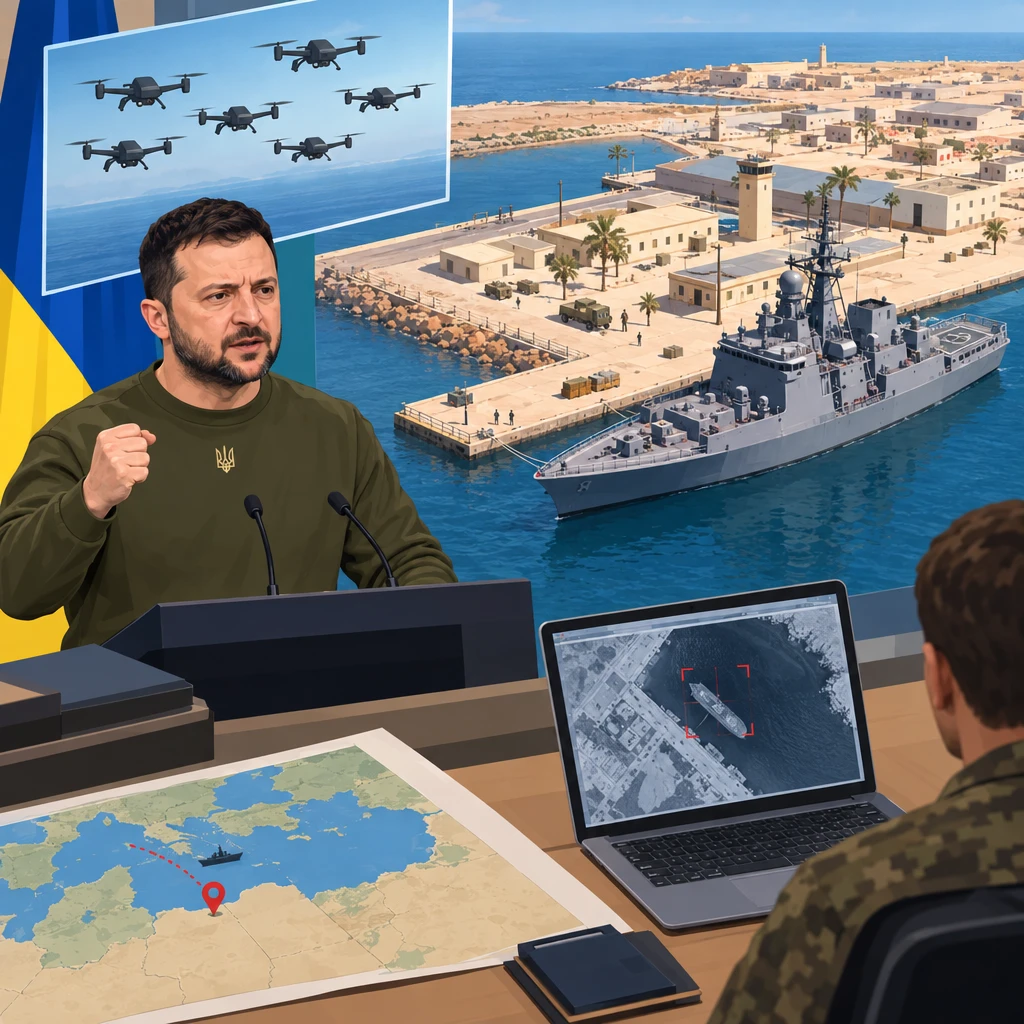
KYIV, Ukraine (AP) — Ukraine carried out an attack on a Russian warship moored at a port in Libya, President Volodymyr Zelenskyy said Monday, claiming that maritime drones sank the navy vessel in a surprise assault the previous day .
Every so often a headline comes along that makes you reread it twice, just to make sure your brain isn’t playing tricks on you. This week’s was one of those: Ukraine says it attacked a Russian warship docked at a naval base in Libya, and President Volodymyr Zelenskyy is happy to take a victory lap about it.
Here’s the basic story. Ukrainian forces carried out an attack on a Russian warship that was tied up at a naval base in Libya. Zelenskyy said the operation used seven drones and resulted in the vessel being sunk. The incident reportedly took place on Sunday.
Now, before we all start cheering or booing, it’s worth slowing down. The details about how much damage was actually done are still unclear. A claim that a ship has sunk is a big one, and in wartime, big claims tend to arrive faster than confirmation. Governments have a long history of announcing successes that look a lot less impressive once the smoke clears, and that is not a judgment on any single side. It’s just how these things usually go. So for now, treat the sinking as Ukraine’s claim, not a settled fact.
Why does this story matter? For starters, it stretches the war well beyond the borders of Ukraine and Russia. A Russian warship sitting at a base in Libya is a reminder that Moscow’s naval reach extends into the Mediterranean and North Africa. If a drone attack can reach a vessel there, that raises questions for everyone who has been assuming that distant ports are safe havens. Naval planners tend to notice when assumptions like that get tested, and they usually don’t like what they see.
It also says something about how modern warfare is changing. Seven drones are not a fleet. They are relatively cheap, relatively small, and can be launched without the kind of massive investment that once separated navies from everyone else. Whether or not this particular operation achieved what Zelenskyy says it did, the broader point stands: lower-cost tools are increasingly able to threaten expensive, high-value targets. That’s a lesson militaries around the world are paying close attention to, and not just the ones directly involved.
The coverage itself is worth a quick look too. At least four outlets, including PBS NewsHour, CTV News, The Hindu, and Castanet, ran versions of the same story, mostly built around Zelenskyy’s statements. That’s pretty typical when a government makes a striking claim. The headlines lean heavily on the official narrative, which is exactly why readers should keep an eye out for independent confirmation. If satellite imagery, shipping records, or statements from other parties start to fill in the picture, that will tell us far more than any single announcement.
So where does that leave us? A dramatic claim, an unclear outcome, and a lot of questions still open. Zelenskyy is clearly pleased, and it’s easy to see why. Still, the honest answer right now is that we don’t know exactly what happened to that warship, or how much of the story will hold up over the coming days. Keep your skepticism handy, your popcorn on standby, and check back as more information emerges. In this kind of story, the second act is usually where the real facts show up.
Inspired by: “Zelenskyy hails Ukraine’s attack on a Russian warship docked at a naval base in Libya” (r/News)