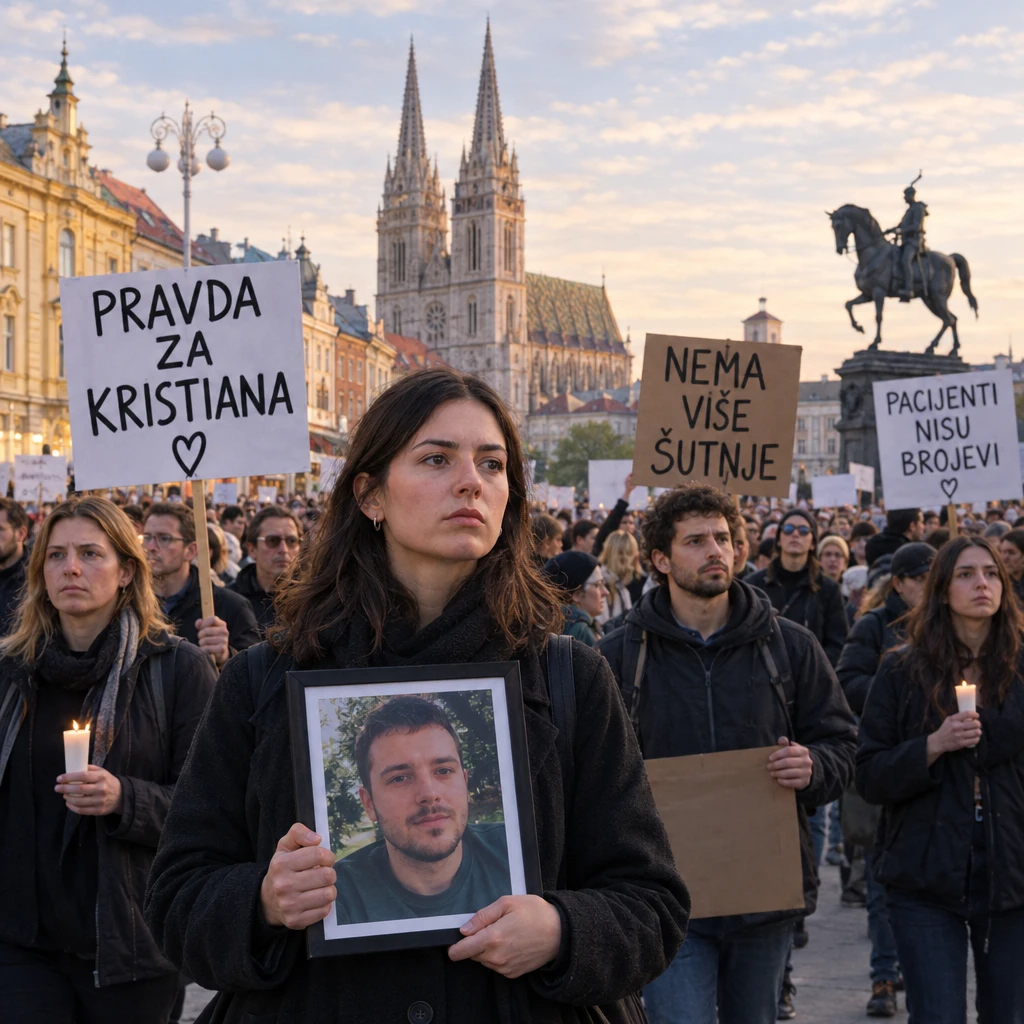
ZAGREB, Nov 21 (Reuters) – Thousands … Josip Peris in a psychiatric hospital, demanding accountability for those responsible and better regulation of treatments in hospitals ….
Some stories land in your feed and you just know they’re going to be bad. This one is worse than that. On a Saturday, thousands of people gathered in Zagreb, Croatia, to demand justice for Kristian Josip Peris, a 32-year-old man who died on October 21 while he was a patient in a psychiatric hospital.
He was supposed to be somewhere safe. Instead, his death has turned into a national conversation about what happens to people when they are at their most vulnerable and in the care of the institutions meant to protect them.
What we know so far
The facts that have emerged are hard to read. Surveillance footage released by local media reportedly showed medical staff restraining Peris and covering him with a pillow. Following the release of that footage, seven nurses and one doctor were arrested. Those arrests are a significant development, but they also raise the obvious question: how did it get to this point, and who else knew?
Different outlets have framed the story in different ways. One headline described a patient who died after a hospital beating. Another spoke of a brutal video surfacing. The specific wording varies, but the core of the story is consistent: a man died in a hospital setting, video showed alarming conduct by staff, and the public response has been fierce.
Why the video mattered so much
It’s worth pausing on why footage changes everything. Hospital deaths, especially in psychiatric care, often happen behind closed doors. Families are left with incomplete explanations, and the institution’s version of events tends to be the only one anyone hears for a while. Surveillance video cuts through that fog. It doesn’t require anyone to trust a statement from a press office. It shows what happened.
That’s exactly why the public reaction has been so strong. People weren’t simply reading about a tragedy. They were watching something that looked wrong, and they wanted to know why nobody stepped in sooner.
The bigger question: how are patients restrained?
Restraint and physical intervention are sometimes used in psychiatric settings, usually to prevent a patient from hurting themselves or someone else. In principle, these measures are supposed to be rare, carefully monitored, and proportionate. In practice, the line between necessary intervention and abuse can be dangerously thin, especially in understaffed facilities where pressure runs high and oversight is weak.
The calls coming out of this case focus on accountability and better regulation of treatments inside Croatian hospitals. That’s a sensible starting point. Clear rules about when restraint is allowed, how it must be documented, who has to approve it, and how it is reviewed afterward could make a real difference. So could mandatory reporting and independent investigations whenever a patient dies in state care.
The uncomfortable truth is that rules on paper don’t mean much if no one enforces them. Every health system likes to say it takes patient safety seriously. Fewer like to explain how they check.
What happens next
Arrests are one step, but they are not the end of the process. What matters now is whether the investigation is thorough, whether it looks beyond the individuals on camera to the systems around them, and whether the results are made public. Families and the public will be watching closely, and frankly, they should be.
For now, the rally in Zagreb is a reminder that people will show up when they feel a institution has failed someone. Thousands did not gather because of a headline. They gathered because a man died while in care, and they want to be sure it never happens quietly again.
Kristian Josip Peris deserves more than a news cycle. He deserves answers, and the people responsible deserve to face them.
Inspired by: “Croatians rally in Zagreb demanding justice over psychiatric hospital death” (r/News)