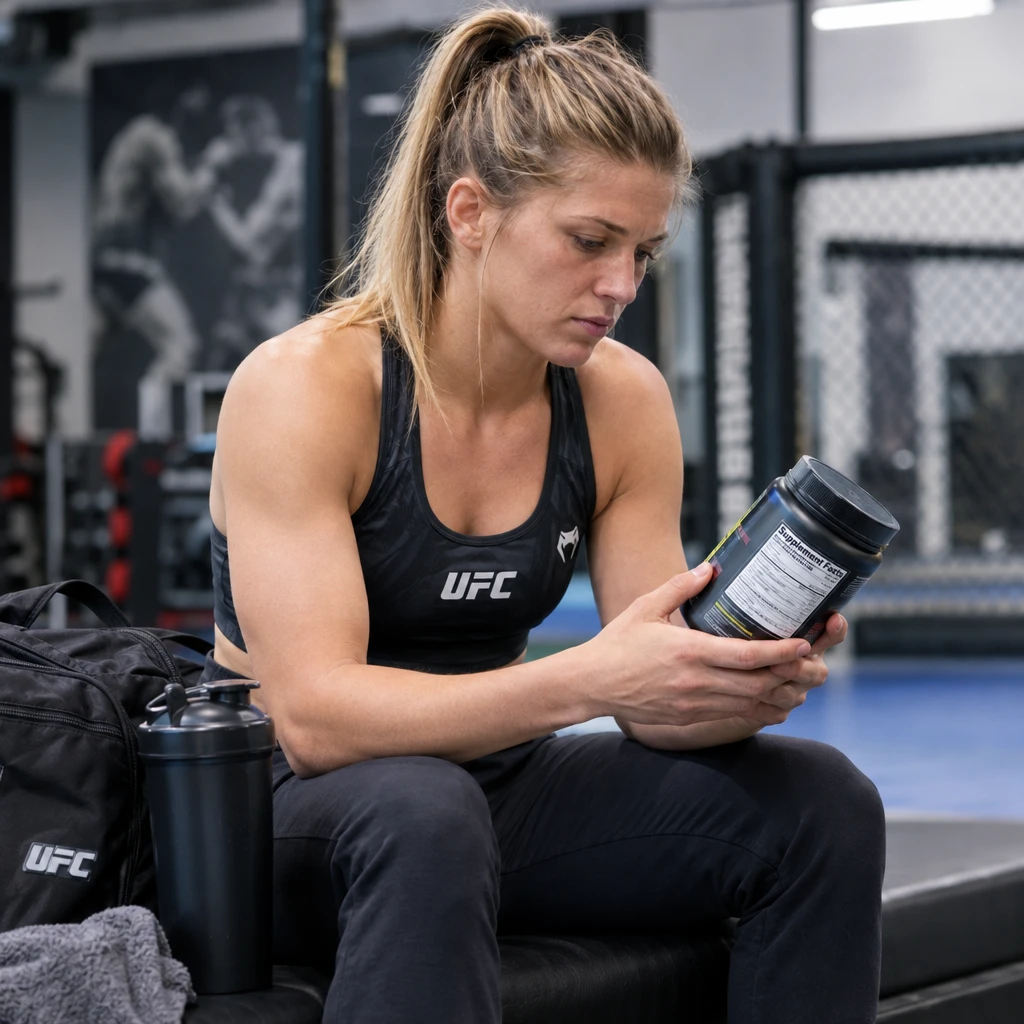
CSAD also concluded that the extremely low levels of ostarine present in the supplements did not provide Fiorot with any significant performance advantage . … "Importantly, neither of the supplements provided to Fiorot had undergone third-party …
If you thought fighters had enough to worry about between weigh-ins and cage fights, the UFC has a reminder for you: the paperwork can hit just as hard. French flyweight contender Manon Fiorot has been banned for three months for violating the promotion’s anti-doping policy, and it is the kind of story that makes you check the label on every tub of protein powder you own.
Here is what we know. Fiorot tested positive for low levels of Ostarine after her September 12th fight against Alexa Grasso, a title eliminator bout that she lost. For a fighter trying to climb toward a title shot, a loss in a bout like that is painful enough without a doping suspension landing on top of it.
What is Ostarine, and why does it matter? Ostarine is a substance that has been marketed as a performance enhancer, often sold outside of regulated medicine. It is not approved for human use as a supplement, and it is prohibited in sport. That is why a positive test, even at low levels, is taken seriously. Anti-doping rules are built on the idea that an athlete is responsible for what goes into their body, regardless of how it got there. Saying you did not mean to take something is a reasonable thing to say, but it rarely erases the violation on its own.
Fiorot did cooperate with the investigation, and she attributed the positive result to dietary supplements provided by her nutritionist. That explanation is a familiar one in anti-doping cases. Supplements are notoriously inconsistent. Labels do not always list every ingredient, and some products have been found to contain substances that never appeared on the packaging. The issue is so common that many athletes now rely on supplements that have been independently tested and certified for sport, rather than just trusting a bottle that looks professional.
The lesson here is not that every supplement is a trap, or that every nutritionist is careless. It is that the responsibility sits heavily on the athlete, and a team of advisors does not change that. If you are a fighter, asking your nutritionist what is in a product, and checking whether it has been verified for banned substances, is not paranoia. It is part of the job, like cutting weight the right way or remembering your mouthguard.
The story also got plenty of coverage. Sport BBC News, Lethbridge Herald and The Independent all reported on the ban, which tells you how much attention a UFC title contender gets when doping enters the picture. Fighters with title ambitions are watched closely, and a suspension can change the timeline of a whole career. Three months may sound short compared with some doping bans in other sports, but for a fighter who needs consistent bouts to build momentum, it is a meaningful stretch on the sidelines.
So what should fans take from this? Mostly that anti-doping enforcement in MMA is real, and that positive tests do not care how close someone is to a title shot. It is also a reminder that good intentions and cooperation with investigators are important, but they do not automatically reset the clock. Fiorot will serve her suspension, and the question for her camp now is how to make sure the supplement process is airtight going forward. For everyone else, it is probably a good week to read the fine print on that pre-workout you bought on impulse.
Inspired by: “UFC fighter Manon Fiorot banned for 3 months for violating anti-doping policy” (r/Sport)