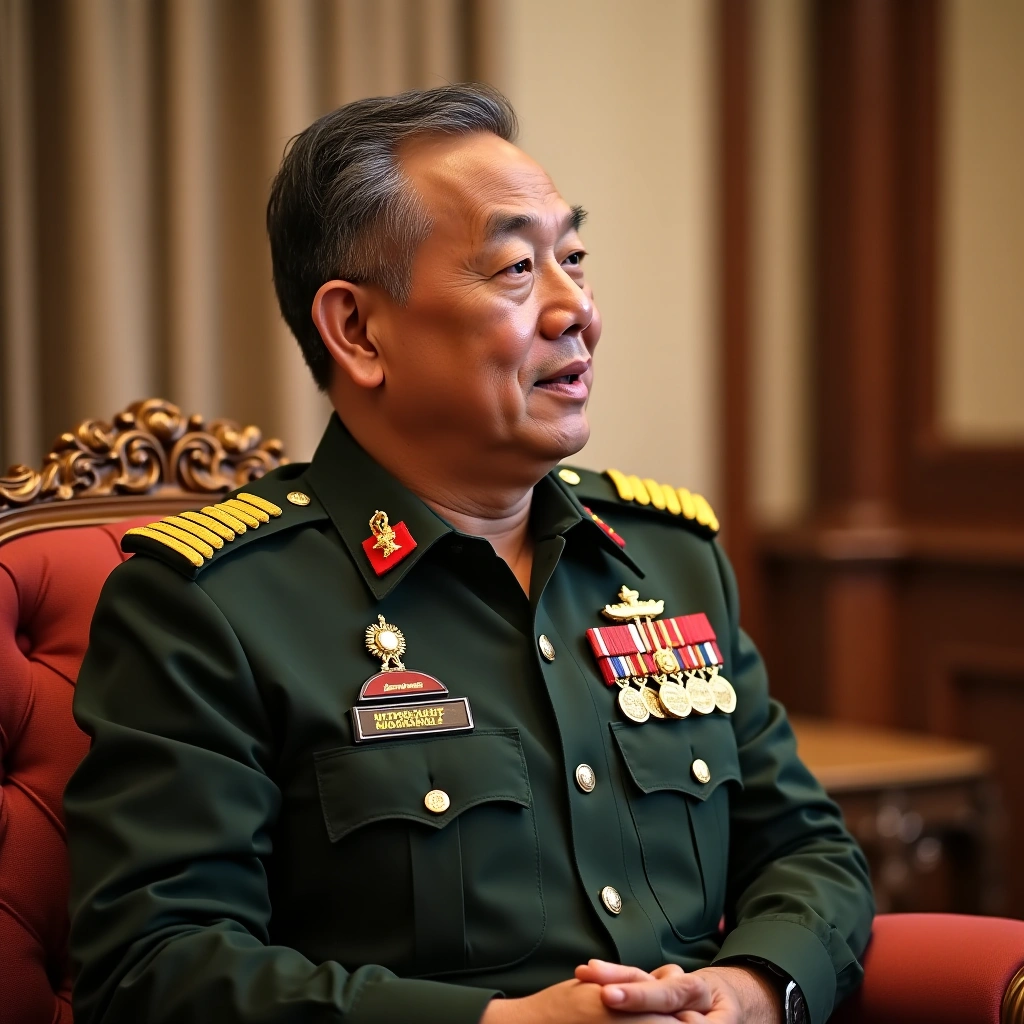
Nov 18 (Reuters) – Myanmar's military-backed leader Min Aung Hlaing said on Wednesday he is reconsidering the country's relationship with the Southeast Asian bloc ASEAN but would continue discussions with its members.
Diplomacy rarely moves fast, so when a headline says a government is “reconsidering” its relationship with a regional bloc, it’s worth slowing down and asking what that actually means. Myanmar’s military-backed leader, Min Aung Hlaing, has said exactly that. He announced a reconsideration of the country’s relationship with the Association of Southeast Asian Nations (ASEAN), while also saying he would keep up ongoing discussions with the group’s members. In other words, he’s thinking about it, and he’d like everyone to keep talking to him while he does.
To understand why this matters, it helps to go back to 2021. That was the year the military seized power in Myanmar, ousting the elected government and plunging the country into turmoil. What followed was not a quick restoration of order. Instead, the country slid into fighting between the military and a range of armed groups, including resistance forces formed in opposition to the takeover. Civilians have borne much of the cost, with displacement, violence, and economic hardship spreading across the country.
ASEAN’s response has been closely watched. The bloc agreed on a Five-Point Consensus in 2021 that called for an end to violence, dialogue among all parties, and humanitarian access. Progress on those points has been slow, and the group has faced criticism for how it handled the crisis. At the political level, ASEAN has limited Myanmar’s representation at its summits, which is a diplomatic way of saying the junta has been left out of the room where many decisions are made. Leaders in the bloc have indicated they may consider restoring Myanmar’s full political representation if the country makes real progress on resolving the crisis. That is a significant carrot, and it’s one the junta clearly has an interest in.
Against that backdrop, Min Aung Hlaing’s comments read as a sort of pressure move. Stepping back from a relationship can be a way of signaling leverage. It can also be a way of making the other side anxious about losing you. Either way, the statement comes with a complication: he also said he plans to hold a peace conference in February, with the stated aim of ending the fighting. Peace conferences are a familiar tool in conflicts like this one, but whether they produce meaningful results depends heavily on who is invited, who shows up, and whether the armed groups actually believe the process is credible.
That’s the part that tends to get lost in the headlines. Announcing a conference is easy. Getting parties that have been shooting at each other for years to sit down, trust one another, and commit to a ceasefire is much harder. Anyone who has followed peace processes in other parts of the world knows that talks can drag on for years, stall repeatedly, or collapse after a single bad incident. So while the February plan deserves attention, it also deserves a healthy dose of skepticism until there is evidence of real negotiation.
The ASEAN question also reflects a broader tension within the region. The bloc is known for its emphasis on consensus and non-interference in members’ internal affairs. That principle has made it slow to take firm action on Myanmar, and critics argue it has allowed the junta to avoid meaningful consequences. Supporters counter that keeping channels open is the only way to influence events on the ground. Both views have some merit, and the coming months will test which approach gains traction.
For ordinary people in Myanmar, though, the outcome matters far more than the diplomatic choreography. A reconsidered relationship with a regional bloc means little if fighting continues, humanitarian access stays restricted, and political prisoners remain behind bars. The real measure of whatever happens next will be whether it changes conditions on the ground.
So, is this a turning point or just another round of diplomatic theater? It’s too early to say with confidence. What’s clear is that the junta wants something from ASEAN, ASEAN has signaled it may be willing to offer something in return, and a peace conference is on the calendar. Watch the details, because in diplomacy the details are usually where the real story lives.
Inspired by: “Myanmar’s army-backed leader says he is reconsidering ASEAN relationship” (r/News)