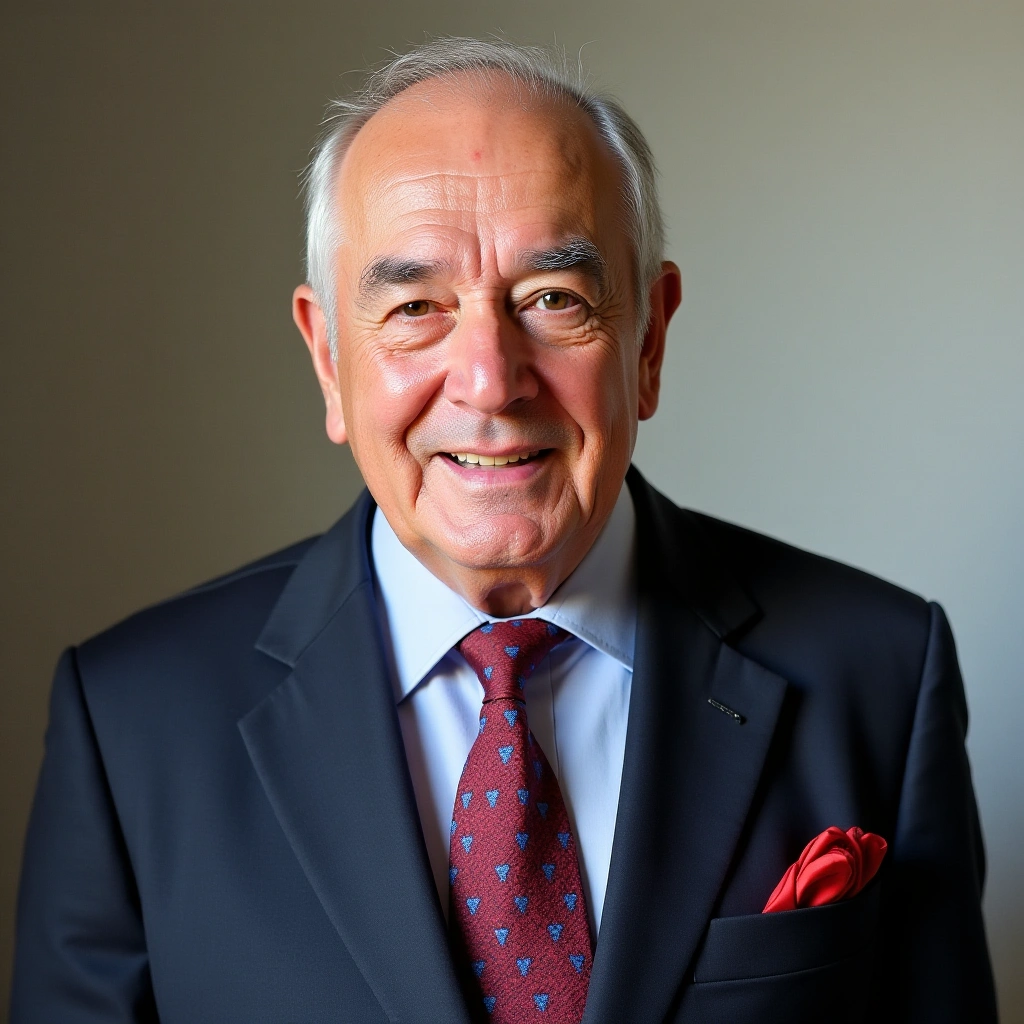
15, 2026.— Miguel Ángel Félix … of the now-defunct Guadalajara Cartel, died Sunday at age 80 in a private Guadalajara hospital after suffering severe health complications ….
Some people are remembered for founding tech companies, inventing kitchen gadgets, or starting a regrettable podcast. Miguel Ángel Félix Gallardo is remembered for something considerably darker. He helped build Mexico’s modern drug trade. The co-founder of the Guadalajara Cartel, known as “El Jefe de Jefes,” or “The Boss of Bosses,” has died at 80.
The news was carried by outlets as different from one another as The Wall Street Journal, TMZ, and ABC7 Los Angeles. That’s a rare overlap. When the financial paper of record and the celebrity gossip site are covering the same obituary, you know the person left a large and complicated footprint.
How He Died
According to reports, Félix Gallardo suffered multiple organ failure and died in a hospital. He had been transferred there from prison under significant security measures.
That detail says a lot. Most 80-year-old hospital patients arrive with a worried relative and a bag of crossword puzzles. Félix Gallardo apparently needed a security operation. Even near the end of his life, authorities treated him as someone who still mattered, and as someone others might have an interest in reaching.
Why They Called Him the ‘Boss of Bosses’
The nickname wasn’t just dramatic branding, although it certainly works as dramatic branding. Félix Gallardo was known for unifying drug traffickers into a single, coordinated operation that grew into a multibillion-dollar enterprise.
That is the key to understanding why reporting calls him an “architect.” Before consolidation, drug trafficking tends to be fragmented, with smaller groups competing, overlapping, and generally getting in each other’s way. Félix Gallardo’s approach treated the trade less like a collection of rival gangs and more like a centralized business with a structure.
It’s one of history’s grim ironies that the kind of organizational skill a business school might praise was applied to an industry built on addiction, corruption, and violence. If there’s a case study here, it’s a cautionary one.
The Guadalajara Cartel’s Legacy
The Guadalajara Cartel is widely regarded as a foundational organization in the history of Mexican drug trafficking. Its importance isn’t only about what it did while it existed. It’s also about what came after.
Félix Gallardo was arrested in 1989. After that, the unified structure he had helped create didn’t simply disappear. It splintered. The groups that emerged from that breakup went on to become some of the most notorious criminal organizations in the region, and the competition among them has been linked to years of brutal violence.
So when headlines call him the “architect of Mexico’s modern drug trade,” the phrase is doing real work. The man at the top of one organization arguably shaped the landscape for the many that followed. Unfortunately, “the guy who built it” and “the guy who could control what happened next” turned out to be two very different jobs.
The Camarena Case
Any honest account of Félix Gallardo has to mention the 1985 kidnapping, torture, and killing of U.S. Drug Enforcement Administration agent Enrique “Kiki” Camarena. Félix Gallardo was among those convicted in connection with the case, which became a defining moment in U.S.-Mexico relations on drug enforcement.
This matters because it’s easy for crime stories to drift into a kind of glamorous mythology. Nicknames, vast fortunes, and dramatic arrests make for compelling television. Behind the mythology, though, are real victims. Camarena’s death was not a plot twist. It was a murder, and it changed how both countries approached the drug war for decades.
Pop Culture Has Entered the Chat
If the name sounds familiar to people who don’t spend their evenings reading about organized crime, there’s a good reason. Félix Gallardo’s story was dramatized in the Netflix series Narcos: Mexico, where he was portrayed by Diego Luna.
That’s probably why TMZ took an interest. For a lot of viewers, he’s less a historical figure than a character from a binge-watch. The real story is more tangled, less tidy, and considerably less cinematic than a well-lit streaming drama. Television gets a soundtrack. Real life gets prisons, funerals, and decades of fallout.
To be fair, dramatizations can help people understand history. They can also make figures like this seem more charismatic than admirable. Watching with a healthy dose of skepticism is always a good idea. Grabbing popcorn is optional.
Decades Behind Bars
Félix Gallardo spent his later years in custody. That’s the less glamorous part of the “Boss of Bosses” story that rarely makes the movie poster. For all the money and power associated with his name, his final chapter played out under guard. His last trip, according to reports, was a carefully secured transfer from prison to a hospital.
It’s not exactly the triumphant ending crime stories sometimes imply. If anything, it’s a reminder that the lifestyle tends to end in one of a few ways, and very few of them involve a peaceful retirement on a beach.
What His Death Does and Doesn’t Change
It’s tempting to treat the death of a figure like this as the end of an era. Symbolically, maybe it is. Practically, it changes very little. The drug trade he helped organize had evolved far beyond his control long before he died. The organizations that grew out of the Guadalajara Cartel’s breakup developed lives, leadership structures, and rivalries of their own.
What his death does offer is a moment to look back at how the modern trade took shape. It shows how consolidation created enormous profits, how fragmentation fueled violence, and how decisions made in the 1980s continue to echo today.
The Bottom Line
Miguel Ángel Félix Gallardo, the “Boss of Bosses,” has died at 80 after suffering multiple organ failure in a hospital, where he was brought from prison under heavy security. He leaves behind a legacy that’s historically significant and deeply destructive. He unified traffickers into a multibillion-dollar operation, helped lay the groundwork for the cartels that followed, and was tied to one of the most infamous crimes against U.S. law enforcement.
He was an architect, all right. It’s just that what he built is the kind of structure most people would rather see torn down.
Inspired by: “Miguel Ángel Félix Gallardo, Architect of Mexico’s Modern Drug Trade, Dies at 80” (r/World)