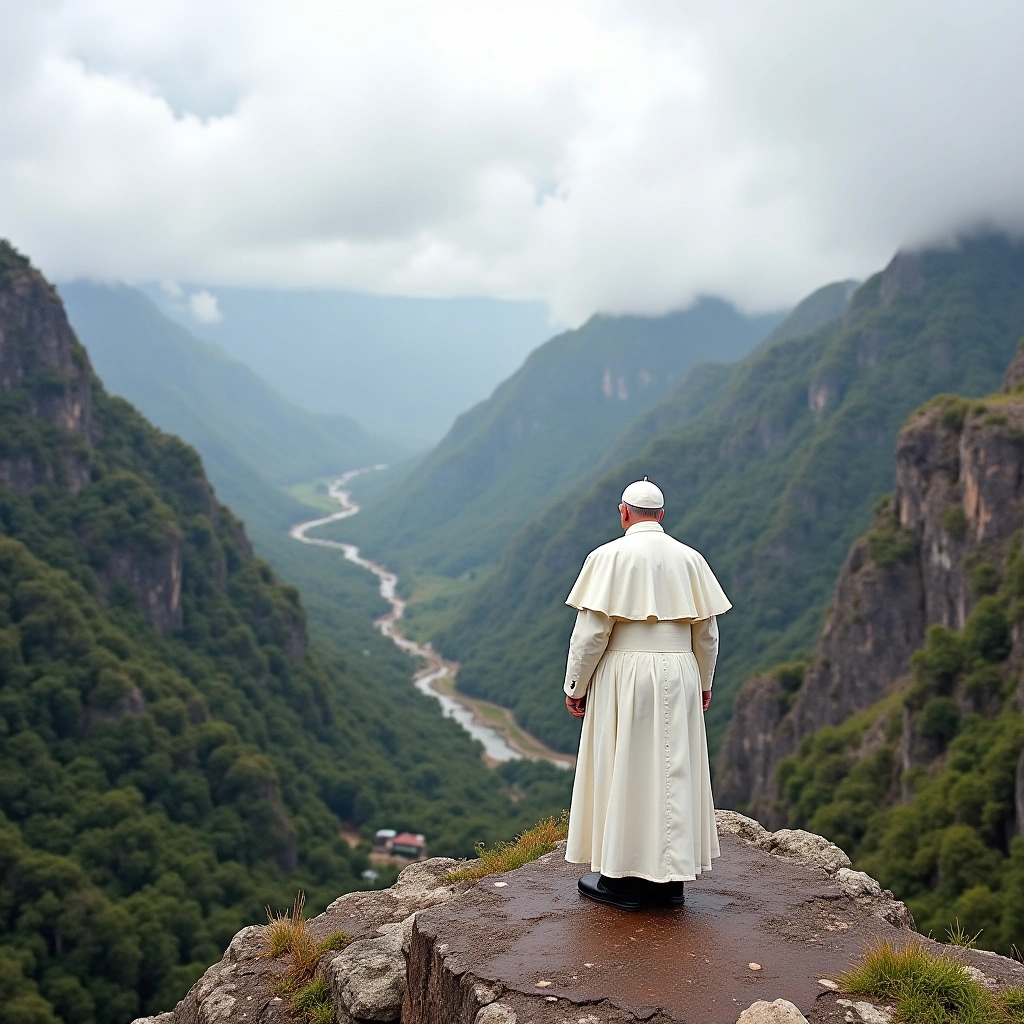
CUSCO, Peru (AP) — The plight of Indigenous peoples and the protection of the Amazon take center stage Sunday as Pope Leo XIV travels across Peru to visit communities high in the Andes and deep in the rainforest.
Most of us, when we visit a place we used to live, do a few predictable things. We drive past the old apartment, eat at the restaurant we swear was better back then, and maybe text an old friend we haven’t spoken to in six years. Pope Leo XIV, on the other hand, apparently decided that a homecoming trip to Peru should involve crossing the country to visit communities high in the Andes and deep in the Amazon rainforest. Some people just don’t know how to relax.
According to reports from The Independent and The Boston Globe, the pope spent the penultimate day of his trip doing exactly that. The focus was on the plight of Indigenous peoples and the protection of the Amazon, two issues that loom large in Peru and that the Catholic Church has spent years trying to keep in the global spotlight.
Yes, the headlines call it the “finale” while the details say “penultimate day.” Think of it as the big closing number before the curtain call. Every good show has one, and this one comes with mountains.
Why Peru Feels Like Home for This Pope
If you’re wondering why a trip to Peru counts as a “trip home” for a pope born in Chicago, the short answer is that Leo XIV has deep roots there. Before he was elected in 2025 as the first pope from the United States, Robert Prevost spent many years in Peru as a missionary and later served as bishop of Chiclayo. He also holds Peruvian citizenship. So he isn’t some visiting dignitary squinting at a guidebook. He knows the place.
That history changes the tone of a trip like this. When a pope visits a country, there’s usually a lot of ceremony, crowds, and carefully staged moments. When a pope visits a country where he once lived and worked, the trip carries something else: familiarity. People there remember him from before the white cassock, and that personal connection is part of why this visit has drawn so much attention.
From the Andes to the Amazon: A Geography Lesson in One Day
Peru is a country of dramatic contrasts. In the Andes, communities live at high altitudes, where the air is thin and the landscape is rugged. In the Amazon basin, the environment flips to humid, dense rainforest crisscrossed by rivers. Covering both on a single day is a statement, and a tiring one.
The symbolism isn’t subtle, and it isn’t meant to be. By going to both regions, the pope put a spotlight on people who often live far from the political and economic centers of the country, and who often feel it. Indigenous communities in both the highlands and the rainforest have long dealt with marginalization, limited access to services, and pressure on their land and resources.
It’s a bit like a manager who skips the comfortable corner office tour and instead visits the people working in the far parts of the building that nobody remembers have a thermostat. Except here, the “far parts” are entire regions with centuries of history and very real struggles.
Indigenous Peoples at the Center
The reports describe the plight of Indigenous peoples as taking center stage on this leg of the trip. That framing matters. Papal visits often address the needs of local communities, but putting Indigenous concerns at the heart of the day signals a priority rather than a footnote.
This also fits a broader pattern in recent Church history. Pope Francis made Indigenous communities and the Amazon a major theme of his papacy. He visited the Peruvian Amazon in 2018 and later convened a special Synod of Bishops for the Amazon region in 2019. So Leo XIV isn’t inventing a new agenda here. He is continuing and personally reinforcing one, with the added credibility of someone who actually spent years in the country.
For the communities themselves, a visit like this can be meaningful in practical ways too. When the pope shows up, cameras follow. And when cameras follow, the issues those communities face, which are usually ignored by international news, suddenly get airtime. It’s not a solution on its own, but attention has a way of making it harder for everyone else to keep looking away.
Protecting the Amazon: Not Just a Slogan
The second big theme of the day was the protection of the Amazon. The rainforest is often described as vital to the planet’s climate and biodiversity, and it faces serious threats from deforestation and other pressures. The Church has increasingly framed environmental care as a moral issue, most famously in Pope Francis’s 2015 encyclical Laudato Si’, which addressed care for our “common home.”
So when a pope travels deep into the Amazon, the message is fairly clear: this isn’t just a nice place for nature documentaries. It’s a place where people live, where ecosystems matter, and where decisions made far away have consequences on the ground.
There’s also a neat connection between the two themes of the day. Indigenous communities are often among the people most directly affected by what happens to the rainforest. Protecting the Amazon and standing up for those who live in it are, in many ways, the same conversation. Bundling them into one day of the trip makes that link hard to miss.
The Optics, and the Substance
Let’s be honest: papal trips are carefully planned. Every stop, every photo, every speech is thought through. A cynic might say crossing the country to visit mountain villages and rainforest communities is good optics. And sure, it is. But optics and substance aren’t mutually exclusive. Choosing where to spend your limited time is itself a message about what you think matters.
A pope could easily spend a homecoming trip doing big events in major cities, shaking hands with officials, and calling it a day. Heading to the Andes and the Amazon on the second-to-last day says something different. It says the people at the edges are worth the travel, the altitude, and the humidity.
A Homecoming With a Point
What makes this trip interesting is the combination of the personal and the global. On one level, it’s a man returning to a country that shaped him. On another, it’s the leader of the world’s largest Christian church using that return to draw attention to issues that extend far beyond Peru’s borders.
Indigenous rights and the future of the Amazon aren’t problems that get solved during a papal visit. They’re long, complicated, and often frustrating. But visibility counts for something, and few people can generate visibility like a pope standing in a place most of the world never thinks about.
So while the rest of us measure a successful trip home by whether the old pizza place still exists, Pope Leo XIV measured his by covering mountains and rainforest to put forgotten communities in the headlines. It’s a slightly higher bar. Then again, he does have a slightly bigger job.
Inspired by: “Pope crosses Peru in finale of trip home to visit flock high in Andes and deep in Amazon” (r/World)