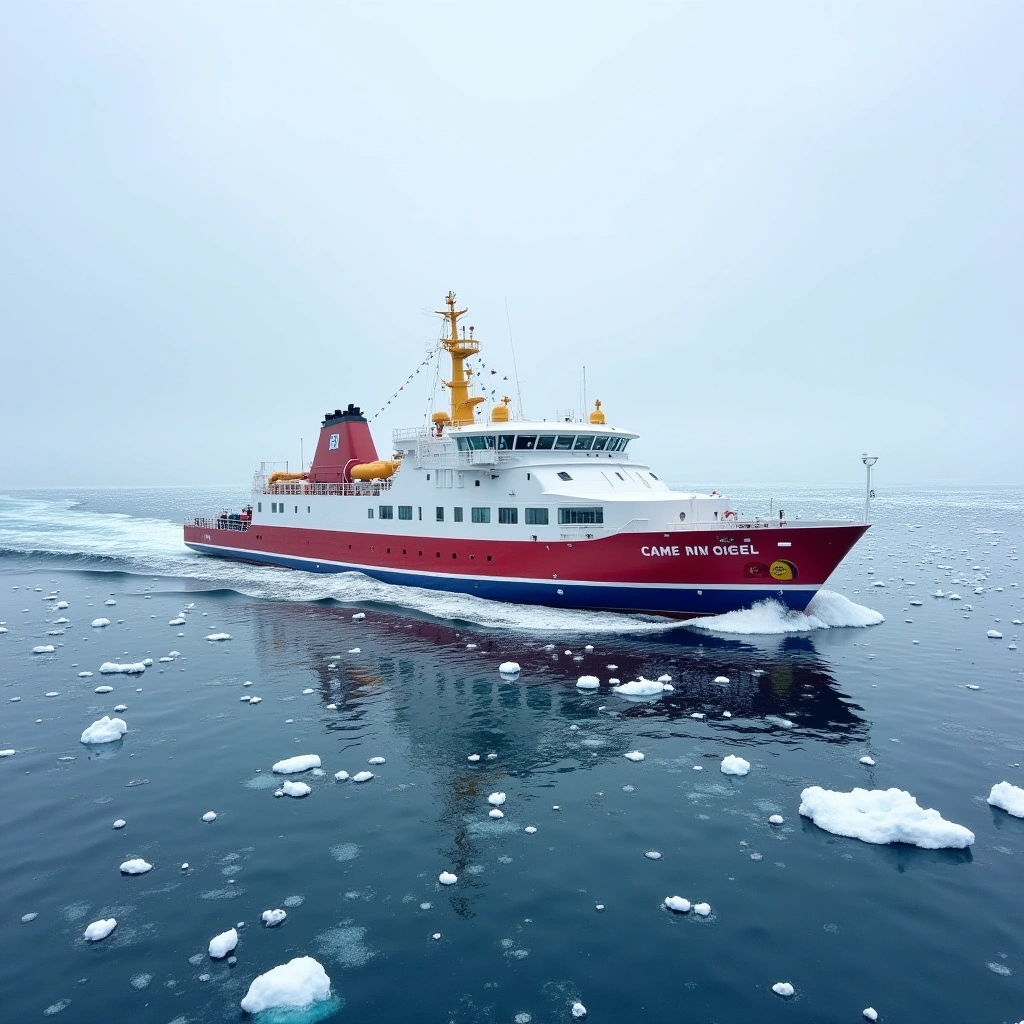
A South Korean container ship completed the country’s first commercial round trip to Europe via the Arctic on Sunday, as authorities bank on the route helping turn the port of Busan into a …
Hey there, maritime enthusiasts and casual readers alike! Buckle up because South Korea has just taken a bold step into the icy depths of the Arctic, completing its very first commercial round trip to Europe via this chilly route. Yes, you heard that right! While most of us are just trying to figure out how to get to the grocery store without hitting a snowbank, South Korea’s PanStar Acro has sailed through the Arctic and back, docking in Busan after a 50-day adventure.
So, what’s the big deal, you ask? Well, South Korean authorities have high hopes that this route could turn Busan into a global maritime hub. I mean, who wouldn’t want to be the cool kid on the block? With the potential to slash typical voyage times by about a third, this Arctic route could be the new shortcut for shipping—kind of like finding a secret passage in a video game, except with more ice and fewer dragons.
President Lee Jae Myung is all aboard this Arctic shipping train (or should I say ship?), making it a priority for the nation. In fact, the plan is to launch regular services by 2030. But hold your horses—or should I say, your polar bears? This ambitious project comes with its own set of risks, especially with the geopolitical tensions surrounding Russia and its ongoing war in Ukraine. It seems that while South Korea is charting a new course, they’re also trying not to step on any toes. After all, no one wants a diplomatic incident over a shipping container.
The route, which hugs the Arctic coast of Russia, required some consultations with Moscow. You know, just a casual chat about whether the ship might need a little help if it decided to play hide and seek in the ice. Spoiler alert: it didn’t get stuck, but it did highlight some challenges ahead.
During its outbound voyage, the PanStar Acro made stops at notable European ports like Felixstowe in Britain, Rotterdam, and Gdansk, before making its frosty return. However, it wasn’t all smooth sailing—literally. The ship aimed to carry about 1,300 twenty-foot equivalent units (TEUs) of cargo but ended up leaving with only 737 TEUs and a bunch of empty containers. Sounds like a classic case of over-promising and under-delivering, right?
Industry experts are already raising eyebrows about the viability of this Arctic route. They stress that its success will hinge on reliable schedules, costs associated with slowing down to dodge icebergs (because, you know, hitting one is generally frowned upon), special insurance premiums, and extra fuel use. So basically, it’s a bit of a gamble—like betting on a horse that might just decide to take a nap instead of racing.
In conclusion, while South Korea’s first commercial voyage through the Arctic is a significant milestone, it’s also a reminder of the complexities of modern shipping and international relations. Will this route become a regular service by 2030? Only time will tell, but for now, it’s safe to say that South Korea is making waves—literally and figuratively. Let’s keep our fingers crossed that they don’t hit any icebergs along the way!
Inspired by: “S. Korea completes 1st Arctic-Europe commercial voyage, eyes regular service despite risks” (r/World)