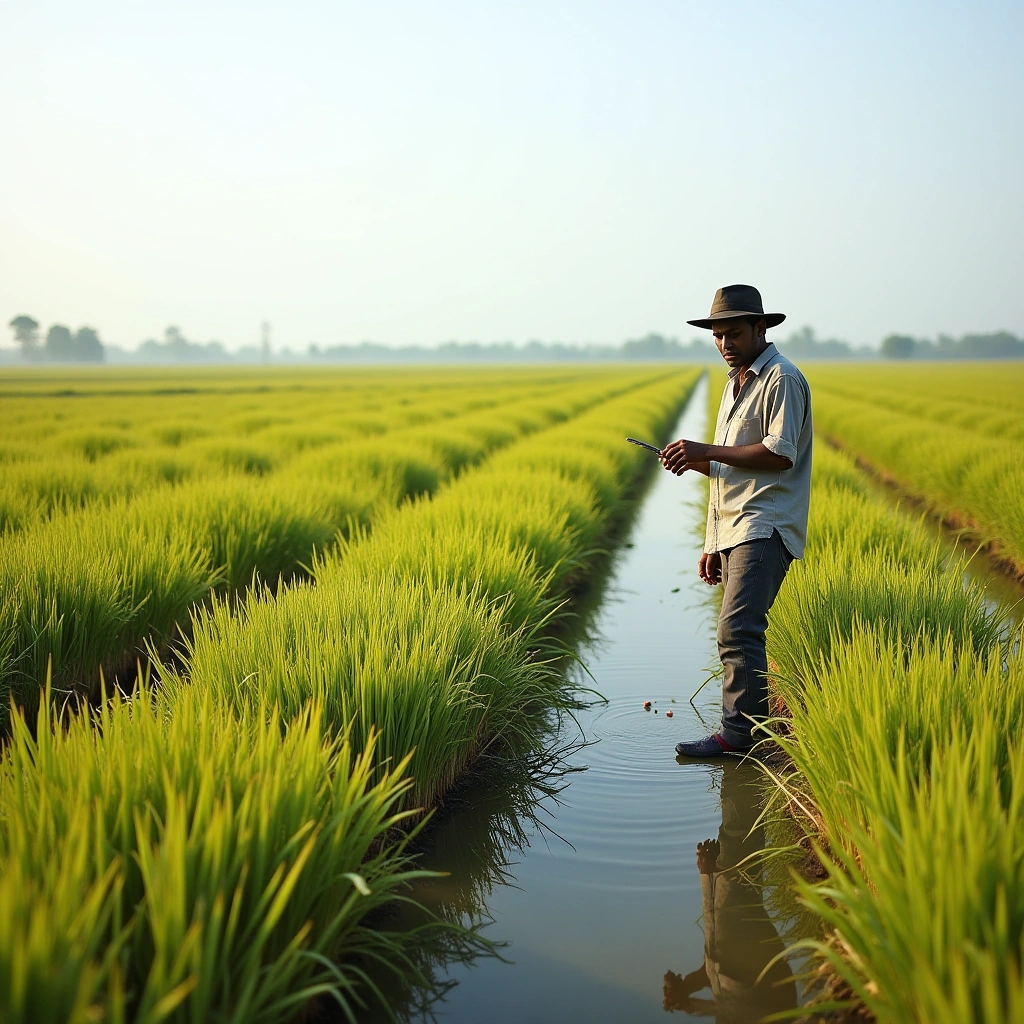
El Niño-induced drought in Andhra Pradesh necessitates urgent adoption of water-efficient crops, drip irrigation, and seed subsidies, while leveraging weather-based crop insurance and multi-tiered funding mechanisms to mitigate agricultural and water security risks. 💬 Doubt on this topic? Ask Aanya, your free AI study-buddy, for an instant explanation. Ask Aanya →
So, let’s talk about the weather. No, not the boring small talk variety, but the kind that’s wreaking havoc on agriculture. If you’ve been following the news (or even if you haven’t), you might have heard about El Niño, that mischievous weather phenomenon that seems to enjoy throwing a wrench in our agricultural plans. Recently, in Vizianagaram, Andhra Pradesh, we’ve seen some serious consequences of this climate anomaly. The area devoted to paddy cultivation has plummeted from a whopping 1 lakh hectares to just 20,760 hectares. That’s not just a dip; it’s more like a dive off a cliff.
Now, you might be wondering, what’s the big deal about rice fields? Well, let me enlighten you. Rice is a staple food for millions, especially in India, where it’s not just a meal, but a part of life. So, when you shrink the area for paddy cultivation by over 80%, you don’t just affect the farmers; you impact the entire food supply chain. Think about it: fewer paddy fields mean less rice, which could lead to rising prices, food scarcity, and an uptick in hangry people everywhere. And we all know what happens when people get hangry.
The irony here is rich. El Niño, which is often characterized by warmer ocean temperatures in the Pacific, can lead to erratic weather patterns, causing droughts in some regions while flooding others. In the case of Andhra Pradesh, it’s led to severe drought conditions. Farmers, armed with hope and a lot of hard work, are left facing dry, cracked earth where lush green fields should be. This is not exactly the kind of drama we want from our weather.
What’s even more frustrating is that this isn’t a one-off incident. El Niño has a history of disrupting agricultural patterns across the globe. It’s like that one friend who shows up unannounced to every party, and you’re just not sure how to deal with them. Will they bring fun? Will they bring chaos? Who knows? But you can bet they’ll be there, and they’ll make their presence known.
Farmers in Vizianagaram are now looking at alternative crops or even shifting their agricultural practices entirely. It’s a tough pill to swallow when you’ve spent generations cultivating rice. Imagine telling your grandma that you’re switching to quinoa. The horror!
As we gaze into the crystal ball of climate predictions, it’s clear that we need to adapt. Climate change is not just a buzzword; it’s a reality that’s knocking at our door, and it’s not leaving anytime soon. The government and agricultural bodies need to step up and provide support to farmers. This could mean investing in drought-resistant crops or providing better irrigation facilities. Because let’s face it, if we don’t do something now, we might just find ourselves in a rice crisis that makes the toilet paper shortage of 2020 look like a walk in the park.
So, what can we do? Well, for starters, we can educate ourselves about climate change and its impacts on agriculture. We can support sustainable farming practices and advocate for policies that protect our farmers. And maybe, just maybe, we can avoid throwing a tantrum when our favorite rice dish is suddenly more expensive. Because in the end, we’re all in this together, whether we like it or not.
In conclusion, the shrinking paddy fields in Vizianagaram serve as a stark reminder of the impacts of El Niño and climate change on agriculture. It’s a call to action for all of us to pay attention, support our farmers, and adapt to the changing climate. Because if we don’t, we may just find ourselves asking, ‘Where’s the rice at?’
Inspired by: “[India] El Niño impact: Paddy area in Andhra’s Vizianagaram falls from 1 lakh hectares to 20,760” (r/climatechange)