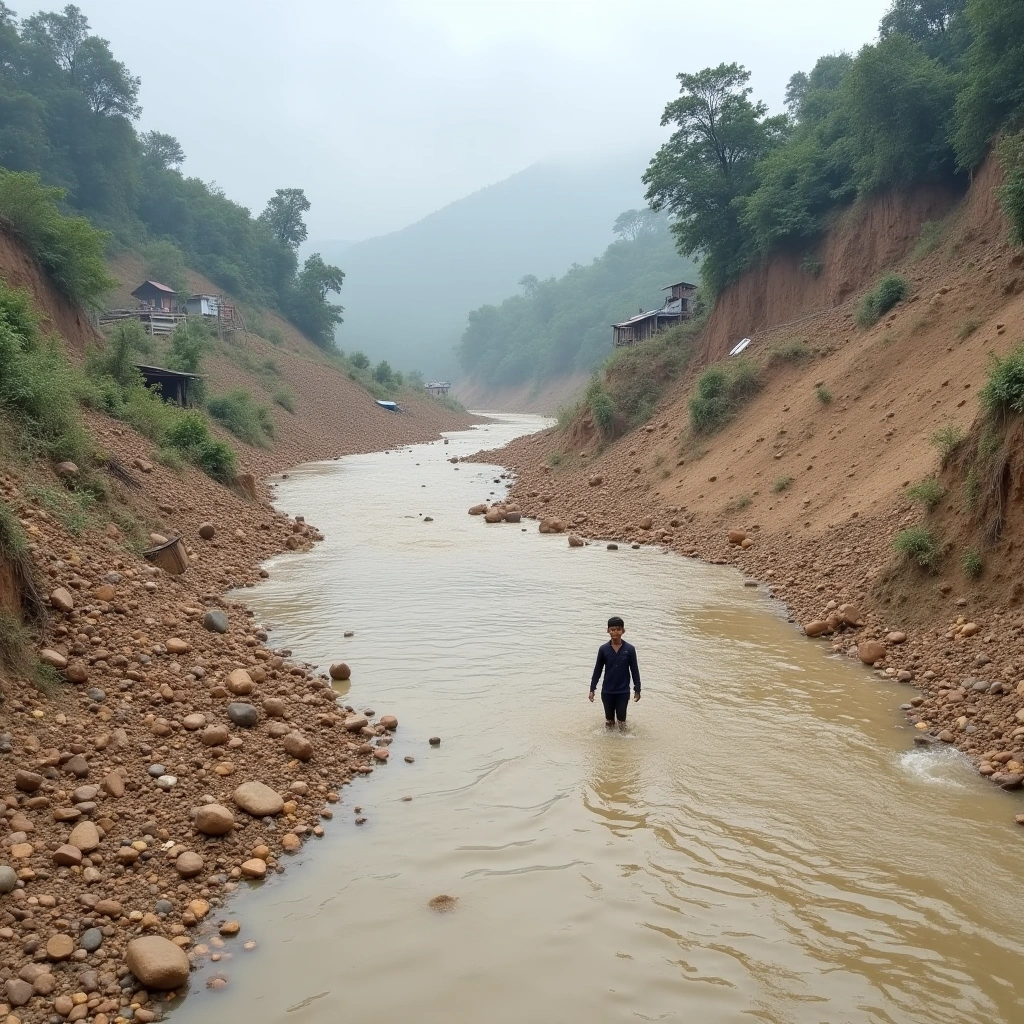
The Himalayas – spanning Nepal, India, China, Bhutan and Pakistan – are warming twice as fast as the global average, putting the region at increased risk of avalanches, landslides and floods .
Is climate change starting to feel more real? Well, if you’re living in Nepal, the answer is a resounding yes. It’s not just about glaciers melting or summers getting hotter; it’s about the increasing floods and landslides that seem to be becoming a regular guest at the party of natural disasters. And trust me, nobody wants that party invite.
Nepal has long been vulnerable to the whims of nature, with its stunning mountains and valleys that are as beautiful as they are precarious. But now, as extreme rainfall events become more frequent, the situation is getting downright alarming. Imagine trying to enjoy your morning chai while the sky opens up and decides to unleash a monsoon that could drown a small village. Not exactly the peaceful morning you envisioned, right?
Floods and landslides are not just inconvenient; they are life-threatening. They displace communities, destroy homes, and wreak havoc on agriculture, which is the lifeblood of many rural areas in Nepal. And as climate change continues to rear its ugly head, these events are likely to become more intense and more common. So, while some of us might be worried about that extra scoop of ice cream, people in Nepal are worrying about whether their home will still be standing after the next storm.
Let’s break it down a bit. The science behind climate change tells us that warmer air holds more moisture, which can lead to heavier rainfall. Combine that with Nepal’s mountainous terrain and you’ve got a recipe for disaster. The already fragile ecosystem is being stretched to its limits, and communities that have survived for generations are now facing challenges that feel insurmountable.
But it’s not all doom and gloom. Awareness is crucial, and discussions around climate change are more necessary than ever. People from the region are starting to notice these changes, and that’s a good first step. It’s like finally realizing that your favorite shirt is two sizes too small; you can’t ignore it anymore. There’s a growing understanding that we need to adapt and prepare for these changes, whether it’s through better infrastructure or sustainable farming practices.
So, what can be done? Well, for starters, we need to support local initiatives that aim to tackle climate change. This could mean anything from helping farmers adopt more sustainable practices to advocating for better water management systems that can handle extreme weather. And let’s not forget about the importance of global cooperation. Climate change doesn’t care about borders; it affects us all. So, it’s time to put aside our differences and start working together as if our lives depend on it—because they do.
In conclusion, climate change is not just a distant threat; it’s knocking on the door, and in places like Nepal, it’s already barged in and made itself comfortable. The floods and landslides are a clear indicator that we need to take action—yesterday. So, the next time you hear someone dismissing climate change as a hoax, just remember that for many, it’s a daily reality. And while you’re at it, maybe offer them a nice cup of tea to cool off their hot takes. Because at the end of the day, we’re all in this together, whether we like it or not.
Inspired by: “Is climate change starting to feel more real?” (r/climatechange)