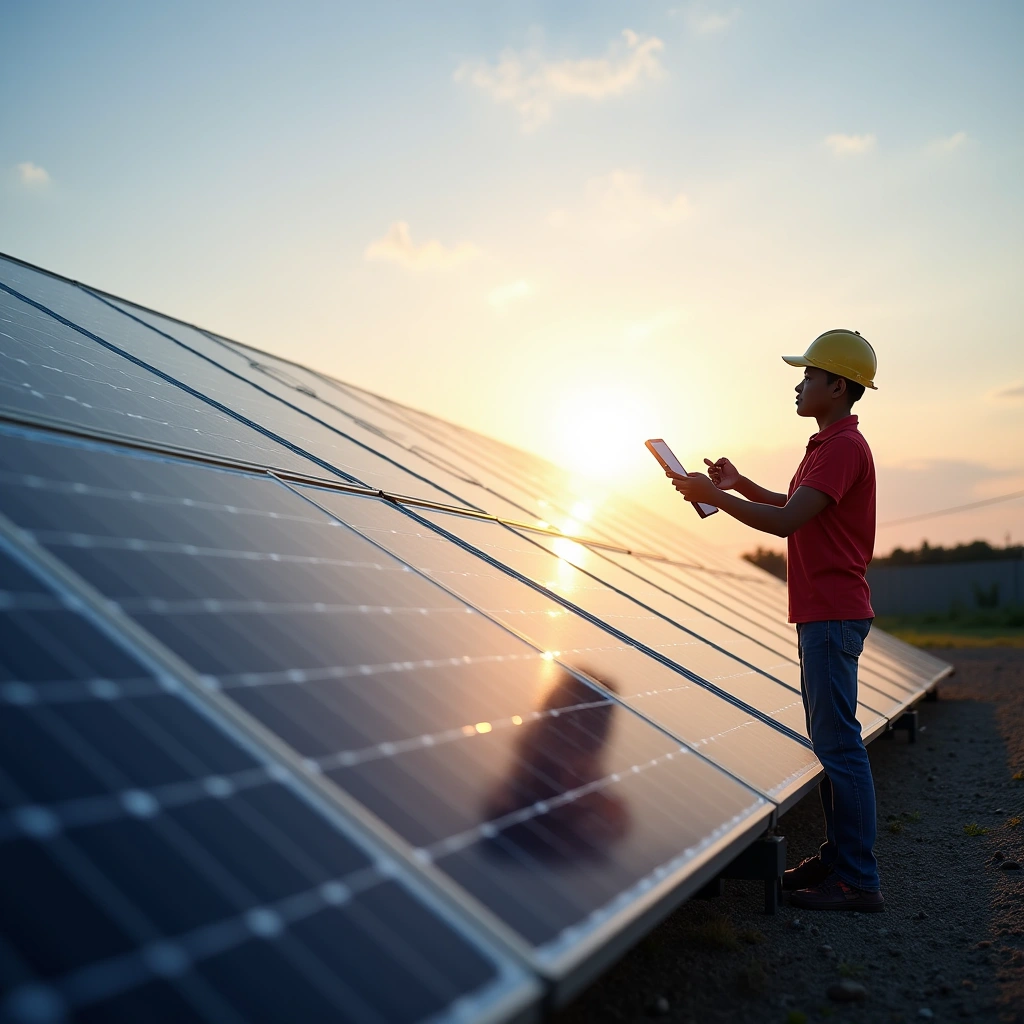
Indonesian President Prabowo Subianto has said the government is serious about realizing its 100 GW solar program, with construction targeted within three years .
Hey there, fellow earthlings! 🌍 Today, we’re shining a light on Indonesia’s ambitious goal to crank out a whopping 100 gigawatts (GW) of solar power by 2029. Now, before you roll your eyes and think, “Oh great, another country trying to save the planet,” let’s break down why this is a big deal and how it might just change the game for energy in Indonesia.
First off, let’s talk numbers. 100 GW is not just a random figure plucked from thin air. To put it into perspective, that’s enough energy to power millions of homes, or to keep your air conditioner running while you binge-watch your favorite shows—because let’s be honest, that’s a priority.
Indonesia is planning on deploying a mix of solar power solutions, including ground-mounted, rooftop, and floating solar plants. Yes, you heard that right—floating! I mean, who wouldn’t want a solar farm that floats on water? It’s like the energy version of a houseboat, but more eco-friendly and less likely to sink during a storm.
But why is Indonesia making this leap into the solar world? For starters, the country is looking to ditch its reliance on diesel generation. Seriously, have you seen the price of fuel lately? Not to mention the environmental impact of burning fossil fuels. By shifting to solar, Indonesia is not only aiming for cleaner energy but also for energy independence. This means less reliance on imported fuels and more control over their energy future. It’s like going from renting a house to finally owning your own—minus the mortgage stress.
One of the most exciting aspects of this initiative is the focus on electrifying rural areas and villages. Imagine a small village in Indonesia finally getting access to reliable electricity. No more candlelit dinners (unless that’s your thing), and more importantly, kids can study at night without straining their eyes. Plus, who wouldn’t want to charge their phone without having to walk miles to find a power source? Talk about a game changer!
Now, let’s not forget about the decentralized, smaller-scale solar systems. This is where things get really interesting. By empowering local communities to harness solar energy, Indonesia is not just building a power grid; they’re building a sense of ownership and responsibility towards their energy resources. It’s like giving people the keys to their own energy castle—minus the moat, of course.
And let’s face it, the world is watching. Indonesia’s moves could inspire other countries to step up their renewable energy game. If they can pull this off, it’s a win-win situation for the environment and the economy. Who knows, maybe we’ll see a wave of countries trying to outdo each other in the solar arena. Solar Olympics, anyone?
In conclusion, Indonesia’s goal of achieving 100 GW of solar energy by 2029 is not just a lofty ambition; it’s a necessary step towards a sustainable future. It’s about electrifying rural communities, reducing reliance on fossil fuels, and paving the way for a greener planet. So, here’s to sunny days ahead—literally! Let’s hope they can pull it off, because the world could use a little more sunshine and a lot less pollution. 🌞
Inspired by: “Indonesia aims for 100 GW solar target by 2029, deploying ground-mounted, rooftop and floating sola…” (r/climatechange)