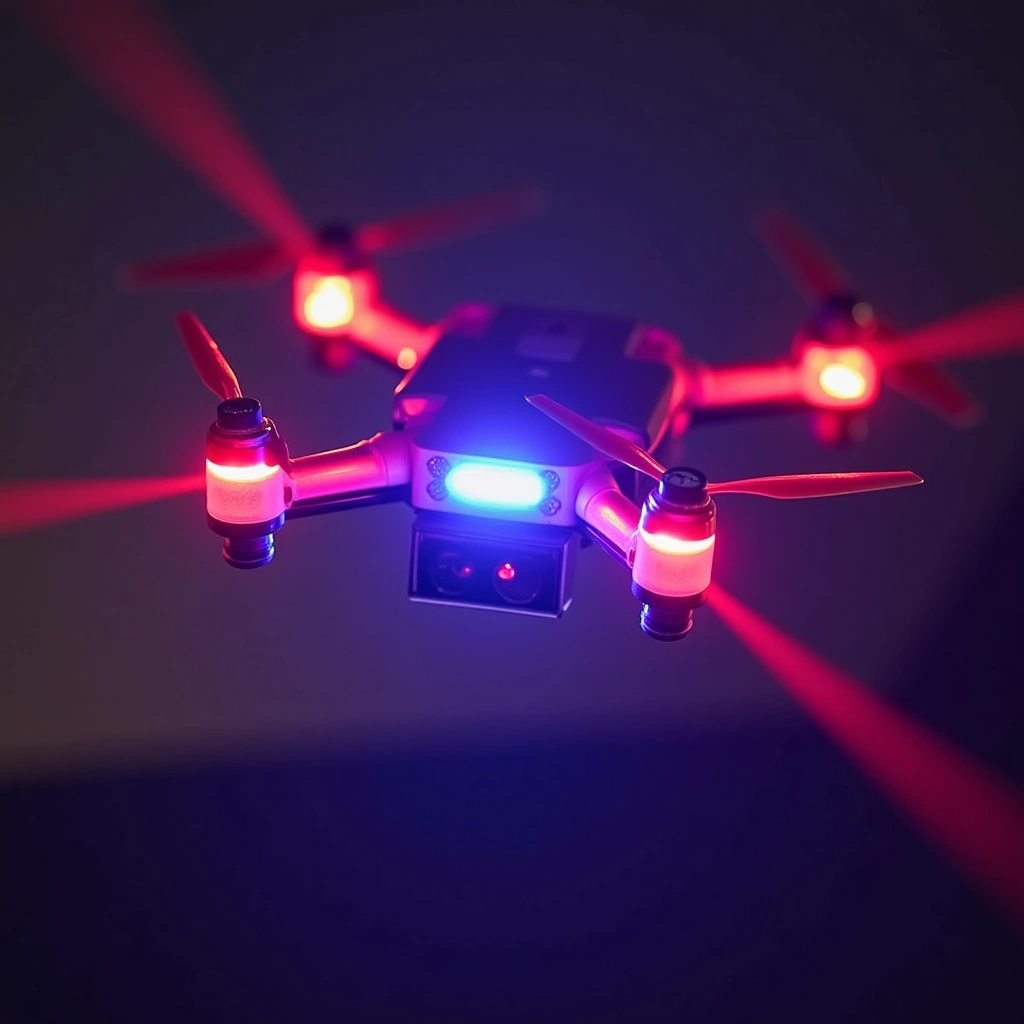
Imagine a world where drones can stay airborne indefinitely, gliding through the skies like majestic eagles, thanks to a high-powered laser beam. Sounds like the stuff of science fiction, right? Well, buckle up because this futuristic dream is inching closer to reality with the advent of wireless charging technology for drones using lasers.
As an example: You fly straight away from the pilot, 10 km out (possibly more), searching for infrared signals in the area, come back, and while in the 2 km zone, you could power up a super super cap, which then charges the battery. 1kw would be 10c for a dji matrice battery, so 6 minutes for a total recharge (which is unrealistic for a battery as far as I know, at least for long life) if the drone searches with 30 kmh, it would be 4 minutes inside the laser, not a full charge, but enough for new round outward.
So, what’s the deal with these high-powered lasers? Essentially, researchers have discovered that they can use focused beams of light to transfer energy to drones in mid-flight. This means drones can receive power without the need to land and recharge. Think of it as a high-tech version of a gas station, but instead of a big yellow sign and a questionable hot dog roller, you have a laser shooting at your flying robot.
The concept is pretty simple: a drone equipped with a receiver can pick up energy from a laser beam directed at it from the ground. This process, known as laser power beaming, could potentially revolutionize how we think about drone operations. No more worrying about battery life or scheduling landing times for a quick recharge. Instead, drones could stay in the air for extended periods, conducting surveillance, delivering packages, or even just flying around to look cool.
Now, before you start picturing a scene from a sci-fi movie where drones are zipping around like they’re in a laser tag arena, let’s address a few practicalities. First off, the technology is still in its early stages. Researchers are working on improving the efficiency of energy transfer and ensuring safety measures are in place. After all, we wouldn’t want to accidentally zap a passing bird or, heaven forbid, a wayward child who’s just trying to enjoy a sunny day at the park.
Safety is a big concern. High-powered lasers can be dangerous, and researchers are keen to ensure that this technology doesn’t turn into a scene from a bad action movie. Imagine the headlines: “Local Drones Grounded After Laser Incident.” Not exactly what we want to see, right? So, as exciting as this technology is, it’s crucial that we proceed with caution.
On a more practical note, the potential applications for this technology are vast. Think about it: emergency services could use drones to deliver medical supplies in remote areas without worrying about battery life. Or imagine the delivery drones from your favorite online retailer zipping around, powered by lasers, ensuring your latest online shopping spree arrives at your doorstep faster than you can say “retail therapy.”
And let’s not forget about the environmental impact. Wireless charging using lasers could reduce the need for battery production and disposal. Fewer batteries means less toxic waste piling up in landfills. So, not only could we have drones flying around like it’s the Jetsons, but we could also be kinder to our planet. Win-win!
In conclusion, while we’re not quite at the point where drones are powered by laser beams like they are in sci-fi movies, the technology is definitely on the horizon. As researchers continue to refine and develop this innovative approach to wireless charging, we can expect to see drones soaring through the skies with a little help from their laser friends. So, keep your eyes peeled for those flying robots and remember: if you see a laser beam, it’s probably not a sign of impending doom – just a drone getting its power-up mid-flight!
Inspired by: “High-powered lasers can wirelessly charge drones mid-flight” (r/technology)