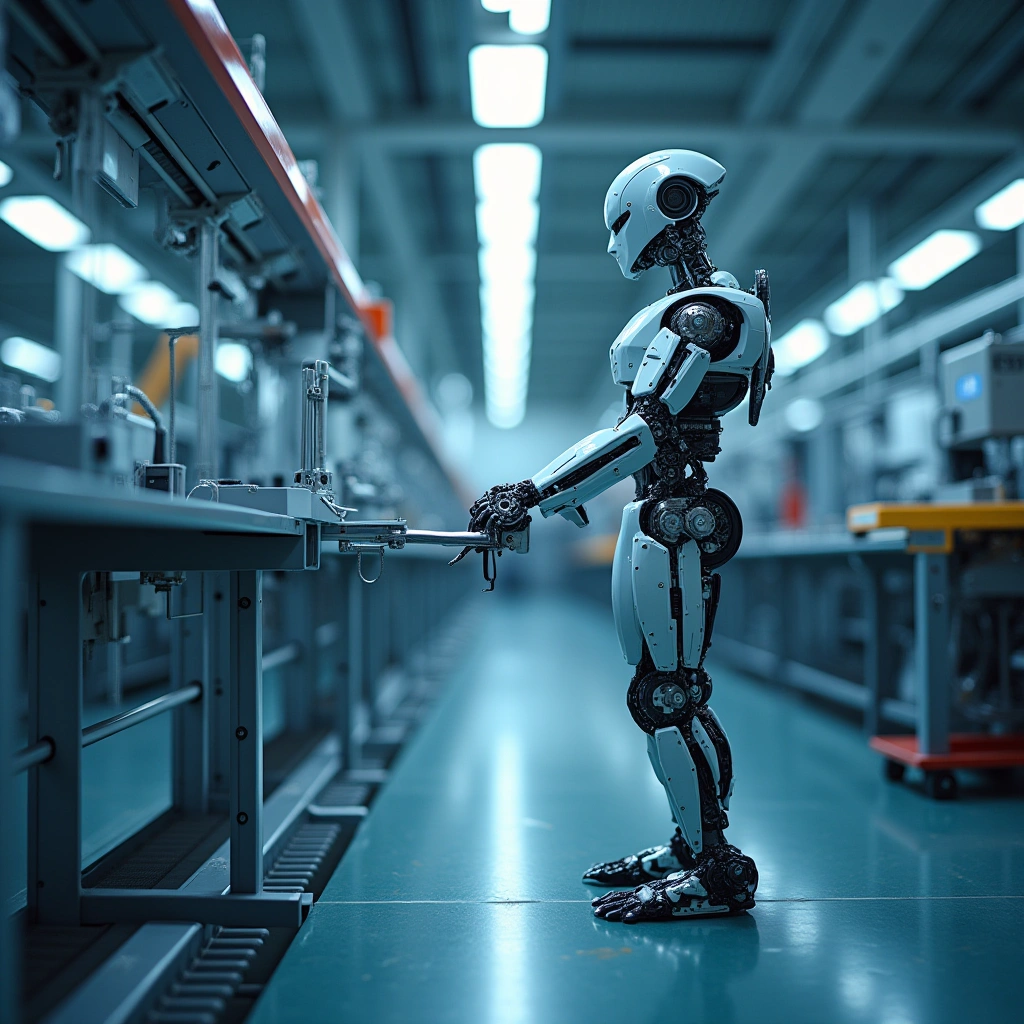
Ah, automation. The shiny new toy that promises to make our lives easier while simultaneously keeping us awake at night, wondering if our jobs are next on the chopping block. It’s like that friend who shows up at your party with a fancy new gadget, only to have it break the moment you try to use it. But let’s dive deeper into how automation has historically led to economic misery and how AI can be different—if we play our cards right.
Automation’s Double-Edged Sword Introduction: McKinsey states that “by 2030, activities that account for up to 30 percent of hours currently worked across the US economy could be automated — …
First, let’s take a stroll down memory lane. Remember when factories were filled with hundreds of workers, each performing their specific task like cogs in a well-oiled machine? Then came automation, and suddenly, those workers became as useful as a chocolate teapot. With the introduction of robots and automated systems, companies could produce more with fewer people. Sounds great for profit margins, right? But hold on—what about those workers?
Here’s where things get a bit messy. Economic misery often follows when people lose their jobs to automation. It’s not just about the loss of income; it’s about the loss of purpose and community that work provides. When entire industries are uprooted, towns can turn into ghost towns faster than you can say “unemployment rate.” So, automation has a bit of a reputation for being a job-killer, and rightfully so.
Now, let’s bring in AI, the cool cousin of automation. AI doesn’t have to follow the same script as traditional automation. Instead of just replacing jobs, AI has the potential to create new opportunities. Imagine a world where AI takes over mundane tasks, allowing humans to focus on creative and strategic work. It’s like having a personal assistant who does all the boring stuff while you sit back, sip your coffee, and brainstorm the next big idea. Sounds dreamy, right?
But there’s a catch, and it’s a big one. For AI to lead to economic prosperity rather than misery, we need to be proactive about it. This means investing in education and retraining programs for workers displaced by automation. We also need to create policies that ensure the benefits of AI are distributed more evenly across society. Because let’s be honest, we don’t want a future where a handful of tech giants are sipping piña coladas on a beach while the rest of us are left scrambling for work.
So, how can we make sure AI doesn’t end up being the grim reaper of jobs? First, we need to embrace a mindset of lifelong learning. The world is changing faster than ever, and if we want to keep up, we need to be willing to adapt. Companies should invest in their employees, providing training to help them transition into new roles rather than just cutting them loose when the robots come knocking.
Next, we need to foster innovation and entrepreneurship. If AI can handle the grunt work, why not encourage people to start their own businesses? With the right support, we could see a surge in creativity and new ideas that could lead to job creation rather than destruction.
Finally, let’s talk about regulation. It’s a dirty word for some, but we need to ensure that AI is developed responsibly. This means creating frameworks that prioritize human welfare and economic equity. If we can get this right, we might just be able to harness the power of AI for good.
In conclusion, automation has a checkered past, but AI offers a glimmer of hope. If we’re smart about it, we can avoid the economic misery that has plagued previous generations. So, let’s raise a toast to a future where automation and AI work for us, not against us. And who knows? Maybe one day we’ll look back and say, “Remember when we were worried about robots taking our jobs?” Here’s to hoping that day is sooner rather than later.
Inspired by: “Automation Led to Economic Misery. AI Doesn’t Have To.” (r/technology)