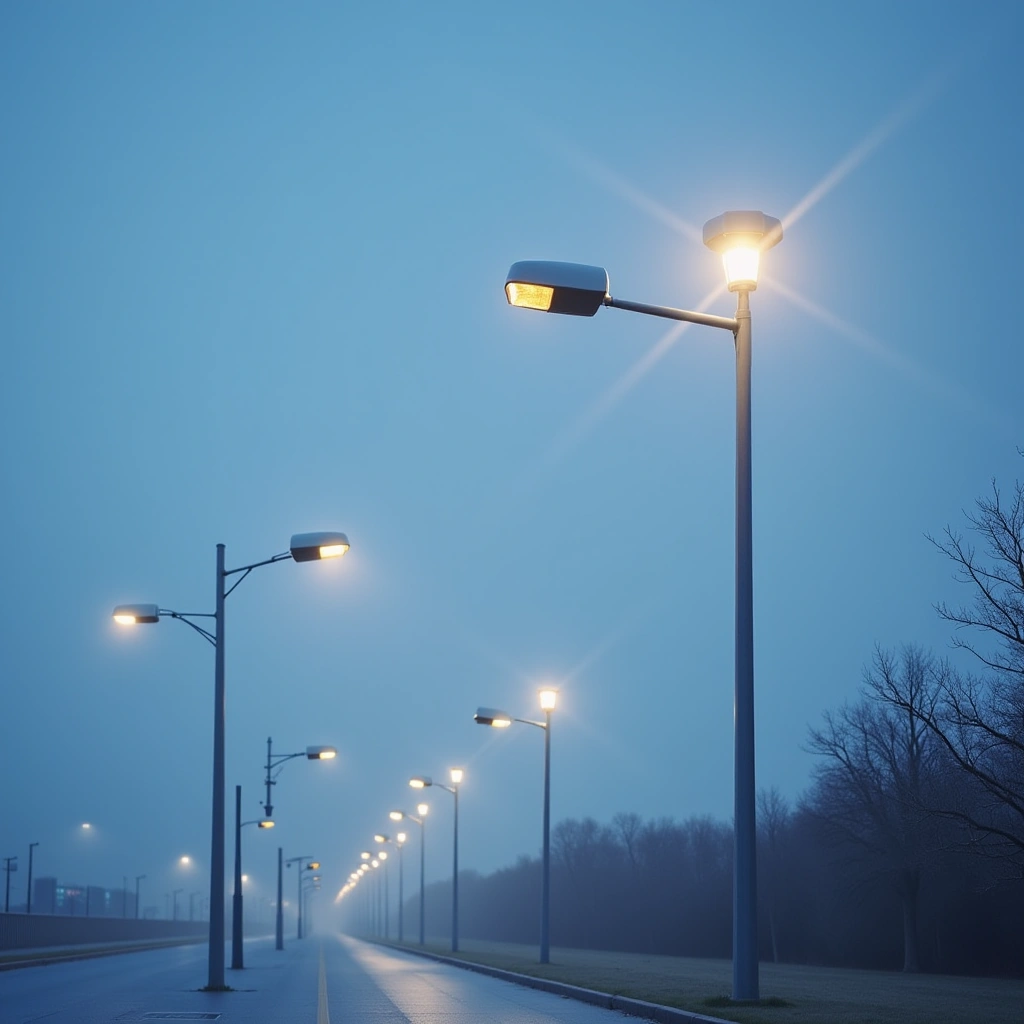
Ah, the future! Where flying cars and robot butlers are just a few sci-fi movies away. But wait, what’s that lurking in the shadows? Oh, just your friendly neighborhood smart lamp-post, equipped with AI and all the surveillance capabilities you never knew you didn’t want. So, how worried should we be about these little guardians of the night? Let’s dive into this bright idea!
Prof Rabih Bashroush, director of the Centre for Artificial Intelligence and Data Innovation at the University of East London, is blunt: “AI datacentres? There’s absolutely no chance this will fly: the technology doesn’t work, there’s not enough power, the economics won’t work …” Solar power to run the iLamps off-grid might work in Nigeria, but in Britain the amount generated by the lamp-posts is “negligible”, he says.
First off, let’s establish what an AI-enabled smart lamp-post is. Picture this: a lamp-post that not only lights up the street but also has the ability to monitor traffic, track pedestrian movement, and even analyze your facial expressions (yikes!). It’s like having a streetlight that’s also your nosy neighbor, except this one doesn’t bake cookies.
Now, you might be thinking, “What’s the harm in a little extra light?” Well, my friend, let’s consider a few things. For starters, these smart lamp-posts are equipped with cameras and sensors. This means they can collect data on everything from how many people walk by on a Tuesday evening to the exact moment your dog decides to take a bathroom break. Is this information going to be used to improve city planning? Sure! But it could also be used to create a detailed profile of your daily life. Creepy, right?
There’s also the matter of data security. If we’ve learned anything from the internet, it’s that data breaches are about as common as finding a Starbucks on every corner. So, what happens when a hacker decides to take control of our friendly lamp-posts? Instead of illuminating the path ahead, they could turn them into a network of surveillance drones that spy on our every move. And let’s be honest, if they can hack into the lamp-posts, what’s stopping them from hacking into our smart fridges? Nobody wants a fridge that knows too much.
But let’s not put on our tinfoil hats just yet. There are some legitimate benefits to these smart lamp-posts. For instance, they can help reduce energy consumption by adjusting brightness based on the time of day or the presence of pedestrians. They can even provide real-time information about local events. Imagine walking past a lamp-post that tells you about a street fair happening just a block away. That’s a win for community engagement!
Moreover, cities can use the data collected to improve public safety and reduce crime. If a streetlight can alert authorities about unusual activity, that could potentially save lives. So, it’s not all doom and gloom; there’s a balance to be found between innovation and privacy.
So, how worried should we be? Well, if you’re the type who likes to keep your life private, maybe it’s time to start wearing sunglasses at night and practicing your best ‘I’m not doing anything suspicious’ face. But if you’re more of a ‘let’s embrace the future’ kind of person, then you might just enjoy the perks of these smart lamp-posts.
In conclusion, AI-enabled smart lamp-posts are a double-edged sword. They can illuminate our streets and our lives, but they can also shine a spotlight on our privacy. The key is to find a way to embrace the technology without turning our cities into a surveillance state. So, keep your eyes peeled and your lamps on; the future may be brighter than we think, but it also might be watching us.
Inspired by: “Spies in the sky: how worried should we be about the arrival of AI-enabled smart lamp-posts?” (r/technology)