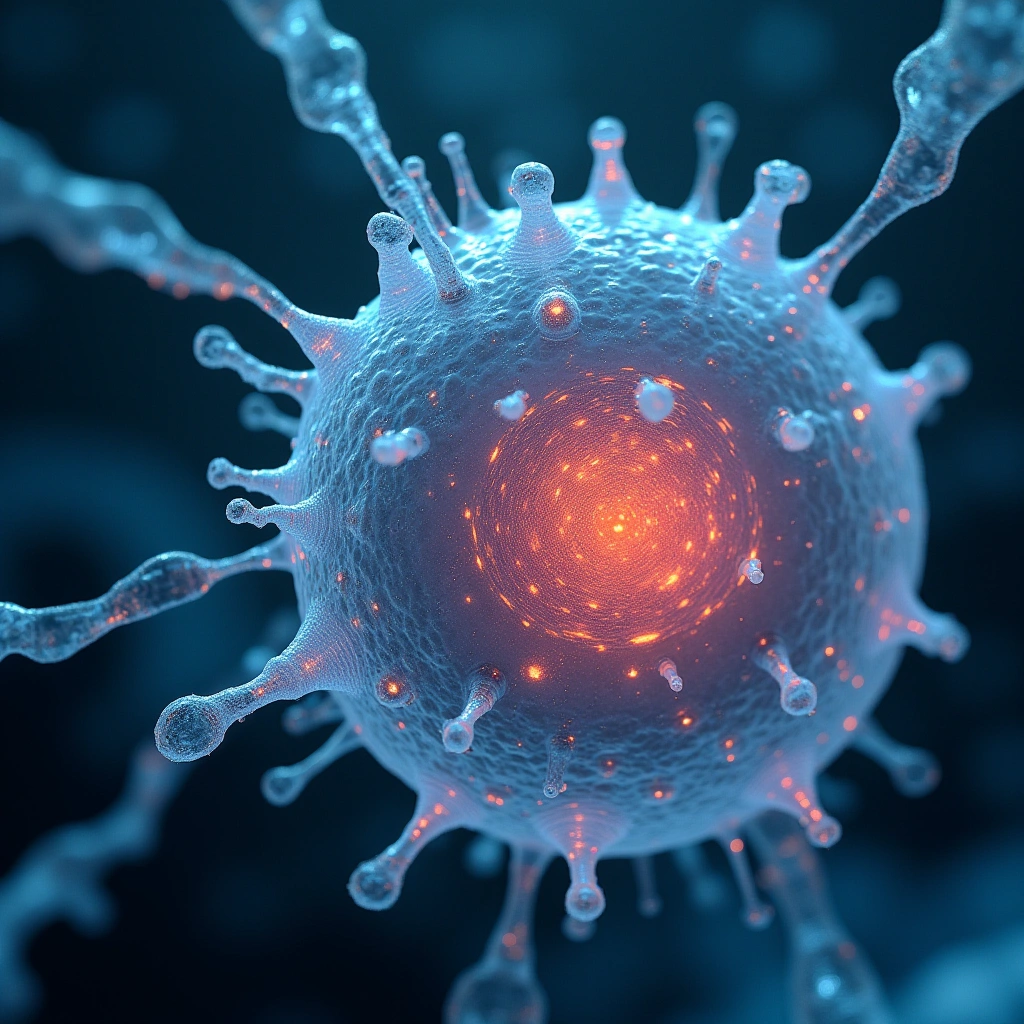
In a groundbreaking development that sounds like something straight out of a sci-fi movie, scientists have successfully created an artificial cell with a full lifecycle. Yes, you heard that right! We’re not just talking about a glorified science project here; we’re talking about a fully functioning cell that can grow, reproduce, and even die—just like the cells in your own body, but without the drama of a midlife crisis.
Artificial cells are man-made, microcompartmentalized systems (0.2–20 µm) that mimic the basic functions of biological cells, constructed either through a bottom-up approach of assembling molecular components from scratch or a top-down approach of stripping down living organisms to their minimal genetic requirements. This field leverages synthetic biology to bridge gaps between artificial and natural cells by integrating genetic circuits, transcription/translation machinery, and functional membranes to create systems capable of communication, adaptivity, and potentially self-replication. Beyond fundamental research into the origin of life, these constructs serve as simplified models for studying cellular dynamics and are being developed for practical applications such as smart drug delivery, biosensors, and autonomous biochemical microreactors.
Now, if you’re scratching your head and wondering why anyone would want to create an artificial cell, let’s break it down. Synthetic biology, the field responsible for this marvel, aims to design and construct new biological parts and systems. Imagine the possibilities! From producing biofuels to creating new medicines, the potential applications are nearly limitless.
But how does one even go about creating an artificial cell? Well, it turns out that it involves a bit of bioengineering wizardry. Scientists typically start with a basic structure and then add components that allow the cell to perform various functions. This includes creating a membrane to keep everything inside (because nobody likes a messy workspace), as well as introducing genetic material that dictates how the cell behaves.
The recent breakthrough signifies that these artificial cells can not only exist but can also replicate themselves. This is crucial because it means they can potentially be used to create sustainable systems that could replace harmful processes in nature or industry. Think of it as the cell version of a hamster wheel—running in circles, but in a productive way!
And let’s not overlook the lifecycle aspect. Just like every good reality show contestant, these artificial cells have a beginning, middle, and end. They can grow, divide, and eventually die, which provides scientists with valuable insights into cellular processes. This could help us understand diseases better or even develop new treatments. Who knew that artificial cells could be such overachievers?
However, before you start picturing a world populated by little artificial cell citizens, there are still significant hurdles to overcome. For one, we need to ensure that these cells behave predictably in real-world environments. We wouldn’t want them running amok and creating chaos, right? Plus, there are ethical considerations to take into account. After all, if we’re going to create life, we should probably have some rules in place.
In conclusion, the creation of an artificial cell with a full lifecycle is an exciting leap forward in synthetic biology. It opens up a world of possibilities that could revolutionize medicine, energy production, and even environmental restoration. So, the next time you’re feeling down about the state of the world, just remember: we’re one step closer to having cells that can do more than just sit around and replicate your bad habits. Here’s to the future of artificial life—may it be productive, sustainable, and slightly less dramatic than reality TV!
Inspired by: “An artificial cell with a full lifecycle has been created for the first time” (r/technology)