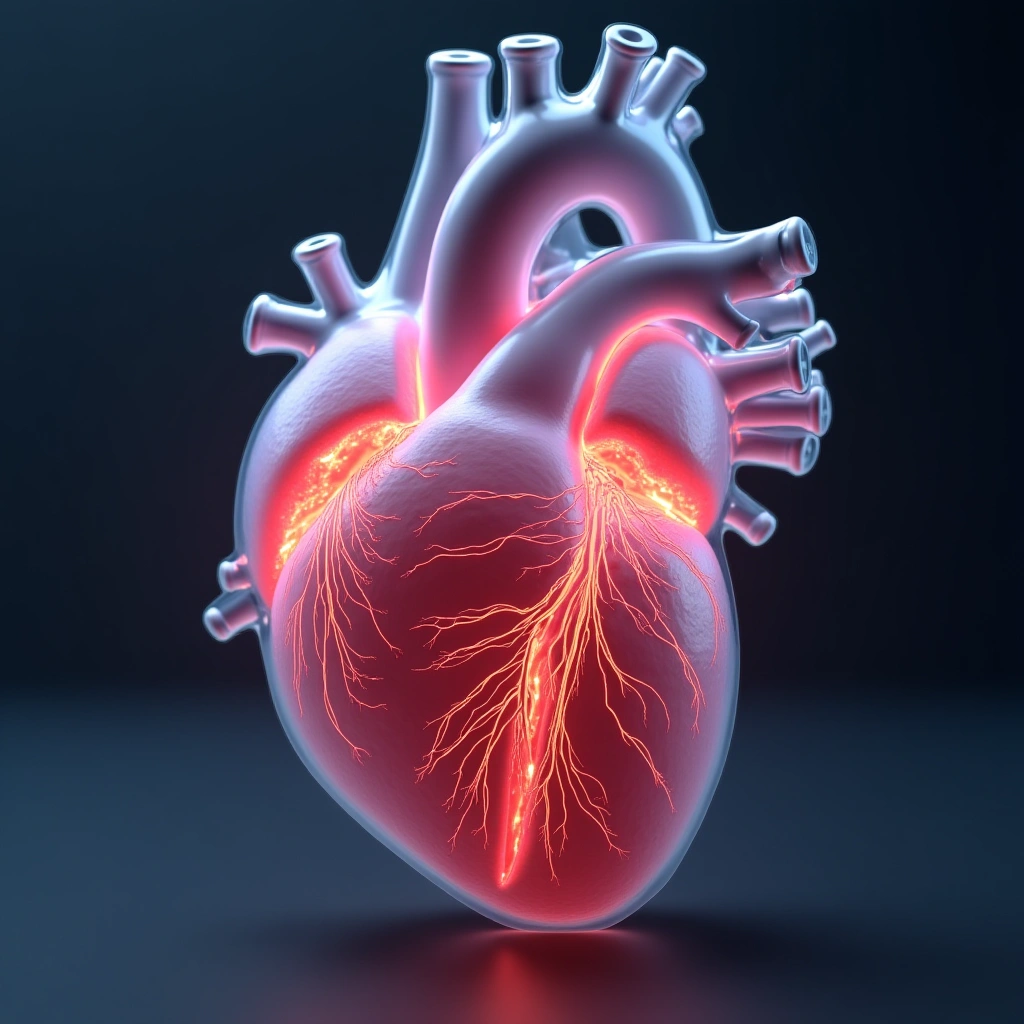
Hey there, fellow science enthusiasts! Today, I want to take you on a spine-tingling journey into the realm of decellularized ghost hearts. Yes, you heard that right! Ghost hearts! No, this isn’t a new horror movie or a trendy Halloween costume—this is cutting-edge science that could revolutionize organ transplantation!
So, what exactly is a decellularized ghost heart? Imagine a heart that’s had a serious spa day. Scientists have taken a real heart, given it a thorough wash, and stripped away all the living cells, leaving behind a pure white protein scaffold. It’s like the heart lost a lot of weight and decided to embrace its inner minimalist—no blood, no cells, just the bare essentials!
But why would anyone want to create a ghost heart, you ask? Well, the genius behind this process is that it provides a scaffold that can be injected with new stem cells. Yes, those magical little cells that can turn into anything from nerve cells to, you guessed it, heart cells! It’s like a DIY organ kit, where you get to play Dr. Frankenstein but with a much more ethical twist.
The beauty of the decellularization process is that it significantly reduces the risk of organ rejection. When you receive a transplant, your body often goes into full-on defense mode, treating the new organ like an unwelcome party crasher. But with a ghost heart, scientists can use your own stem cells to grow a custom organ that your body recognizes as its own. It’s like having a heart that’s tailor-made for you—no awkward sizing issues!
Now, I know what you’re thinking: “This sounds too good to be true!” And you’re not wrong to be a bit skeptical. The science is still in its infancy, and while the prospects are exciting, we’re not quite at the point where you can order a brand-new heart with just a few clicks online. But hey, if we can order tacos online, surely hearts are next, right?
There are ethical considerations too. If we can grow organs in a lab, what’s to stop someone from creating a super heart? You can imagine a world where people are flaunting their bioengineered organs like designer handbags. “Oh, you have a human heart? How quaint! Mine is a custom-made, extra-large model with a turbo boost!”
But let’s not get too carried away. For now, the focus is on saving lives and improving the quality of life for those in need of transplants. The potential of decellularized organs could mean that fewer patients will have to wait on donor lists, which, let’s be honest, can be a waiting game that feels longer than waiting for the next season of your favorite TV show.
In conclusion, decellularized ghost hearts are not just a spooky concept; they are a beacon of hope in the world of medicine! As we venture further into this uncharted territory, let’s keep our fingers crossed that one day, we’ll all have access to these miraculous organs. Who knows? Maybe one day, we’ll even have ghost hearts for all—just in time for Halloween!