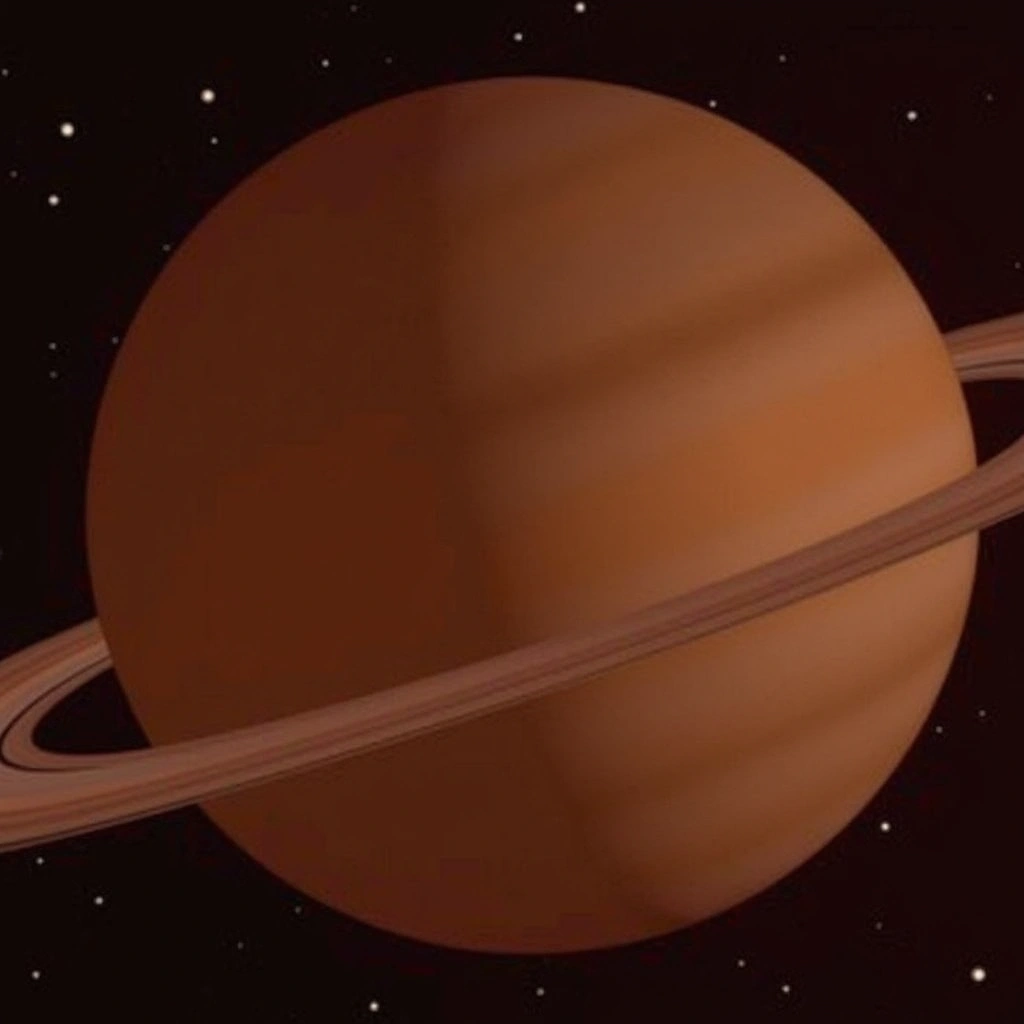
Hey there, space enthusiasts and curious minds! Grab your telescopes and your favorite snacks because we’re about to embark on a cosmic journey to Venus, the planet that decided to play by its own rules. So, did you know that one day on Venus takes longer than a whole year? Yep, you heard that right! It’s like Venus is saying, ‘I’ll take my time, thank you very much!’ Let’s dive into this peculiar phenomenon.
First things first, let’s break down what this means. A single rotation of Venus on its axis—the time it takes for the planet to spin around once—is about 243 Earth days. That’s longer than its orbit around the Sun, which takes only 225 Earth days. Talk about a slowpoke! If Venus were your friend, you’d probably be saying, ‘Hurry up, we’ve got places to go and things to see!’
Now, you might be wondering why this peculiar timekeeping is in play. Well, Venus has a retrograde rotation. This fancy term means that it spins in the opposite direction to most planets in our solar system. Imagine trying to walk backwards on a treadmill while everyone else is running forward. That’s Venus for you! As a result, the Sun rises in the west and sets in the east—an absolute plot twist for any aspiring astronomer.
But wait, there’s more! The atmosphere on Venus is a real drama queen. It’s thick, toxic, and crammed with clouds made of sulfuric acid. As if that wasn’t enough, the atmospheric pressure on Venus is about 92 times greater than Earth’s. Basically, if you were to stand on Venus, you’d be crushed like a soda can. So, the next time someone complains about their job’s pressures, tell them to try a day on Venus!
And speaking of extreme conditions, let’s not forget the temperature. Venus is the hottest planet in our solar system, with surface temperatures averaging around 900°F (475°C). That’s hot enough to melt lead! So while you’re waiting for Venus to finish its day, you might want to consider investing in some serious sunblock—like SPF 10,000. Seriously, you’d need it!
So, what’s the takeaway from all this? Venus, with its slow days and fast years, reminds us that our universe is full of surprises. It raises the question: what else don’t we know about our solar system? Why is it that we’ve only scratched the surface of these cosmic mysteries? Perhaps it’s time for us to get off our couches, explore the stars, and maybe even send a few snarky tweets to our planetary neighbor!
In conclusion, Venus may be the ‘morning star’ when viewed from Earth, but it’s certainly not the planet you’d want to spend time on if you’re in a hurry. So next time you look up at the night sky, remember the quirky world of Venus, where a day takes longer than a year and the atmosphere is just as dramatic as any reality TV show. Until next time, keep your eyes on the stars (and maybe your feet on solid ground)!