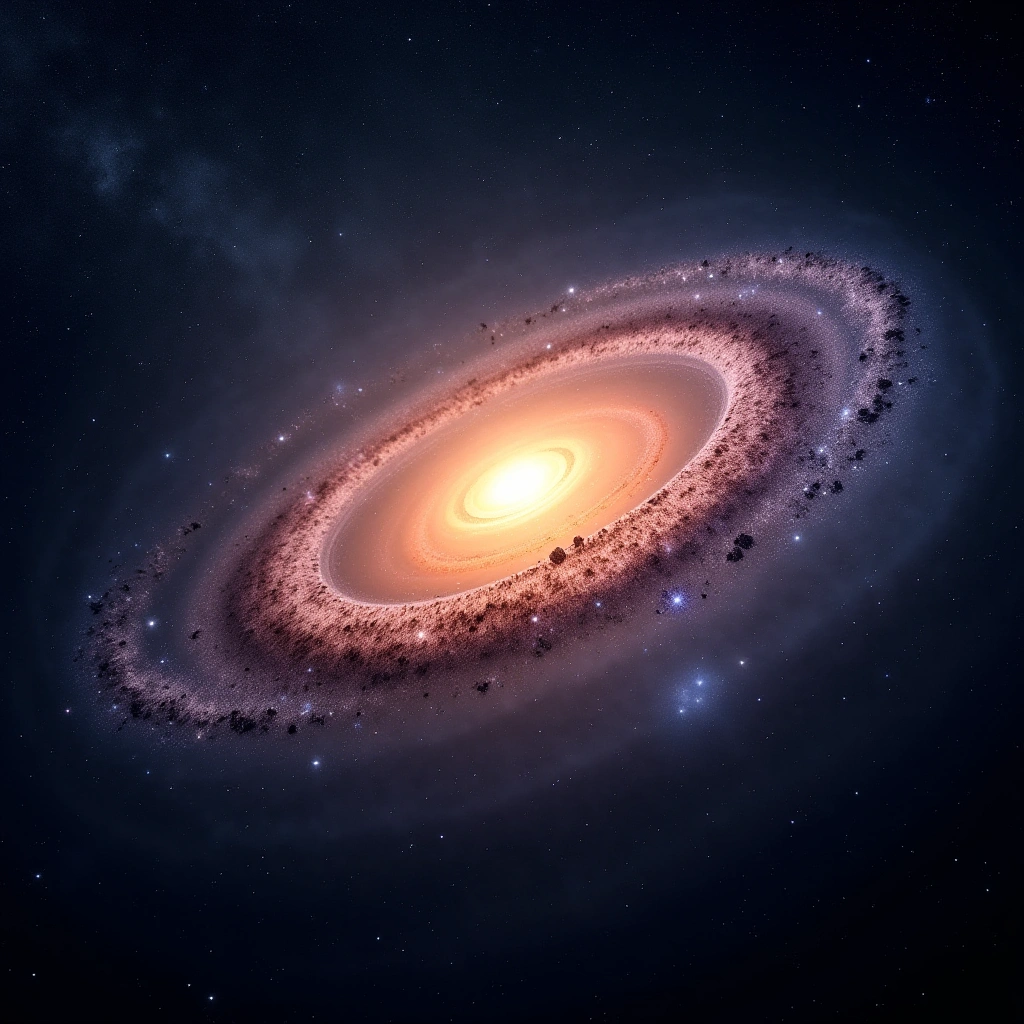
Hey there, cosmic explorers! 🚀 Have you ever wondered what the universe sounds like? Well, thanks to NASA’s latest sonification of the Whirlpool Galaxy, we can finally turn our ears to the stars and find out! Who knew that the universe was not just a vast expanse of nothingness but also a cosmic concert waiting to happen?
So, what is sonification? Imagine you’re at a party where all your friends are talking about the latest Marvel movie, but instead of words, they’re using sounds to express their thoughts. Yeah, it’s like that but for the entire galaxy! Sonification is the process of converting data into sound. NASA uses this technique to take the data collected from space missions and transform it into audio waves. It’s like giving the universe a voice, one that sounds surprisingly like a cross between an old-school synthesizer and a cat walking across a piano. Seriously, it’s a thing!
The Whirlpool Galaxy, or M51 if you’re feeling particularly scientific, is a stunning spiral galaxy located about 23 million light-years away from Earth. It’s got everything—spirals, bright stars, and a whole lot of space dust. It’s basically the Instagram model of galaxies, flaunting its beauty across the cosmic landscape. NASA took data from the Chandra X-ray Observatory, the Hubble Space Telescope, and the Very Large Array radio telescope to create this auditory masterpiece.
Now, you might be asking yourself, “Why do we need to hear the galaxy when we can just look at pretty pictures?” Well, my friend, hearing the galaxy is an entirely different experience. It’s like switching from a regular TV to a 3D surround sound system. The audio representation adds a layer of depth to our understanding of cosmic events. For instance, when you hear a high-pitched sound, it could signify the activity of young stars or supernovae, while lower frequencies could indicate the presence of massive black holes. It’s science with a side of musicality!
And honestly, who doesn’t want to feel like they’re at a rave with the universe? Imagine hosting a party where instead of a DJ, you’ve got the Whirlpool Galaxy spinning beats in the background. People will be like, “Dude, what’s that sick track?” And you can be like, “Oh, that’s just the sound of cosmic collisions. No big deal.” Instant cosmic street cred!
But before you grab your headphones and start jamming to the cosmos, let’s address the elephant in the room. Some skeptics might argue that this is just a gimmick. After all, can we really trust a galaxy to have a good taste in music? I mean, this is the same universe that brought us black holes and asteroids. But hey, even if it’s a gimmick, it’s a pretty cool one! It reminds us that the universe is a complex, beautiful place, full of mysteries waiting to be uncovered. Plus, it’s a fantastic way to spark interest in astronomy and STEM fields.
So, if you’re looking to expand your playlist beyond the same old pop hits, dive into the sounds of the Whirlpool Galaxy. Who knows, it could inspire you to reach for the stars—literally! Just don’t forget to tell your friends you’re not just listening to random noises; you’re vibing with the universe!
In conclusion, though it may seem a bit out there, NASA’s sonification of the Whirlpool Galaxy is a brilliant blend of science and art. It’s like the universe is saying, “Hey, I’m not just out here looking pretty; I’ve got a groove too!” So, next time you’re gazing at the night sky, remember: there’s a whole lot going on above us, and now, thanks to NASA, we can hear it too!