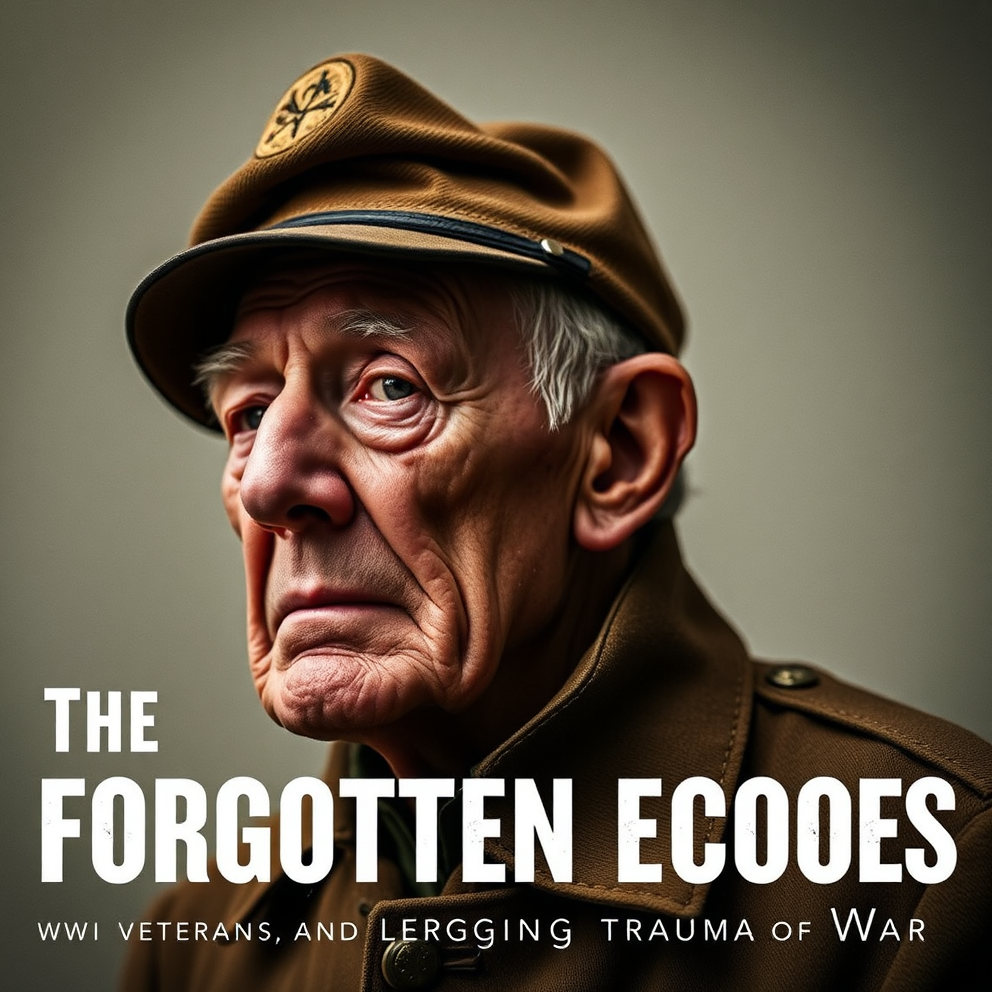
Ah, the good old days of the early 20th century! When flapper dresses were all the rage, and everyone was just a little too excited about jazz music. But wait! Amidst the glitz and glamour of 1919 and 1920, there lurked a darker reality—one that involved our brave men returning from the battlefields of World War I, carrying invisible scars that would define their lives for decades to come.
Imagine this: you come back home after fighting in a war that was supposed to be the ‘war to end all wars,’ only to find yourself flinching at the sound of a door slamming—because it reminds you of artillery fire. Or maybe you see a soldier’s uniform and suddenly you’re back in the trenches, feeling the mud and despair surround you again. Not exactly the welcome home parade you had in mind, right?
These veterans, unfortunately, were the pioneers of what we now understand as PTSD—or, as I like to call it, ‘Post-Traumatic Stress Disorder.’ Back then, it was often brushed off as ‘shell shock,’ a term that sounds more like a quirky beach condition than the serious mental health issue it truly is. And it wasn’t just a little case of the jitters; these brave souls were experiencing real symptoms that included shakes, seizures, and severe anxiety, along with a fear of anything remotely related to their harrowing experiences.
Picture this: a group of veterans performing military drills in an effort to regain some semblance of control over their lives. It’s almost poetic, isn’t it? They were trying to reclaim their sense of purpose, but instead, it often highlighted just how deeply they were affected. The irony is rich—here they were, once proud defenders of freedom, now struggling to find freedom from their own minds.
Fast forward to today, and we still see the echoes of their struggles. Society has come a long way in understanding mental health, but let’s be honest—there’s still a stigma attached to it. When will we learn that being brave doesn’t mean you have to pretend everything is fine? As we honor these heroes of the past, let’s also advocate for those bearing similar burdens today.
So, the next time you hear a story about a veteran struggling with their mental health, remember the footage of those men from 1919 and 1920. They were not just numbers or statistics; they were human beings grappling with the aftermath of war. And if you ever doubt the impact of trauma, just think of those poor guys flinching at the sound of a balloon popping! It’s about time we give them the recognition they deserve, not just as soldiers, but as survivors. Cheers to them—may we continue to learn, grow, and advocate for a world where no soldier feels alone in their fight.