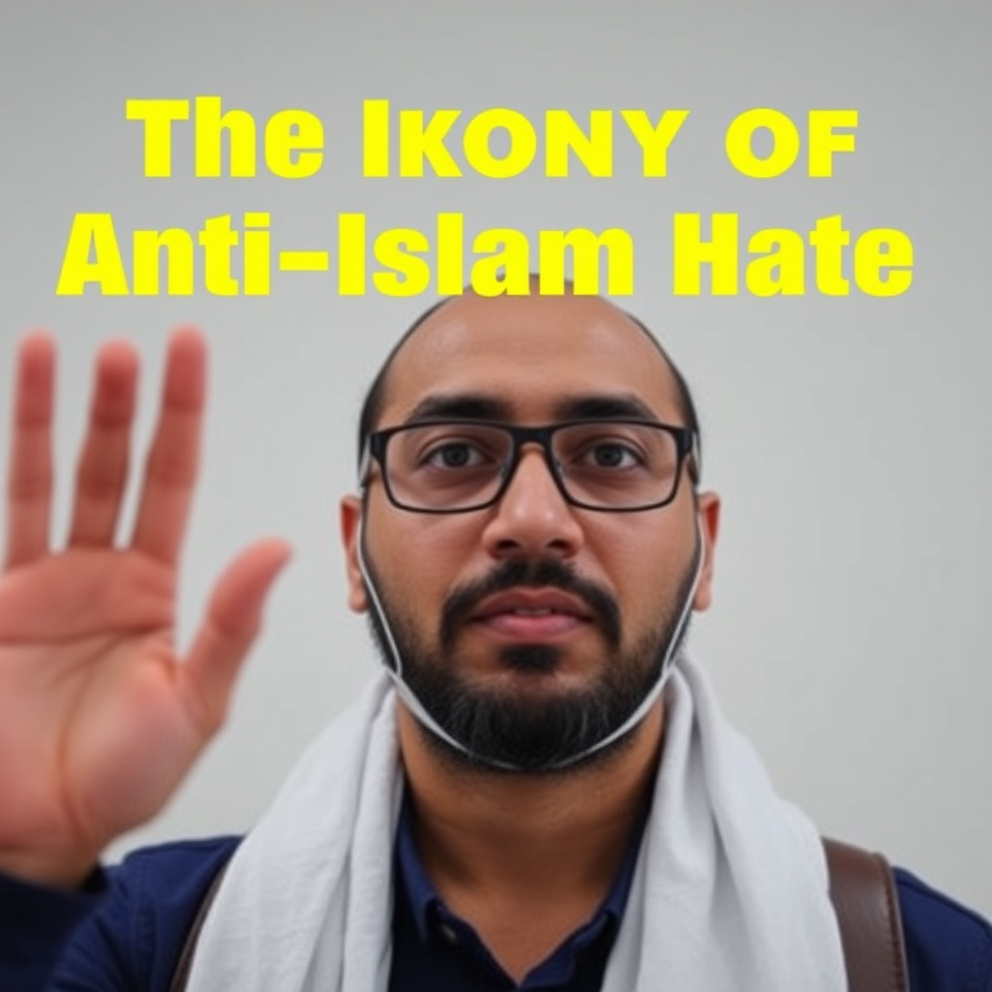
Gather ’round, folks, because today we’re diving into a story so rich in irony that it could be a Netflix series. Picture this: a Pakistani Muslim, who apparently doesn’t speak ‘proper’ English (whatever that means, right?), is raking in millions of views online by spreading anti-Islam sentiments. Yes, you heard it right. It’s like ordering a burger at a vegan restaurant and being surprised when it doesn’t come with bacon!
Now, let’s unpack this. The internet has always been a wild west of opinions, where everyone has a loudspeaker and a stage, and this individual has figured out how to monetize their grievances. It’s a bit like watching a magician pull a rabbit out of a hat, but instead, the rabbit is a controversial opinion, and the hat is a platform filled with algorithms that just love scandal. The more outrageous, the better!
It’s fascinating how this person has climbed the social media ladder by leveraging their experiences. It’s almost like they took the idea of ‘if you can’t beat them, join them’ and turned it into ‘if you can’t understand them, criticize them.’ The irony is thick here, folks. You’ve got someone from a background that’s often misrepresented, becoming the very embodiment of that misrepresentation. It’s like a plot twist in a bad rom-com where the lead falls in love with their worst enemy.
Now, why is this happening? It’s not just about the individual, but the environment that allows such content to thrive. Think of it as a garden where the weeds (a.k.a. controversial figures) grow faster than the flowers (a.k.a. rational discourse). In the UK, where multiculturalism is often celebrated, this person has found a niche that feeds off fear and misunderstanding. And let’s be honest, who doesn’t love a bit of drama in their feeds? It’s like reality TV for the brain!
Let’s also talk about the audience. In a world where people are constantly scrolling, it seems outrage sells better than reason. It’s like people have turned into modern-day Romans, cheering for the gladiators while the real issues are left to fend for themselves. So, when this Pakistani Muslim starts dishing out anti-Islam rhetoric, it’s like throwing a steak into a pack of starving wolves. The views and clicks pour in, and suddenly, they’re the star of the show.
But here’s the kicker: while this individual may be gaining fame, the community at large is left to deal with the fallout. The very narratives they’re promoting may shape public perception and lead to real-world consequences. It’s a bit like setting off fireworks in a crowded room—everyone loves the show until someone gets burned.
So what can we learn from this? For one, it’s crucial to engage critically with the content we consume. Just because something is popular doesn’t mean it’s true, or even helpful. Secondly, let’s not be too quick to judge. After all, everyone has their story, even if it’s wrapped in a controversial package. And finally, maybe—just maybe—we should all learn a little bit of proper English, so we can understand what the heck is going on!
In conclusion, this saga of a Pakistani Muslim earning millions of views while spreading anti-Islam hate in the UK serves as a reminder that sometimes the loudest voices aren’t the most rational ones. So, as you scroll through your feeds, keep your critical thinking cap on and remember that not everything that glitters is gold. Sometimes, it’s just a well-polished piece of irony!