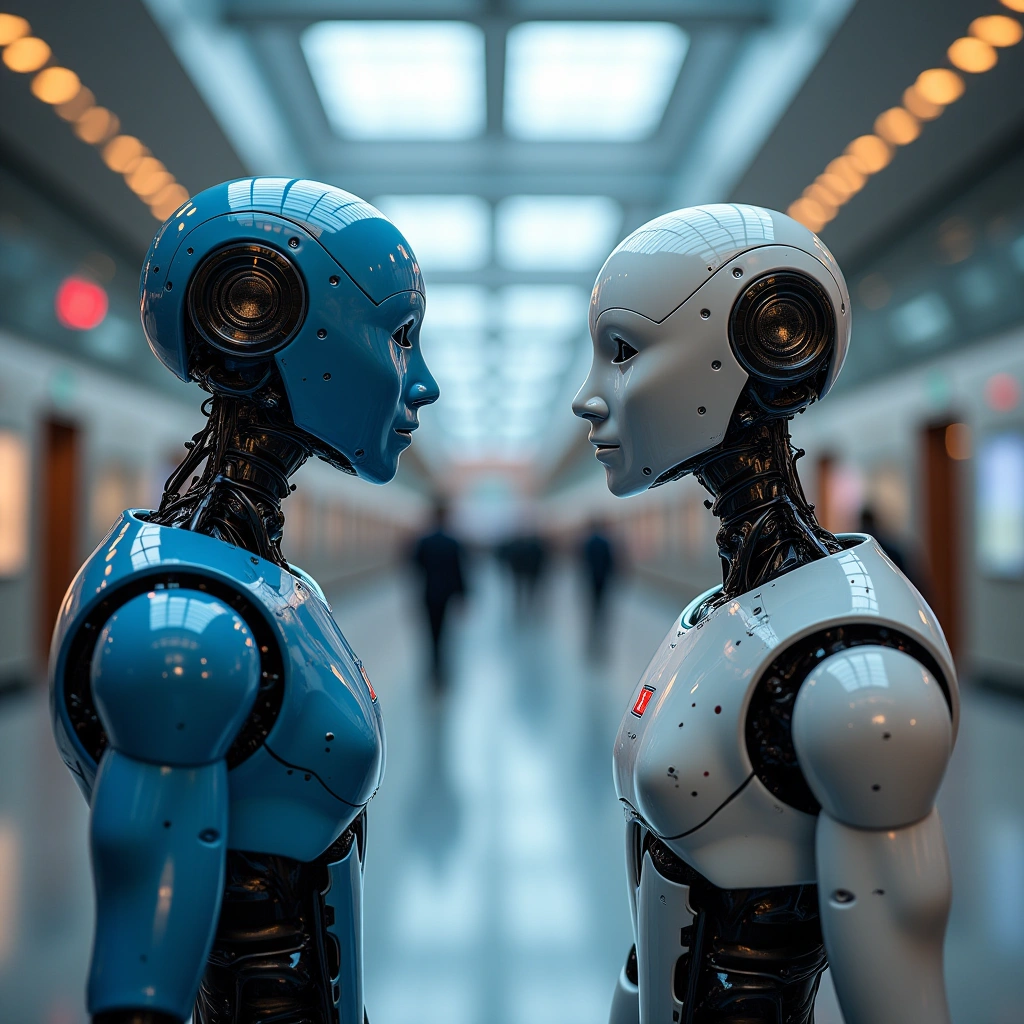
Ah, the good old days when the biggest rivalry was who had the best pizza toppings. But now, the U.S. and China are putting their culinary differences aside to tackle something much more serious—artificial intelligence (AI) and its potential for global chaos. Let’s dive into this tech showdown that’s got everyone buzzing (and not just from caffeine).
First off, let’s set the stage. AI is like the new kid in school who’s not only good at math but also can beat you at video games and has an impressive collection of Pokémon cards. The U.S. and China are both trying to befriend this kid, but it’s turning into a classic case of “who can throw the best party?” Spoiler alert: it usually ends with someone crying in the corner.
So, what’s the deal? The leaders from both countries are now engaging in talks to establish “guardrails” for AI development. Think of it as putting bumpers on a bowling lane to stop that rogue ball from heading into the gutter—or into a crisis. Because let’s face it, if AI gets too powerful, we might end up with a robot uprising where our coffee machines start demanding higher wages.
But here’s the catch: defining those guardrails is like trying to find a parking spot in a crowded mall during the holidays. Everyone has an opinion. Should the focus be on ethical standards, data privacy, or keeping AI from becoming the next Skynet? (Note to self: avoid any tech that resembles a T-800.)
One major concern is the competition itself. The U.S. and China are in a race to outdo each other, but instead of running laps, they’re coding algorithms. Imagine two kids on a playground, each trying to build the tallest sandcastle. If one kid accidentally knocks over the other’s creation, we might get a full-blown sandbox war. And nobody wants to be the adult who has to step in and clean that mess up.
Experts are warning that without proper regulation, the AI arms race could spiral out of control. This isn’t just about who can create the smartest chatbot or the most advanced facial recognition software. It’s about ensuring that AI remains a tool for good and doesn’t turn into the digital equivalent of that one relative who shows up uninvited at family gatherings.
One proposed solution is international cooperation—imagine a global tech summit where U.S. and Chinese leaders sit down to hash it out over a plate of dumplings and cheeseburgers. They could draft a treaty that makes it clear: “Hey, let’s keep our AI in check so we don’t accidentally start World War III because our robots misinterpreted a tweet.”
In conclusion, while the rivalry between the U.S. and China may seem like a classic game of tug-of-war, the stakes are much higher this time. If we can establish some effective guardrails for AI development, we might just avoid a crisis that could make the Cold War look like a friendly game of Monopoly. So, here’s to hoping for a peaceful tech future—and maybe a pizza party to celebrate our shared humanity (and to distract the robots). Cheers!