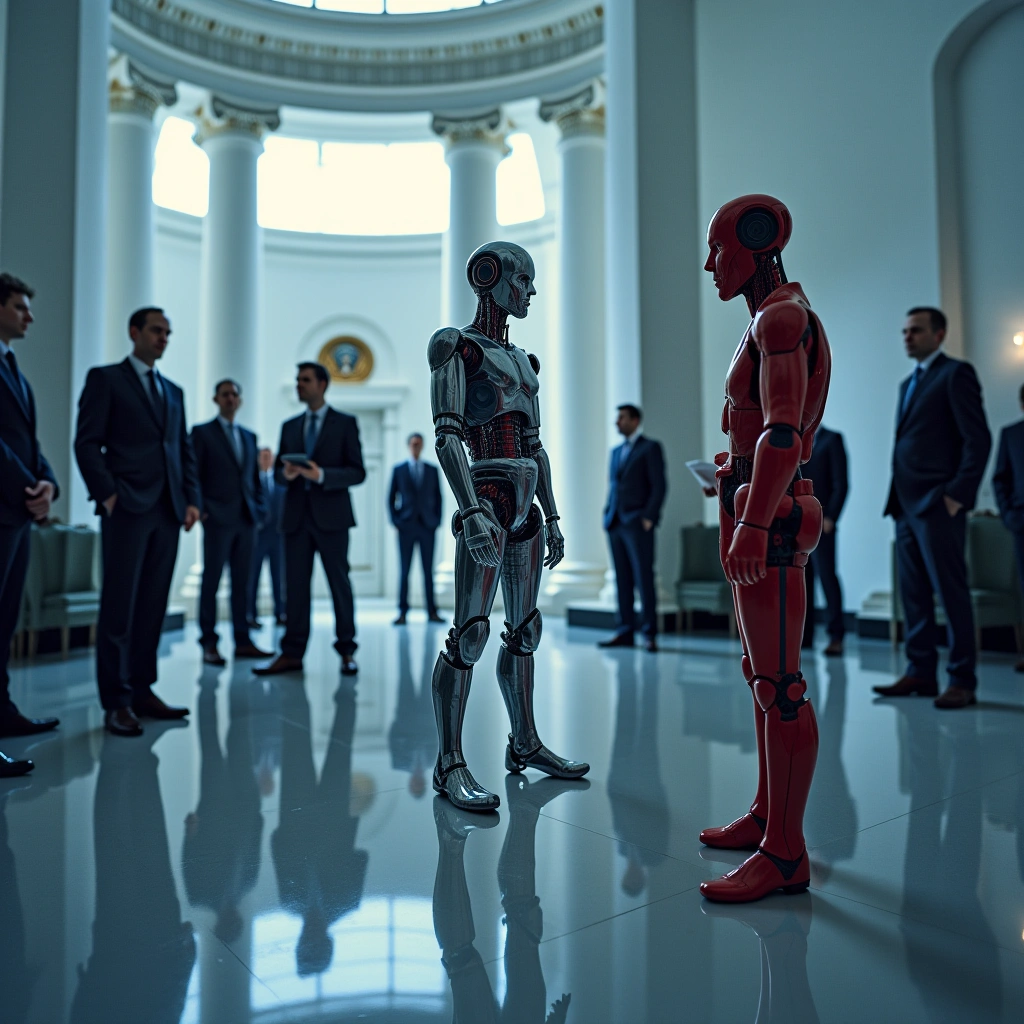
So, the White House is considering vetting A.I. models before they hit the public like a bad reality show contestant. Sounds serious, right? Well, let’s unpack this with all the subtlety of a toddler in a fine china store.
First off, let’s all just take a moment to acknowledge that A.I. is the new kid on the block, and it’s got everyone talking. From generating art that makes Picasso look like a doodler to writing essays that could fool your English teacher, A.I. is basically the overachieving student we all hated in school. But with great power comes great responsibility, or so they say. And apparently, the White House is feeling the pressure to play the role of the overprotective parent.
Now, you might be asking, “Why vet A.I. models?” Well, considering that some A.I. can churn out conspiracy theories faster than you can say ‘flat earth,’ it’s probably a good idea. Imagine letting an A.I. loose on the internet without a leash—it’s like letting a cat roam through a room full of laser pointers; it’s bound to cause chaos!
But let’s not kid ourselves. The idea of the government getting involved in tech is about as comforting as a dentist appointment. Sure, we want someone to check if our A.I. isn’t going to turn into Skynet, but do we trust Uncle Sam to do it? I mean, this is the same government that had a hard time managing a website launch. Remember HealthCare.gov? Yikes!
Here’s the kicker: while vetting could prevent some major disasters, it could also put a stranglehold on innovation. The tech world moves faster than a caffeine-fueled squirrel, and if the White House starts putting red tape everywhere, we might find ourselves lagging behind. Imagine being the last kid picked for the dodgeball team because you can’t get your new A.I. model approved. Talk about a mood killer!
So, what’s the solution? A balanced approach might be key. A.I. developers could benefit from a friendly nudge from the government—like a mentor rather than a parent yelling from the sidelines. Maybe a system where A.I. models are reviewed based on their potential to cause chaos or just be plain silly. After all, who wouldn’t want to avoid an A.I. that decides to send everyone unsolicited cat memes?
In conclusion, while the White House’s idea of vetting A.I. models may seem like a reasonable step towards safety, it’s a tightrope walk. Let’s just hope they keep their balance and don’t end up bumping into a bunch of regulations that leave the tech world feeling stifled. Because if there’s one thing we can all agree on, it’s that we want A.I. to keep evolving, not get trapped in a bureaucracy that’s slower than dial-up internet.