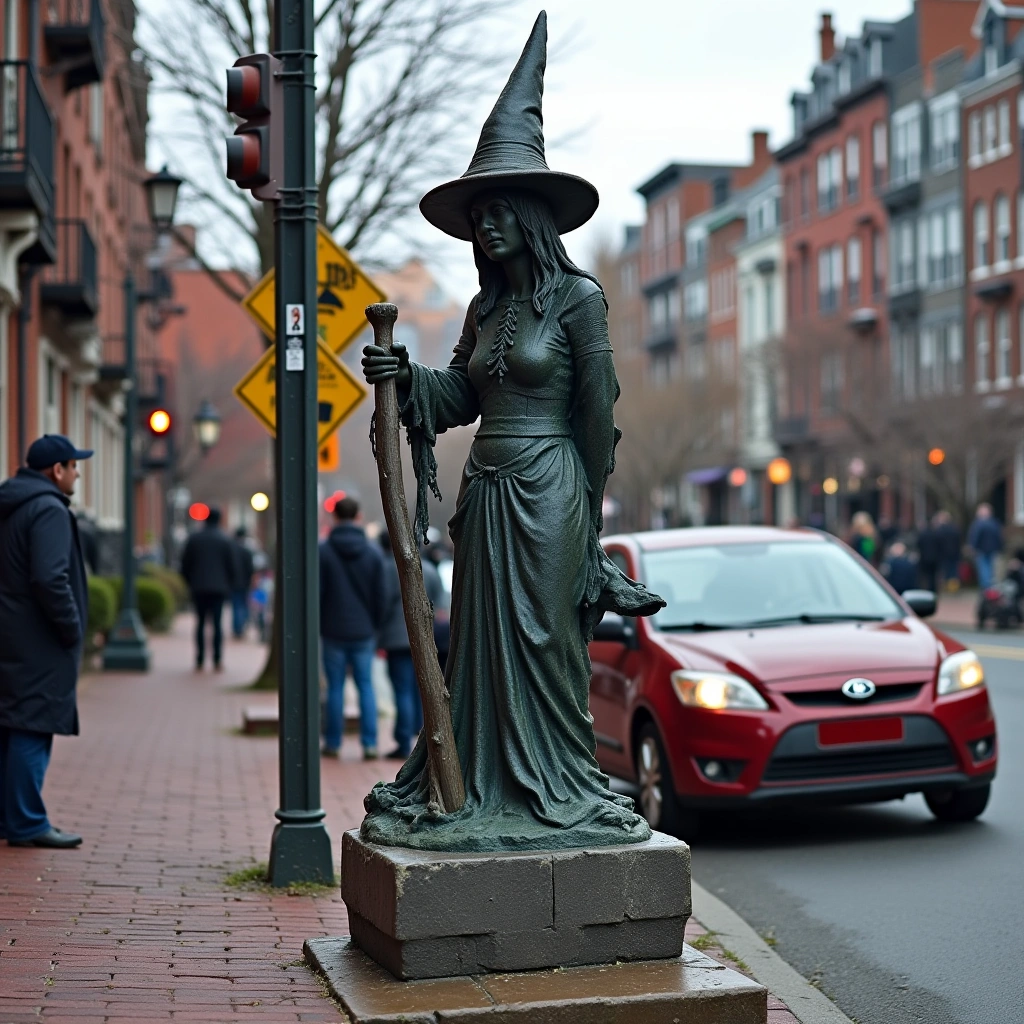
Ah, Salem, Massachusetts—a town that knows a thing or two about witch hunts, both literal and digital. Recently, it came to light that Google Street View has decided to censor the face of a witch statue in this historical haven. Now, before you conjure up wild theories about big tech being in cahoots with the undead, let’s dive into this eerie situation with a bit of humor and a pinch of controversy.
First off, what’s the deal with the censorship? One might wonder if Google has transformed into a modern-day Inquisition, afraid that some pixelated visage of a witch might cast spells over unsuspecting viewers. But in reality, this decision likely stems from a desire to maintain a semblance of decency and respect in a world that can be overly sensitive. After all, it’s 2023, and we’ve got enough to worry about without adding “witch face” to our list of digital dilemmas.
Now, let’s talk about Salem. Known for its notorious witch trials of the 1690s, this town has become a historical hotspot for anyone looking to dabble in the darker side of American history. But as we stroll down its cobblestone streets via Google Street View, we’re reminded that even statues can’t escape the scrutiny of our overly politically correct society. It’s almost as if the digital version of Salem is waving a white flag, saying, “Please don’t be mad!”
But are we really going to let a little face censorship ruin our fun? I mean, come on! If we’re going to let Google sanitize our experiences, what’s next? Are they going to blur out the witches’ brooms too? We might as well be left with a bunch of floating hats and cauldrons! Talk about a lack of authenticity!
On a serious note, one can’t help but question the implications of such censorship. Are we erasing history in the name of decency? Are we turning into a society that’s so afraid of offending anyone that we lose the very essence of what makes us human? Witchcraft, after all, has been a part of folklore and culture for centuries. To censor it is to deny the rich tapestry of our shared past.
So what’s the solution? Maybe we need a digital version of the witch trials where Google can defend its decisions. Picture this: a tribunal of techies, historians, and the occasional goth enthusiast debating the morality of pixelation in a live-streamed event. Spoiler alert: it ends with everyone agreeing that witch statues deserve to have their faces on display, but only if they come with a disclaimer saying, “Not all witches are bad; some just really love herbal tea.”
In conclusion, while Google may have taken a step towards what it believes is respectful censorship, the debate over what should be shown or hidden in our virtual world is far from over. So, let’s keep the conversation going and remember: whether you’re a witch or a tech giant, everyone deserves a chance to show their face—even if it’s a pixelated one. Stay spooky, my friends!